The Folder My Cousin Could Not Lose
She looked at me for the first time like a cousin and not like an official. For one second I thought I saw something in her face that was not a smile. Then it was gone.
“Is that a threat?” she asked.
“No,” I said. “It’s a door.”
“I don’t take instructions from the family,” she said. “And I’d be careful, Dennis. It’s an awfully long way to walk with nothing but a stack of cards.”
I picked my copy up off her desk. “The original goes to the board on the 20th, with or without you. I’m telling you now so you’re not surprised.”
I went downstairs.
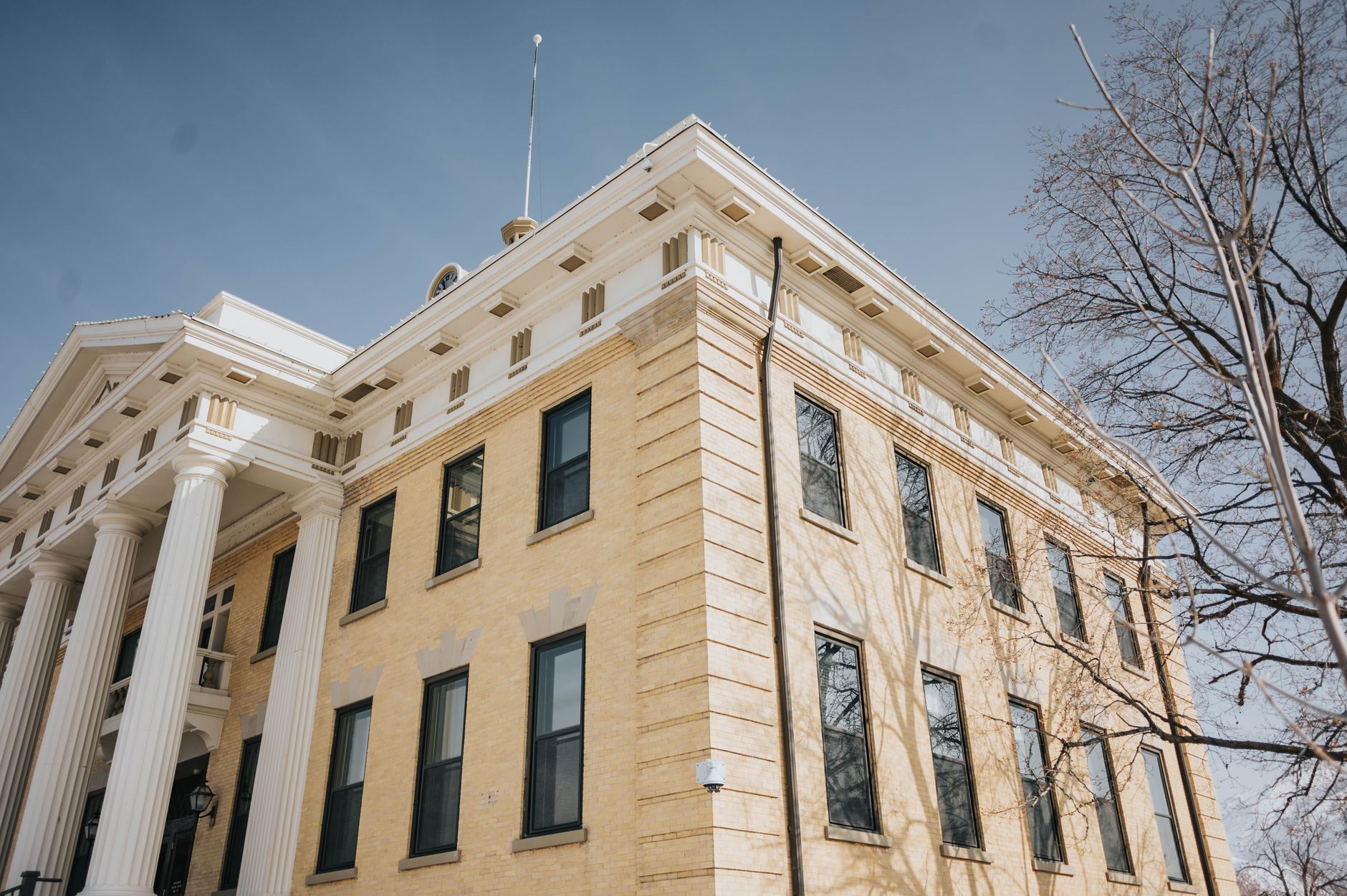
The county clerk’s office is on the ground floor of the Rennick County Courthouse, down a hallway of worn terrazzo that smells of floor wax and radiator heat. The building went up in 1911, tan brick with a clock tower, and the radiators in that hallway tick from October to April like a roomful of knitting needles.
The clerk was Shirley Dostal, two years behind me in school, the kind of person who writes your name down before you finish saying it.
“Dennis Hartwell. What can I do you for?”
“I’d like to be on the county board agenda for the 20th. Public comment, five minutes. Maybe a little more.”
“Sure.” She pulled out a form. “What’s the topic?”
“My father’s homestead exemption. The disabled veteran one.”
She stopped writing.
I laid the folder on her counter and opened it to the green cards. I did not say anything else. She picked up the first card, turned it over, read the signature, and then, very slowly, set it down. She picked up the second.
“These are Deb’s,” she said.
“Yes.”
“These are all Deb’s.” Her voice dropped. “Dennis, how long has this been going on?”
“Three bills.”
She was quiet a moment. Then she wrote on the agenda form, in clean block letters: HARTWELL, E., HOMESTEAD EXEMPTION, 10 MIN. She underlined the 10. “Right after the roads report,” she said. “That’s when we get the most people.”
From there I walked two doors down to the treasurer’s window and asked Sandy Mickelson for my father’s tax history. She printed it, then squinted at the page.
“Eldon’s bill jumped,” she said. “In 2023. I noticed. I figured his rating changed.”
“It didn’t.”
“No. I see it didn’t.” She handed me the pages, warm from the printer. “I should have asked. I’m sorry.”
I put them in the folder and shut it.
That was all the hunting I did. People have asked me a hundred times why I did not call the state, or a lawyer, or the newspaper. The state would have mailed the question back to the same desk in the same courthouse. A lawyer would have made my father a case, and he did not want to be a case. He wanted to be a man whose house had a roof. All I wanted was for the people on the county board, every one of whom we had known all our lives, to look at a piece of paper with their own eyes.
My father told Bernie Kolb himself.
I had not meant for it to get around. But my father sat down at the Friday fish fry at the VFW, at the same table he had sat at for 40 years, and when Bernie asked how he was, he said, “Dennis is taking my tax exemption to the county board on the 20th.” That was the end of keeping it quiet.