Three Summers in the Corn
Saturday
He didn’t come that week. I didn’t expect him to.
The second Saturday after that, the fourth week, I was in the yard with a pan of bars when a gray Ford I didn’t know pulled in off the gravel and parked behind my Malibu. It was Tom Hendricks’s truck, from the feedlot. Darren got out of the driver’s side alone.
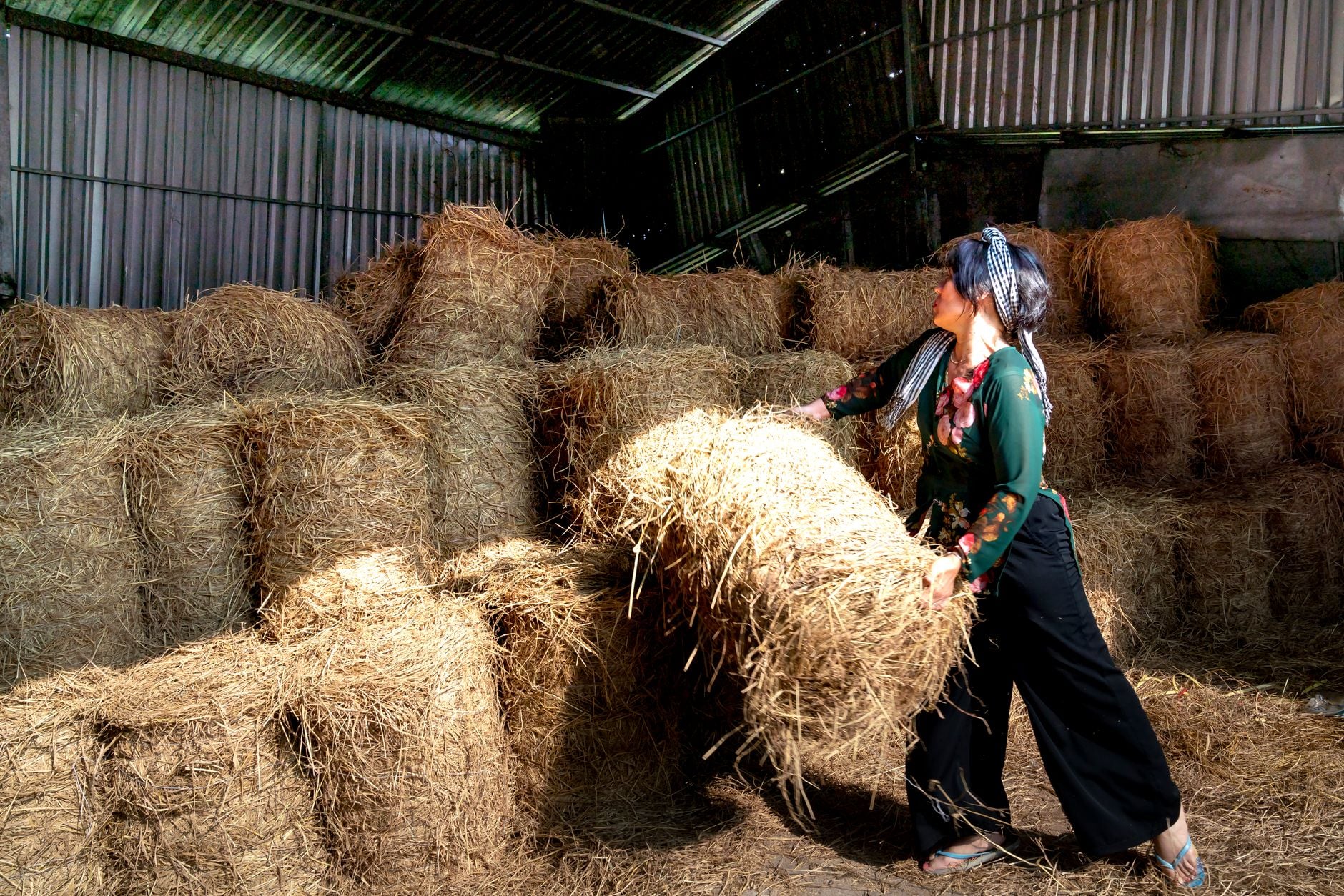
He had work gloves in his back pocket. He didn’t look at me. He walked straight past the porch to the hay barn, where Vern was on the rack and Caleb was up in the mow, and he stood at the bottom of the elevator.
Vern looked down at him. Darren looked up.
Neither one of them said anything for a while. Then Vern said, “You know how to stack?”
“Grew up stacking,” Darren said. “My dad’s place, south of Remsen.”
“Then get up there with him. He’s slowing down at the back of the mow.”
Darren climbed the ladder up into the loft.
I stood in the yard with those bars getting warm in my hands and I could not move. I could hear them up there. Not talking. Just bales, set and set and set, two pairs of hands now instead of one. Every once in a while one of them would say, “Got it,” or “Here,” and that was all.
They worked like that for five hours. When they came down at suppertime, both of them were soaked through and green with alfalfa dust, and Caleb’s face was a thing I can’t describe.
Darren went straight to the porch where Vern was sitting. He took an envelope out of his shirt pocket. It was a bank envelope, the white kind with the little window.
“That’s fifteen hundred,” he said. “It’s what I’ve got. I sold my shotgun and my boat motor. I’ll get you the rest.”
Vern didn’t reach for it right away. He looked at the envelope, and then at Darren.
“That’s not my money,” Vern said. “It’s his.”
“It’s the half I owe him,” Darren said. “He’s earned the other half already. I can count. I’ve been asking around about his hours.”
Vern took the envelope. He opened the green seed notebook against his knee and wrote something in it, slowly, and turned it so Caleb could see.
Caleb looked at it a long time.
Then he looked at his dad. Darren still couldn’t hold his eyes, not all the way. But he didn’t walk away either.
He stood there with the alfalfa stuck to his neck, and our son put out his hand, and Darren shook it like they were two men at the elevator. Then Darren pulled him in by the back of the neck, and held on, and I went inside to Marlys’s kitchen to get the plates. I needed something to do with my hands.
There were four plates that night.
The arithmetic
After Darren left, I sat on the porch steps with the green notebook while the men argued about whose turn it was to feed the cat.
The arithmetic had changed. Caleb had worked about a hundred hours at that point, which was fifteen hundred dollars. With his father’s envelope, the three thousand was paid.
“So he’s done,” I said to Vern quietly.
“He’s paid,” Vern said. “He’s not done. There’s still about six hundred bales on the forty, and rain coming Thursday.”
“He’ll want to finish them.”
“I know he will,” Vern said. “That’s why I didn’t tell him he’s paid.”
I looked at him.
“One more week,” he said. “Let him finish what he started. A man ought to get to finish.”