Three Summers in the Corn
The porch
“How are you on hay?” Vern said.
Caleb blinked. “Sir?”
“Small squares. You ever stack small squares?”
“I helped my grandpa some. When I was little.”
Vern nodded slowly, like that was about what he’d expected. He pushed the screen door open with his good arm and stepped out on the porch, and now I could see him plain: seventy-some, sunburned to the elbow, with a face that had been out in a lot of weather.
“I got third cutting down on the forty behind the barn,” he said. “Got more to bale yet.”
“Figure four thousand bales by the time it’s all in, give or take. I bale it fine. I can’t stack it. Shoulder’s shot.” He tapped his right arm. “Doctor in Sioux City says I need it done over. I say I need my hay in first. So I been doing about two hundred a night and it’s killing me, and the weather won’t wait.”
He looked at Caleb a long time.
“Fifteen dollars an hour,” he said. “Evenings after school and Saturdays. I’ll keep the hours in a book and you can check my arithmetic. When you’ve worked off what I paid, the truck’s yours. Until then, it stays parked right where it is, by the shed. You don’t drive it. You don’t sit in it. Deal?”
Caleb’s voice cracked on it, and he didn’t care. “Deal.”
“Then be here tomorrow at four thirty. Wear long sleeves. Alfalfa stems’ll eat your arms.”
“Yes, sir. I know about that.”
“I figured you might,” Vern said, and he looked at the gloves.
Then he looked at me, out in the grass. “You his mother?”
“Yes, sir. Angie Fritz.”
“Gene Haugen’s girl.”
“Yes.”
He nodded once. “Your dad sold me a bull in 1988 that was the best bull I ever owned. Tell him I said so.” And he went back inside.
The first night
I want to say I drove home crying. I didn’t. Caleb did, a little, quietly, with his face turned to the window, and I let him. I kept my eyes on the road and my hand on the wheel and I thought about my ex-husband.
I would like to tell you I thought charitable things. I didn’t, not that night.
But I did not call him. I did not post anything. I did not say a word to his sister, who works at the bank, or to his boss at the feedlot, whose wife gets her teeth cleaned at our office every six months. I had a whole small town of ways to make Darren Fritz feel small, and I used none of them. Caleb asked me not to.
“It’s between him and me,” he said in the car. “I don’t want people talking about my dad.”
So nobody heard it from us. They heard it anyway, of course. This is northwest Iowa. They always hear it anyway.
Stacking
Thursday at four thirty, Caleb was in Vern’s yard with a water jug and his long sleeves. I dropped him off on my way back from work and picked him up at eight thirty, when the light was going.
He came out to the car like he’d been beaten with a board. His shirt was soaked, there was alfalfa in his hair and down his collar, and his forearms were scratched up again in brand new places. He fell into the passenger seat and said, “He stacks like a machine. With one arm. He’s seventy-four, Mom.”
“Did he feed you?”
Caleb thought about it. “He gave me a Pepsi.”
That was the first thing I noticed about Vern Pohlman, and the thing I kept noticing. The man was not eating.
The second night I came early, a little after seven, and stood at the edge of the hay barn. They had a hayrack up against the open door and an old elevator running up into the mow, chattering away.
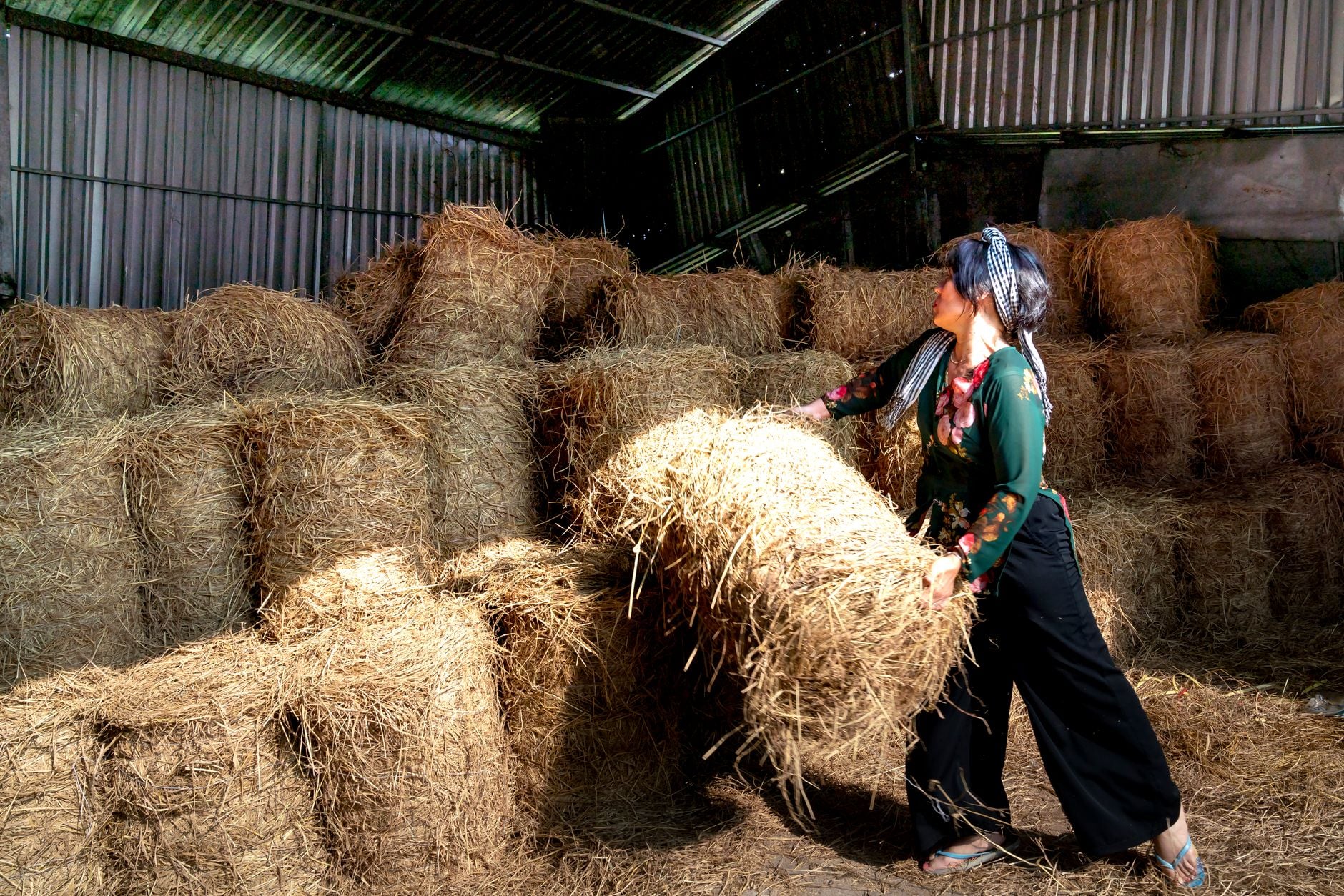
Caleb was up in the loft in the heat, catching bales off the top of the elevator and setting them in tight, row on row, the way you have to so they don’t slump and mold. Vern was on the rack feeding them on, one-handed, hooking each bale with his good hand and his knee.
They didn’t talk much. Every once in a while Vern would holler up something like, “Tie side out!” or “Lock that corner, crossways!” and Caleb would holler back, “Yes sir!” and you could hear him learning.
At eight they quit. Vern came down off the rack slow, the way an old man gets down off anything, and he went to the house, and through the screen I saw him stand at his kitchen counter and eat a sleeve of saltines with a slice of cheese. That was his supper.
I didn’t say anything that night. But I went home and thought about it.