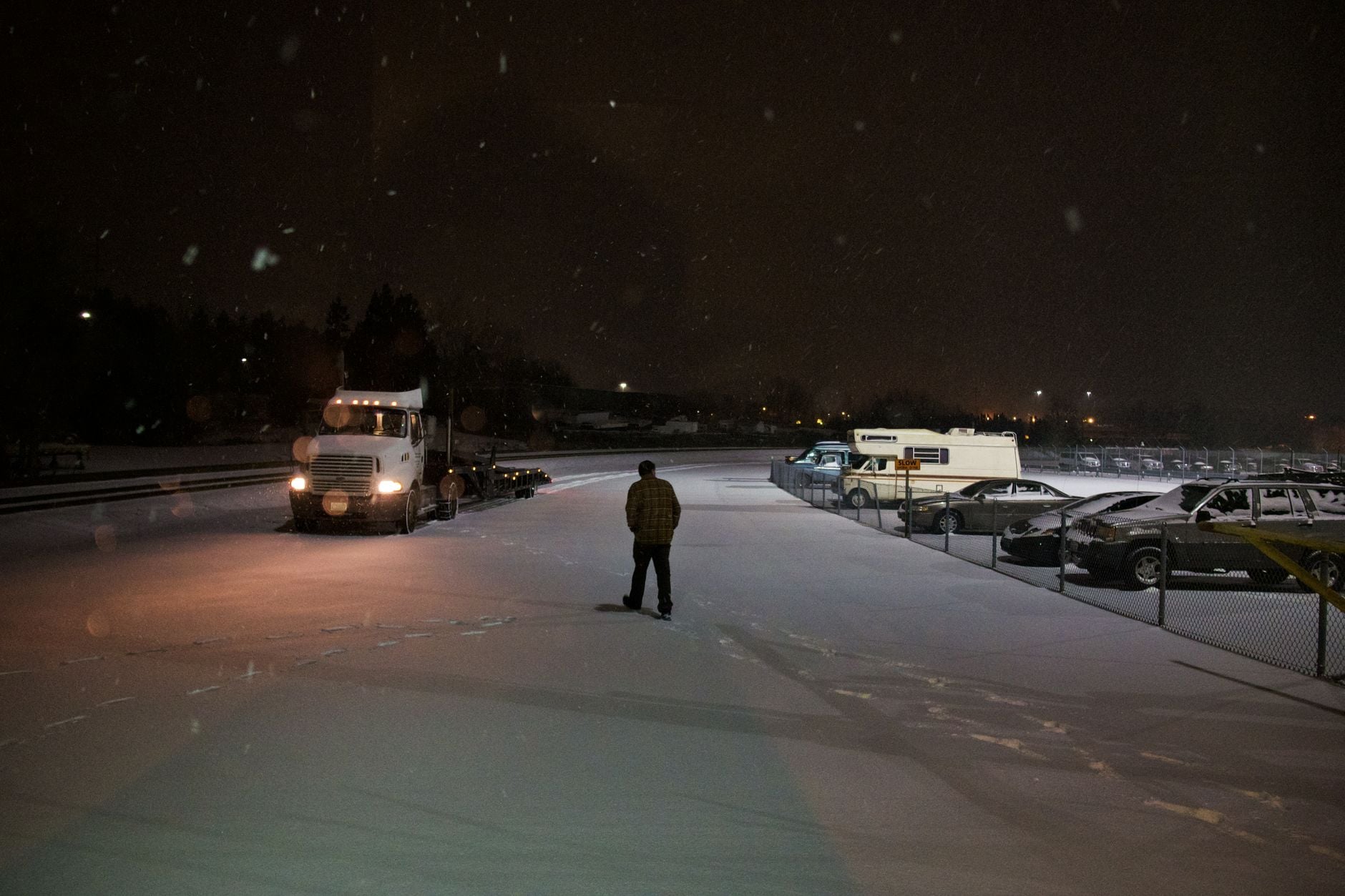
The Night I Towed His Cadillac Home
He looked down at himself like he had only just noticed. “I left it on the hook in Mankato.” He was quiet a second. “Margaret always handed it to me on the way out.”
Margaret had died the April before. Forty days in the hospital and the nursing home, and then she was gone, and Harlan had gone right on wearing a tie to the post office every morning like nothing had moved.
I unzipped my chore coat and took it off. The cold went straight through my coveralls to my ribs. I put the coat around his shoulders, and he stood still and let me do it, which told me more about how cold he was than anything he could have said.
“Get in the truck,” I said. “Heater’s on high.”
“I’ll wait with my car.”
“Harlan, you’ll wait in the truck, or Julie will never forgive either one of us.”
He looked at me for a long moment. Then he walked to the passenger door of the wrecker, holding my coat closed at his throat with one bare hand, and climbed up into the cab on the second try.
The hook
Before I hooked it, I leaned into the cab and asked him what the car had done. A lot of what I know about a breakdown I learn from how the driver tells it.
“The little red battery light came on past Good Thunder,” he said. “Then the radio quit. Then the dash lights went dim, and the headlights went yellow, and it coughed and quit.”
“That’s your alternator,” I said. “The battery ran the whole car till it couldn’t anymore.”
He frowned at me. “You can tell that from here?”
“I can tell that from how you said it.”
The DeVille is front-wheel drive, so I backed the wheel lift under the front tires, cranked the arms snug, and strapped both wheels down. I ran the safety chains to the frame. Then I opened the driver’s door and made sure the parking brake was off, because the back wheels would be rolling on packed snow for eleven miles.
The whole time, I could see his shape through the frosted back window of the cab, sitting very straight. He did not take his eyes off his car.
When I climbed in, he had his hands spread out in front of the heater vents. They were red and stiff. I turned the fan up one more notch and did not say anything about it.
“I didn’t call Julie,” he said, after the first mile.
“I know.”
“She’d have worried.”
“She’s worried anyway. Deb said your name, and Julie heard it.”
He was quiet for a while. The amber light went around and around on the snowbanks. Then he said, “I knew it would be you. When I called the county. I knew Gene quit nights.”
“You could have called the house.”
“No,” he said. “I couldn’t have.” He did not explain, and I did not ask. Some things a man has to say on his own clock.
At the Alder Creek turn, I asked whether he wanted to go home to his house on Elm Street or come to ours. “I’ll fix it in the morning,” I said. “You can sleep in Tyler’s old room.”
“Take it to your shop,” he said. “I want to watch you fix it.”
I almost laughed. Thirty-one years he had made sure I knew exactly what he thought of what I did with my hands. Now he wanted to sit and watch.
“It’ll take most of the night,” I said.
“Then it will take most of the night.”