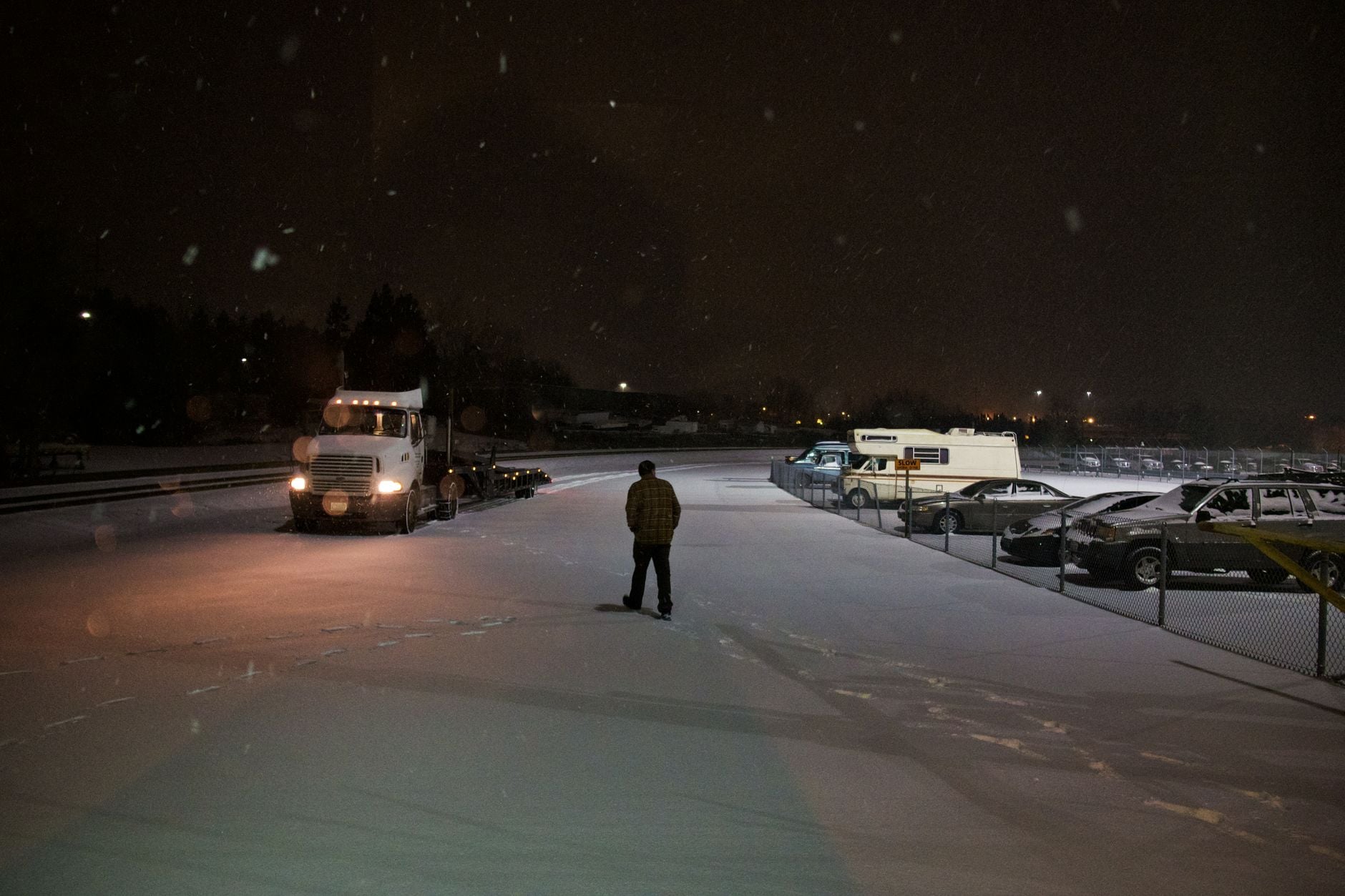
The Night I Towed His Cadillac Home
We take every call. Not most calls. Every call. He used to say a man in the ditch at midnight does not care what you think of him, and he should never have to find out.
There used to be two tow outfits in our county. The one in town quit running nights in November when Gene’s back went out, so from Thanksgiving on, after dark, it was me. If I did not go, nobody was coming for a long time.
Julie had heard her father’s name. She was up on one elbow. “Dad? What on earth is he doing out on 14 at midnight?”
“Bankers’ association dinner up in Mankato,” I said. “He told you about it Sunday. He goes every year.”
“I’m coming with you.”
“Stay by the phone,” I said. “If Deb calls back and he’s getting bad, you call Ron Petersen and have him drive down there with blankets. Ron’s a mile closer than I am.” She did not like it, but she nodded, because she knew it was right.
I pulled on my insulated coveralls over my long johns, then my stocking cap, then my Sorels, then my brown canvas chore coat with the corduroy collar. Julie had sewn a patch on the left elbow of that coat three winters running. It was twenty years old and it was the warmest thing I owned.
County 14
Our shop sits three hundred yards behind the house, and I keep the wrecker plugged in all winter, because a diesel will not turn over at fourteen below without a block heater. It is a 2004 Ford F-450 with a wheel lift, nothing fancy, but it has never once left a man in a ditch.
I let it idle two minutes for the oil to move, and then I went. The plow had been through County 14 at suppertime, and the snowbanks stood up on both sides higher than the hood. The road was packed white, and the cab lights threw amber across the drifts every second.
I saw his flashers before I saw the car. They were barely blinking, that weak orange you get when a battery is about done. It was his white Cadillac DeVille, a 1997, the one Margaret had picked out because she liked the color. He had kept it like a church pew for twenty-seven years.
When my headlights hit it, the driver’s door opened and Harlan climbed out slow, one hand on the roof. He was in his navy suit and his good fedora. That was all. No overcoat. No gloves. His shoes were the thin black lace-ups he wore to board meetings and funerals.
I got out with my flashlight. Our breath hung between us in the beam like smoke.
He squinted into the light and saw who it was, and his face did something I could not read. Then it set, the way it always did.
“Of course,” he said. “The mechanic.”
I had heard it a thousand times. For some reason, out there with his lips going pale, it did not land the way it used to. “Where’s your overcoat, Harlan?”