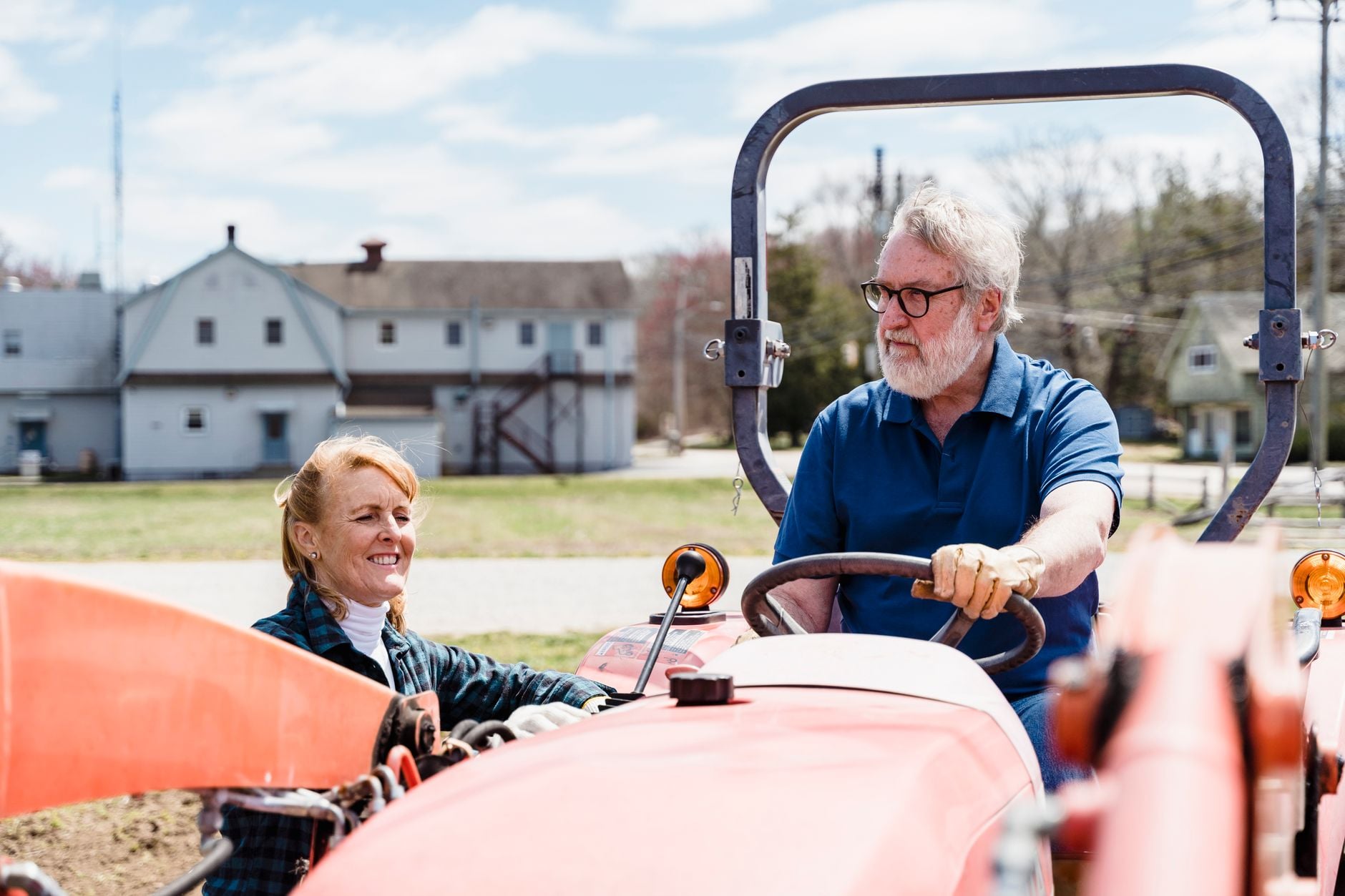
The Farmall That Plowed Us to Town
The blade on the front was a seven foot steel one his father bought used in the sixties. It raised and lowered off the tractor’s own hydraulics, with a lever by my right knee.
I had driven that tractor every winter for forty years. I had never driven it four miles in my life.
“It will start,” Gene said. “Choke all the way out. Short shot of starting fluid in the air cleaner. Short, Marlene, not the whole can. Then let her warm up a good ten minutes.”
“I know.”
“I know you know. I’m saying it because I can’t go do it.”
That was the hardest sentence I ever heard him say, and he said it plain, the way he said everything.
“How fast?” I asked.
“Second gear in the drifts. Third if it’s bare. Take a bite, back up, take another bite. Angle the blade so it throws to the ditch.”
He stopped for air. “And at the creek bridge, lift the blade a little. The deck’s higher than the road and you’ll catch the edge.”
I wrote it on the back of a church bulletin. I still have that bulletin.
“And you?” I said.
“I’m coming.”
“Gene.”
“I can’t ride that tractor in this air. I know that. But I can sit in the pickup with the heater going and drive in your track.”
He took a breath, and another. “I’m not sitting here alone watching a clock. And the tanks are in town. I’m going to be there when you get there.”
He was right. If I went alone and came back, that was eight miles of plowing. If he came behind me, that was four.
I went out to the shed.
I want to tell you about that tractor, because it matters to the rest of it.
In the summer of 1984 I was twenty-two and Gene was twenty-five, and I was walking beans for his father for four dollars an hour. Going down the soybean rows with a hoe, pulling weeds and volunteer corn. Every kid in the county did it.
On the last day of July, Gene drove up on that Farmall to bring us water. The other girls took their jugs to the shade of the truck.
Gene stayed on the tractor and patted the fender beside him. I climbed up and sat on it, which you are not supposed to do, with my hoe across my lap.
He did not get down on one knee. There was no room on a tractor fender. He just took a ring out of his shirt pocket, wrapped in a piece of Kleenex.
“I’ve been carrying this three weeks,” he said. “I don’t think I can carry it a fourth.”
I said yes before he finished the sentence.
There was a little dent in that left fender, just in front of where I sat. Gene always said I put it there with my hoe handle when I grabbed him. I do not remember that, but I never argued, because I liked the story.
In the shed that Tuesday morning, I put my hand on that dent before I climbed up. My glove was too thick to feel it, but I knew where it was.
love these stories. ❤️😎