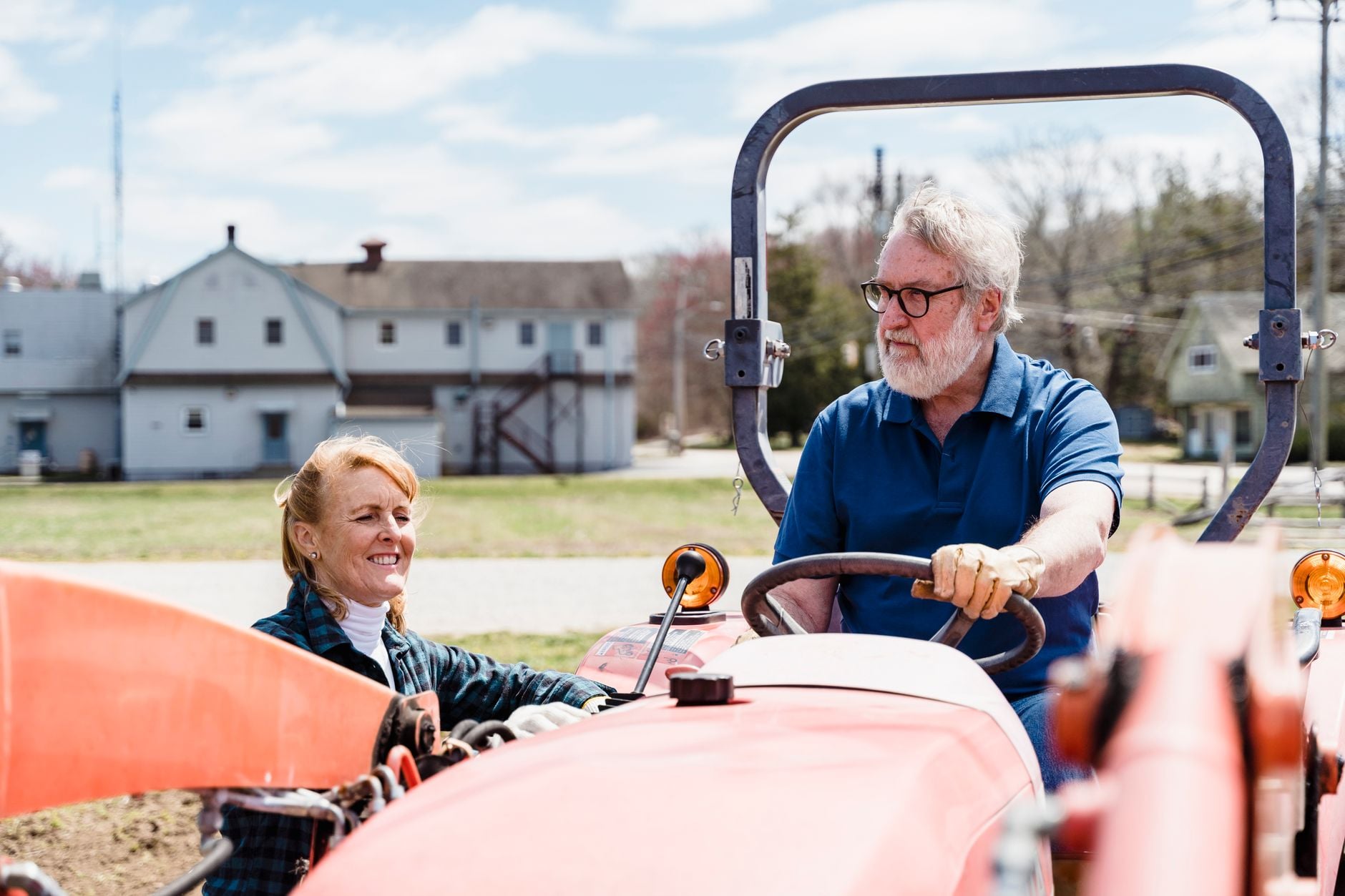
The Farmall That Plowed Us to Town
Dale Petersen taught agriculture at the high school for thirty years. When the bridge over the creek on our road washed out two springs ago, the county took fourteen months to replace it.
In all that time the school bus went eleven miles around. Dale was the one who stood up at the supervisors’ meeting every month and asked why. Lyle was on the board then, and Lyle kept saying the money was not there.
So when Dale ran against Lyle in November, I put up the sign. I did it because a little girl down the road rode that bus an extra forty minutes a day for over a year, and Dale was the only one who noticed.
Lyle lost by forty-one votes.
He came to Thanksgiving, because Gene’s mother would have skinned him otherwise, but he sat at the far end of the table and passed me the potatoes without looking up. At Christmas he did not come at all.
I understood some of it. Lyle had been on that board twelve years. Being turned out by your neighbors is hard, and being turned out while your brother’s wife has a sign on her crib is harder.
I did not blame him for being hurt. I just did not think a sign was a sin. I never took it down after the election, either. It was nailed up high, and then Gene got worse in December, and the sign was the last thing on my mind.
Gene’s lungs had been going bad for six years. Forty years of grain dust and hog barns and a pack a day until 1998 will do that. In the fall the doctor in Spencer put him on oxygen full time, two liters a minute.
The machine that made his oxygen ran on electricity. The storm took our power out on Sunday night, the way it always does out our way, and Gene’s little gas generator had been running the machine ever since.
For backup, the supply company in Spencer left us green metal tanks the size of a fire extinguisher. We were supposed to have six on hand. The truck was due Monday with the new ones. Monday, of course, the truck did not come. We had three.
Each tank, at Gene’s setting, lasted a little over five hours. I had done that arithmetic more than once.
The phone had been dead since Sunday night too. Cell phones barely work in our river bottom. On a good day you get one bar by the grove behind the machine shed, holding your arm up like you are hailing a cab.
The tower outside town lost power on Monday. After that, even the grove gave me nothing.
So there we sat, Gene in his recliner and me at the kitchen table, with Trent’s words still hanging in the kitchen like stove smoke.
“He’ll come tomorrow,” Gene said finally. “He was talking big at the shop. That’s all.”
“Maybe so,” I said. I went to bed wanting it to be true.
The generator quit at ten minutes after three in the morning.
I knew it before I was all the way awake. In a house where a machine has been breathing for your husband for four months, silence is the loudest sound there is.
love these stories. ❤️😎