The Week in March Nobody Wanted
The next March
Bobby met my brothers in April, at the bait shop, over coffee. Mark told me later he liked him right away, mostly because Bobby knew which drop off Dad fished and why.
He booked eight weeks of the following winter. All eight filled. Jim and the Iowa men came back in the week after mine and left a thank you card on the table signed by all six of them, and a sack of frozen sweet corn from Jim’s garden.
That fall, Mark and Steve put a new roof on the cabin. They hired a crew out of Deer River, and they paid for it out of the cabin account, and there was money left over.
And in the second week of March, a year after the calendar came into the group text, I drove up to the cabin with Scott on a Friday night.
Mark and Steve were already there.
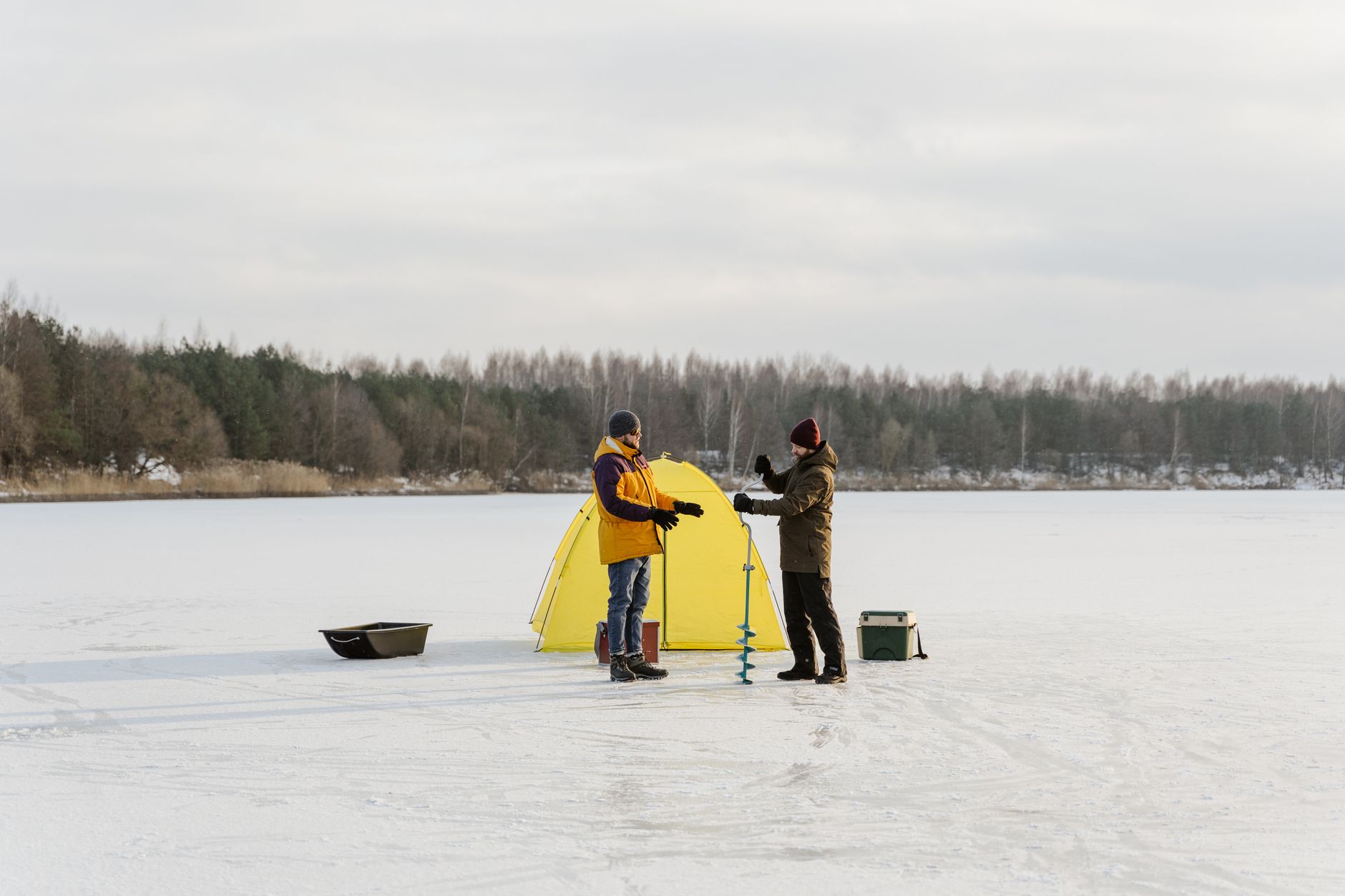
The fish house was already out on the ice.
Bobby had hauled it out of the trees the weekend before with his tracked machine. He and Steve had dug the runners out of the drift and checked them over.
Mark had put a new latch on the door and touched up the red paint. Steve had bought the shelter license at the bait shop and put the tag on the door himself, right where Dad’s old tags had been for thirty years.
It was sitting right over the drop off on the east end of the lake.
“Bobby said this is where your dad fished,” Steve said, standing at the window with his coffee.
“This is where he fished,” I said.
The thermos
On Saturday morning I made pancakes. Then the three of us put on our boots and our bibs and walked out across the ice, Mark and Steve and me, the way we had never once done together as children.
Scott stayed back at the cabin. He said somebody had to keep the wood stove going. I know that was not the reason.
It was a bright cold March day, eight degrees with no wind, and the snow on the ice squeaked under our boots. I carried Dad’s hand auger over my shoulder. I had kept it in our garage in Duluth since the funeral.
Mark opened the door of the fish house and stepped back so I could go in first.
It smelled the same. Coffee and wet wool and plywood and the faint ghost of minnows. My eyes went right to the little shelf Dad had built over the window, where he always kept his matches and his jig box and his thermos.
The thermos was there.
The green Stanley, the big one, with the dented cup screwed down on top. Steve had found it in the cabin’s back closet on a high shelf in the fall when they were tearing out the old roof boards. He had not said a word to me about it. He had just cleaned it out and set it on the shelf where it belonged.
“Steve,” I said.
“It was in the closet,” he said from the doorway. “I figured it lived out here.”
I took it down. It was heavy. It was full.
I unscrewed the cup and poured. The coffee came out steaming, with so much sugar in it that it ran slow, like syrup.
“I asked Scott how Dad made it,” Steve said quietly. “Scott said you’d know if I got it wrong.”
I tasted it. It was exactly right.
I stood there in Dad’s fish house in Dad’s mittens with Dad’s coffee, and I cried the way you cry when nothing is wrong at all.
Mark put his hand on my shoulder.
“Come on, Nicky,” he said, and it was the first time he had called me that since we were kids. “Let’s go see what the perch are doing.”