The Week in March Nobody Wanted
The cabin
The cabin sits on a small, clear lake up past Bigfork, north of Grand Rapids, on a gravel road the county plows when it gets around to it. Dad built most of it himself in 1979, a log cabin with two bedrooms, a sleeping loft, a wood stove and a propane furnace, and a picture window that looks straight down the lake to the east.
Mom made the curtains. Dad made the big pine table, with a crack down the middle he filled with epoxy, and every one of us learned cribbage on it.
Mom passed six years ago. Dad followed two years ago this past November. They left the cabin to the three of us in equal shares, and nobody fought about that part. The lawyer in Grand Rapids read it out and Mark said, “Well, that’s simple,” and it was.
What was not simple was the rest of it.
The property tax on a lake cabin up there is not small. Ours came to a little over $4,100 that first year, about what you would expect for a hundred feet of shoreline in Itasca County.
We split it three ways. My share was $1,367 and change, and I paid it in two halves, in May and October, out of the account where I keep my pharmacy paychecks.
I have been a pharmacy tech at a drugstore in Duluth for nineteen years. I count pills and run insurance and talk to people on the worst days of their lives. It is good work. It is not the kind of work that leaves an extra $1,367 lying around.
I paid it anyway. I would have paid twice that. It was Dad’s cabin.
But I will tell you what it feels like to pay a full third of the taxes on a place and get one week of it, and that week the one where the dock is stacked on the shore under four feet of snow.
It feels like being a guest who pays rent.
Why it was March
Here is what my brothers did not know when they handed me that square on the calendar, and what I did not tell them for almost four months.
March was Dad’s month. Mine and Dad’s.
When I was nine years old, Mark and Steve both played hockey. They were good, too, the kind of good where March in a Minnesota hockey family means section playoffs and tournaments in Hibbing and Duluth and Bemidji. Mom drove them. Every weekend, every rink, a thermos of hot chocolate and a stadium blanket.
Which left me and Dad.
The first year, I think he took me to the cabin only because he did not know what else to do with a nine-year-old girl for a weekend.
He made pancakes on Saturday morning. Then he handed me a pair of his old wool mittens, which came halfway to my elbows, and said, “Come on, Nicky. Let’s go see what the perch are doing.”
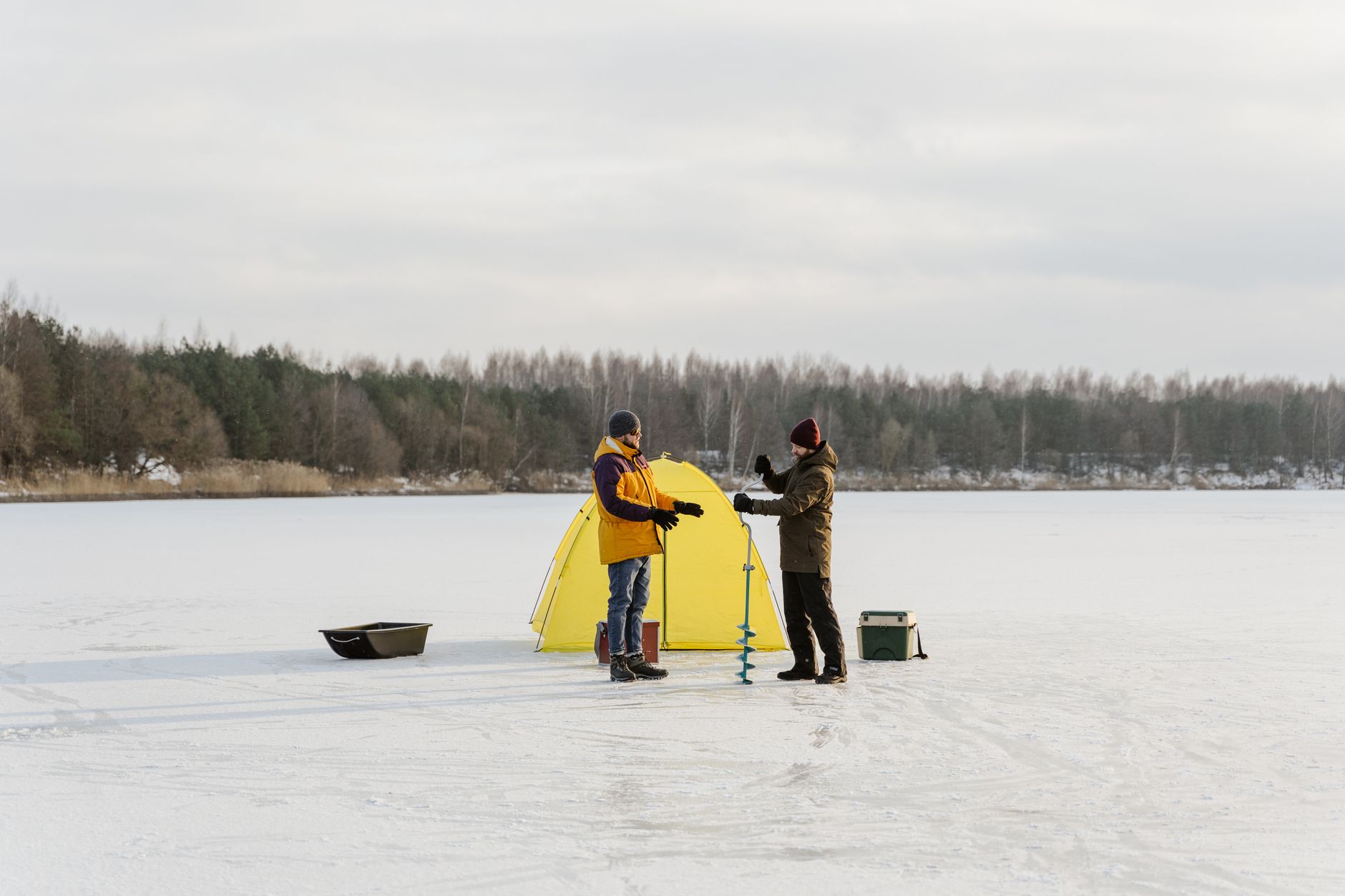
He had built a fish house out of two by fours and plywood, painted barn red, with oak runners and a little window and a tiny propane heater. It was six feet by eight, and it smelled like coffee and minnows and wet wool. We sat in there for nine hours.
I caught eleven perch that day. He caught four. He said I was a natural, and I believed him for the rest of my life.