The Week in March Nobody Wanted
Why
Mark was the one who finally said it. I will give him that. It is not easy for a man like Mark to say the true thing out loud at a table full of people.
“We thought you didn’t care about the place,” he said.
I didn’t say anything. I let him go on.
“You moved to Duluth,” he said. “You stopped coming up for the dock weekends. You missed the shingle job. When Dad got sick, Steve and I were the ones up here every weekend mowing and shoveling and fixing the pump. And you’d come up for a day, maybe two. We figured you’d made your life somewhere else.”
“So you gave me March,” I said.
“We gave you March.” He shook his head. “I thought it was funny. I’m sorry, Nic. I thought it was funny.”
“I know you did.”
Steve was looking at me now, really looking, the way he used to look at me when we were kids and he had broken something and was trying to figure out if I was going to tell.
“Why’d you say thank you?” he asked. “In the text. You said thank you. That’s what’s been bugging me. I figured you’d blow up. You just said thank you.”
I looked over at Scott. He gave me the smallest nod.
So I told them.
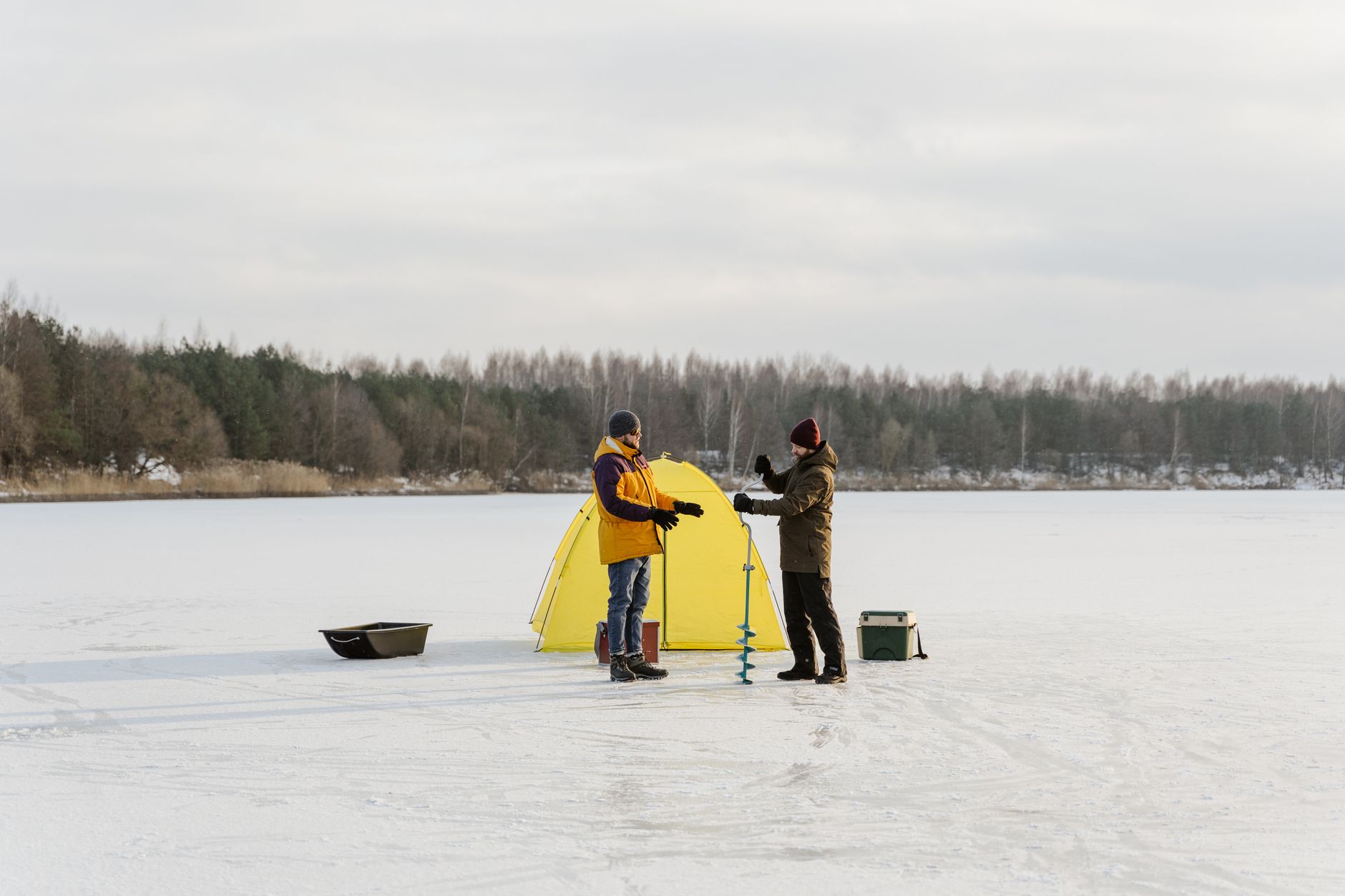
I told them about being nine years old in Dad’s mittens. I told them about the barn red fish house and the eleven perch.
I told them about the green Stanley thermos and the coffee so sweet it made your teeth hurt, and “He was not good enough to clean your fish.”
I told them that every second week of March from the time I was nine until the time I got married, while they were in hockey rinks in Hibbing and Bemidji with Mom, Dad and I were out on this lake in that fish house, just the two of us.
“You gave me Dad’s week,” I said. “You didn’t know it. But you did. So I said thank you, because I meant it.”
Steve’s eyes had gone red. He is the soft one. He always was.
“I didn’t know,” he said. “I swear, Nic. I thought you two were just at home.”
“I know you didn’t know. Nobody ever asked.”
Mark didn’t cry. Mark does not cry. But he reached across Dad’s table and put his big hand flat on top of my notebook, the way Dad used to put his hand on top of the cribbage board at the end of a game, and he left it there.
“I’m sorry,” he said again. “For the calendar. For the joke. For the vote last spring. All of it.”
“Thank you,” I said.
“Don’t say thank you,” Mark said, and for the first time all day, everybody at the table laughed.
The new calendar
Mark got a pad of paper out of the kitchen drawer and drew the calendar again, right there at the table. This time he used one pen for all of us.
“Rotation,” he said. “Like you said last year. Everybody picks one week, round and round, and next year we flip the order.”
“Nic picks first,” Steve said.
“Nic picks first,” Mark agreed.
I sat there with the pen in my hand for a while.
“The Fourth of July,” I said finally. “I haven’t been up here for the Fourth since Dad bought the pontoon. I’d like Scott to see the fireworks off the end of the dock.”
Mark wrote my name in the Fourth of July square without a word. I know that was his week. He had it every year since Dad passed.
“And I’ll keep March,” I said. “If nobody minds.”
“Nobody minds,” Steve said.
We went around the table. Mark picked the third week of June. Steve picked his deer week. I picked a week in August. Kelly made a case for Labor Day and won it. By the time we were done, it was a real calendar, fair and even, and every square had a reason.
Then we talked about Bobby.
Mark wanted to meet him before anybody said yes, which was fair. We agreed that the winter weeks would go into one account at the bank in Grand Rapids, three names on it, and that Kim at the insurance agency would get a call on Monday to set it up right.
Before we left, Mark walked out back with Scott, and they stood by the woodshed in the snow looking at Dad’s old fish house for a long time.
“Those runners are still good,” I heard Mark say.
“That’s what I said,” Scott told him.