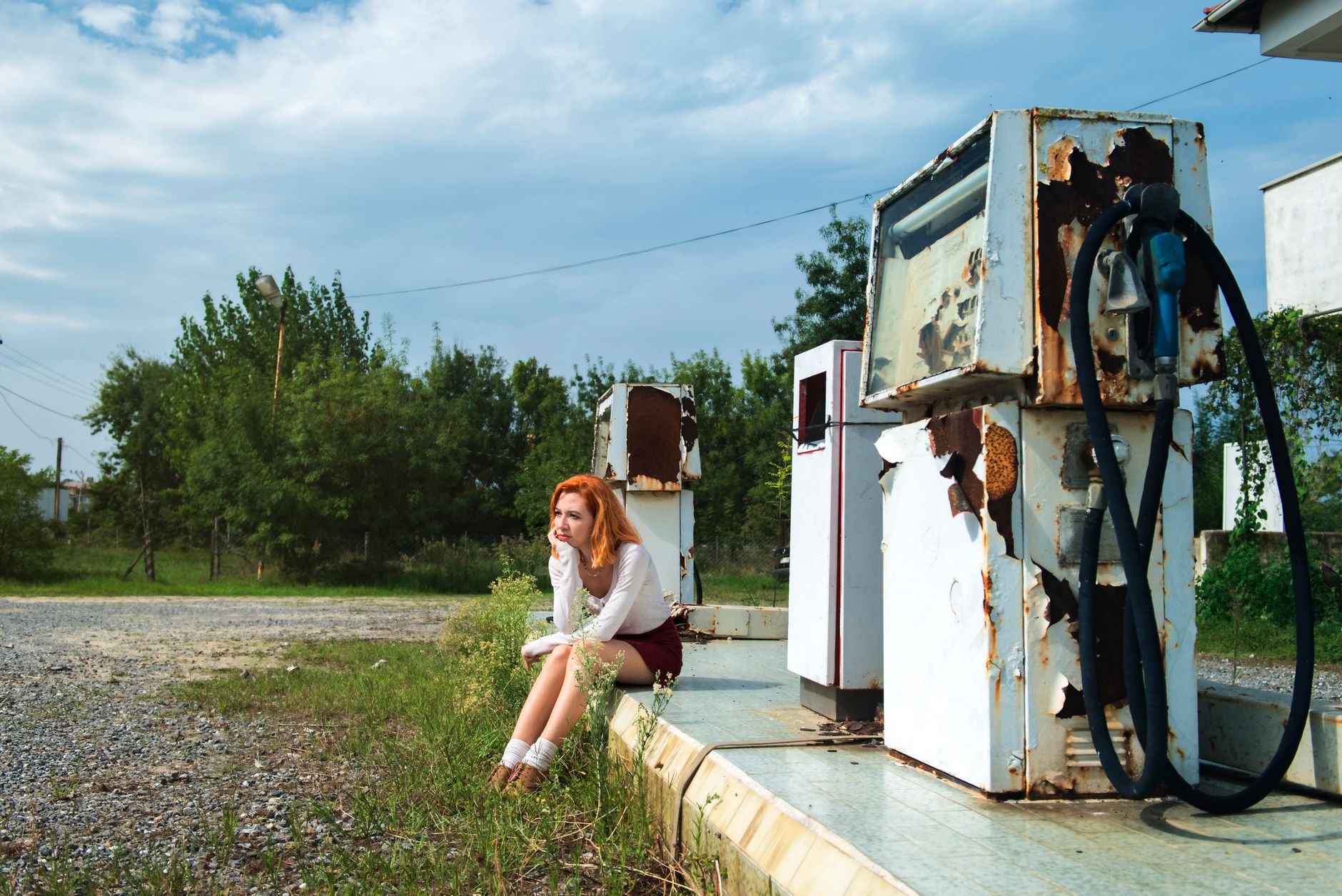
The Lights on Route 9
Harvest
October in the Red River Valley is the busiest month of the year.
The beet harvest starts the first of the month, and soybeans come off at the same time, and the corn comes right behind. Trucks run day and night. Men eat in their cabs.
What I did not understand, until I was standing behind that counter, is that the nearest place to get fuel and a hot meal between Nordby and Larsen was twenty-two miles of road.
For two years, every harvest crew in that stretch had been doing without.
By the second week, the beet trucks were pulling in at four in the morning, and I was opening at four to meet them.
I started making egg bake and caramel rolls in the oven upstairs. I made sloppy joes in a roaster for lunch, the kind you call barbecues around here, and a pan of bars every afternoon.
Emma ran the register after school. She was fourteen and quicker with change than I was.
Jack stocked the cooler and wiped down the stools and asked every farmer what he was hauling and how many bushels it was going, and they told him, because nobody can resist an eleven-year-old who wants to know yields.
And every morning at six, Arvid walked across the gravel in his cardigan and sat in his old chair by the front window with a cup of coffee he did not let me charge him for.
He told the beet drivers which roads would wash out in a hard rain. He told the young guys whose fathers he had known how their fathers used to drive. He told Jack about the winter of 1997.
“He’s better than the radio,” one of the drivers told me. “And he’s free.”
I made my first $310 payment to Arvid on the first of November, in cash, in an envelope. He took it and put it in his cardigan pocket and said, “Well, that is one.”
Dale
The first two weekends, Dale picked the kids up at the edge of the lot and honked. The last weekend in October, he pulled in to the pumps instead. He did not get out of the truck right away.
He sat in his pickup at pump one with the engine running and looked at the canopy and the pumps and the window upstairs.
Then he came in. The station was half full, harvest crew and a couple of retired men at the counter.
Everybody knew Dale. Everybody knew everything. The room went quiet the way a room does at a funeral when the family walks in.
“Kids ready?” he asked.
“Five minutes,” I said. “Jack’s finding his other boot. Coffee?”
He looked at the urn. He looked at Arvid in his chair. “No,” he said. Then, lower, so only I could hear: “You know you’ll be broke by spring. You know that. A station out here in the middle of nowhere. You’ll have the kids living over a gas station when the furnace quits.”
“It might,” I said. “Arvid says it quit in 1979 too, and they got through.”
He did not have anything to say to that. The kids came down. Emma walked past him without hugging him and got into the truck.
Jack hugged him, because Jack hugs everybody, and Dale held on a second longer than he needed to.
I watched them pull out onto Route 9. I was not angry anymore. I was only tired, and sorry, and very busy.