The Lights on Route 9
The money
I want to tell you exactly how the money worked, because I know some of you will wonder, and I would wonder too.
I did not have forty-eight thousand dollars. I had the $19,000 from Dale and about $4,100 in a savings account that was mine from the years I worked lunch at the school before Jack was born.
I tried the bank in Larsen first. Not Farmers State. I could not walk in there and sit across from Kelsey. The loan officer in Larsen was polite.
He said a closed station with underground tanks and no operating history was not something they could lend on, not to a woman with no income on paper. I thanked him and meant it.
When I told Arvid, he did not even blink.
He said he would carry the paper himself, on a contract for deed, which is how half the land in this part of North Dakota has changed hands for a hundred years.
“Nineteen thousand down,” he said. “And the rest over ten years. Three hundred ten a month. If you miss one, you call me and we figure it out. If you miss three, I get my station back and you get my sympathy.”
He stuck out his hand. I shook it.
We had the abstract company in the county seat draw up the contract the next week, because his nephew insisted, but as far as Arvid was concerned the deal was done in his driveway.
“Why would you do that for me?” I asked him on the way back to my car.
“Because I would rather see the lights on,” he said. “Two years I have looked out my kitchen window at a dark station. It is like having a dead tooth in your mouth.”
The tanks
The tanks were the part I was scared of. Everybody had told me the tanks were the part that would sink me.
Arvid had pulled his old steel tanks in 1993 and put in two double-walled fiberglass tanks, one for regular and one for diesel, 6,000 gallons each.
He had every paper on them in a shoebox, in order by date. He was that kind of man.
But a station that has sat closed for two years does not just open. The tanks had to pass a tightness test and the line leak detectors had to be tested, and the state inspector had to come out from Bismarck and sign off.
The test company out of Fargo charged me $1,450. The inspector came on a Thursday in a state car and spent three hours with a clipboard.
He passed us. He also told me the pumps were older than he was, which was true, and that I should keep a close eye on the diesel nozzle, which was also true.
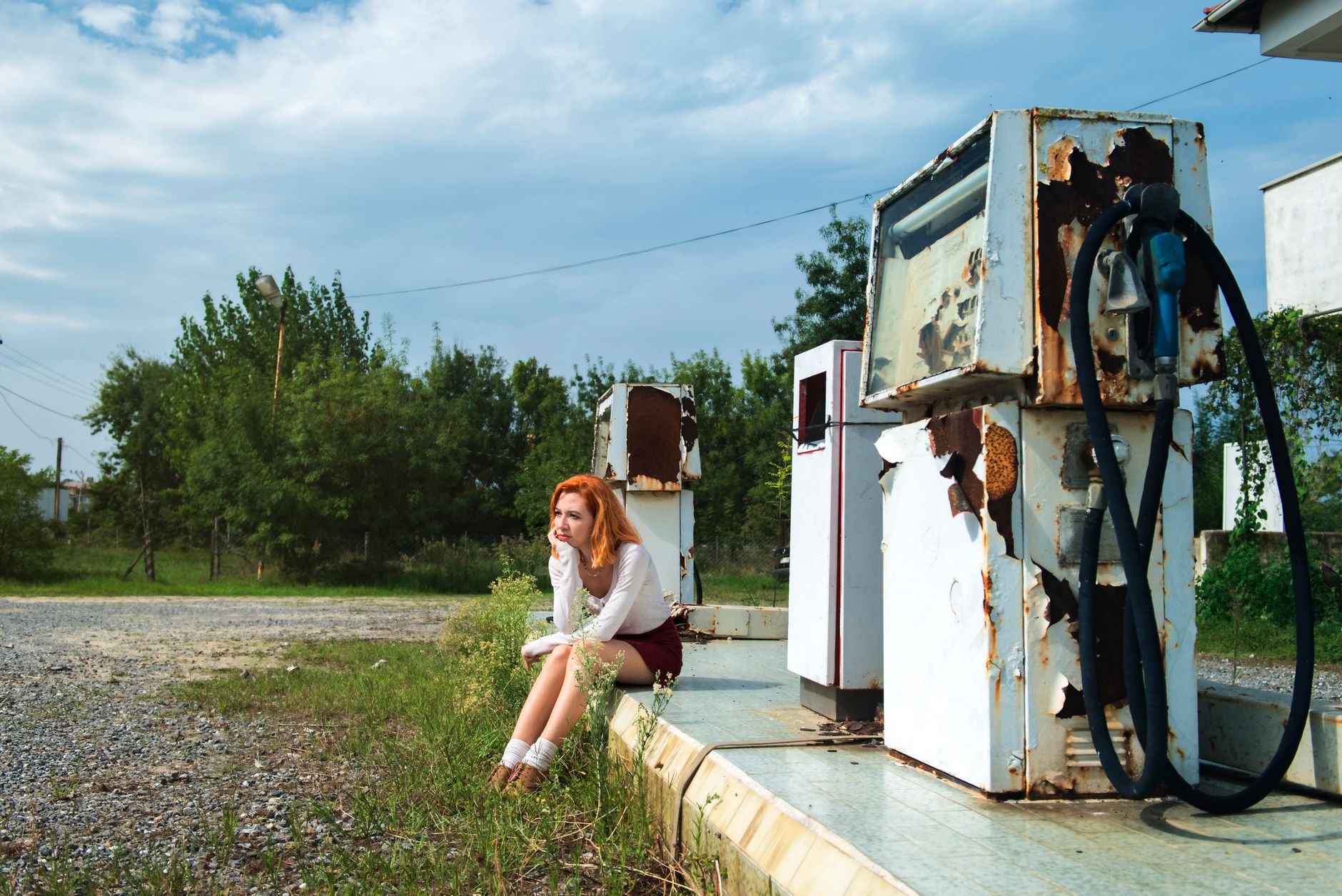
There were no card readers on those pumps. I could not afford new dispensers, which run more than most people’s houses. So we did it the old way.
You pumped, you came inside, you paid at the counter. I bought a used card machine off a café that closed in Larsen for $200.
The fuel came from the co-op. They wanted cash on delivery from a new account, and I did not have cash for a full load.
Arvid got in his Buick and drove to Nordby and sat in the co-op manager’s office for forty minutes. I never asked what he said. The co-op gave me ten-day terms on my first load.
I also needed a food license from the state to sell coffee and pie, which meant a sink inspection, a thermometer in the pie case and a lot of paperwork.
I had kept the books on a 640-acre farm for sixteen years. Paperwork did not scare me.