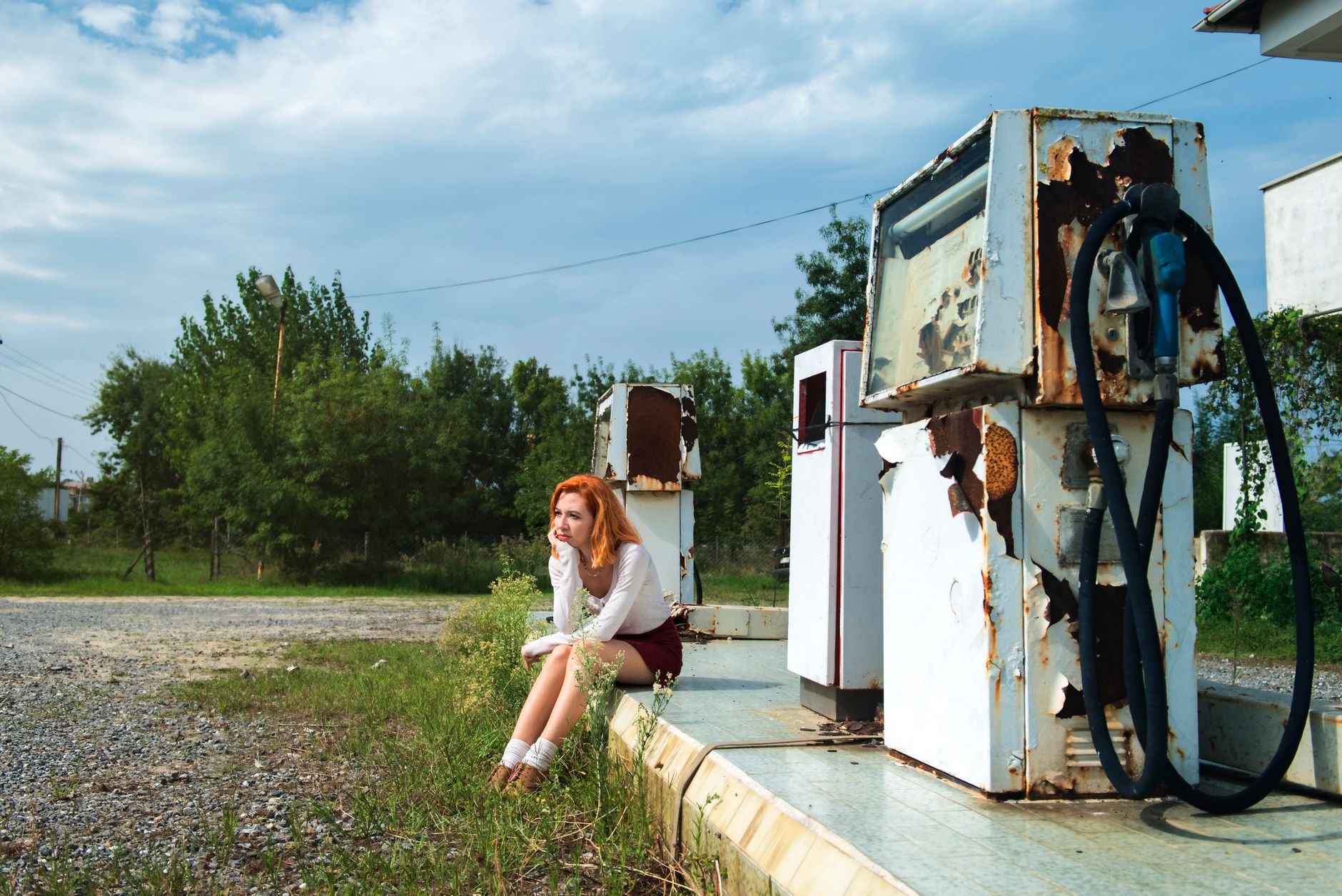
The Lights on Route 9
The counter
We moved our beds and the kitchen table up the station stairs the last week of September, and we scrubbed that station for three weeks. I say we, because the kids did as much as I did.
Emma took the pie case. She took every shelf out and washed it in the claw-foot tub upstairs, and she found a 1987 penny stuck in the track that she kept in her pocket for the rest of the fall.
Jack swept. He swept the station floor and the stairs and the apartment and the canopy and, one afternoon, the gravel lot, until I told him gravel did not need sweeping.
“Grandpa Hanson said it did in 1966,” Jack said.
That was the first time he called Arvid that. Arvid was sitting in his old wooden chair by the front window, the one with the flattened plaid cushion, and he heard it.
He did not say anything. He just looked out at the road for a while.
The coffee counter was the worst of it. Two years of dust had settled on old grease and turned into something like varnish.
I scrubbed it with baking soda and dish soap and, finally, with oven cleaner and a putty knife. My hands were raw by the end of the week.
On the last night, I was down on my knees scraping the brass footrail under the stools, and Arvid said, from his chair, “Look under the lip there. By the third stool.”
I looked. Scratched into the underside of the counter, low, where nobody would ever see, it said A.H. OPENED JUNE 1 1966.
“I carved that the night before I opened,” he said. “I was twenty-one years old, and I had borrowed every dime, and I was scared to death nobody would come.”
I sat back on my heels on that cold linoleum and cried, harder than I had cried in the whole divorce.
Arvid let me. He did not get up or pat me or say anything. He just waited, the way old farmers wait out weather.
“Well,” he said, when I was done. “You will want to leave that one.”
I left it.
Five in the morning
We opened on the first Monday in October.
I made the coffee at 4:30 in the big urn, and at 4:50 I put three pies in the case: apple, sour cream raisin, and a pumpkin, because it was October and you have to.
At five o’clock I turned on the canopy lights. I had replaced every tube in them with new bulbs from the hardware store in Larsen.
For the first time in two years, the corner of Route 9 and the county road lit up white against the dark.
I stood behind the counter in my red barn coat because the furnace had not caught up yet, and I waited. Nobody came. It got to be 5:15, then 5:20. I started to feel foolish.
At 5:24, headlights came down Route 9 from the north and slowed. A blue Chevy pickup with a toolbox across the bed pulled up to pump two.
The man who got out was about seventy, in a seed cap and insulated bibs, and he stood there looking up at the lights like he was not sure they were real.
He came inside. He looked at the counter, the coffee, the pie case. He took off his cap.
“Arvid sold it,” he said.
“To me,” I said. “I’m Carrie. Gas is inside pay.”
“Don Severson,” he said. “I’ve farmed two miles west of here since Nixon. I bought gas here every day for forty years until Arvid closed, and then I had to drive into Nordby, which takes me twenty minutes I don’t have in October.” He looked at the pie case. “Is that sour cream raisin?”
“It is.”
“Then I’ll have a slice of that and a cup of coffee and forty dollars on pump two,” he said. “And I’ll tell everybody.”
He did tell everybody. Don Severson was the first, and then by seven o’clock there were four more pickups, and by noon I had sold out of every pie I had made.