The Grain Truck Past My Father’s Field
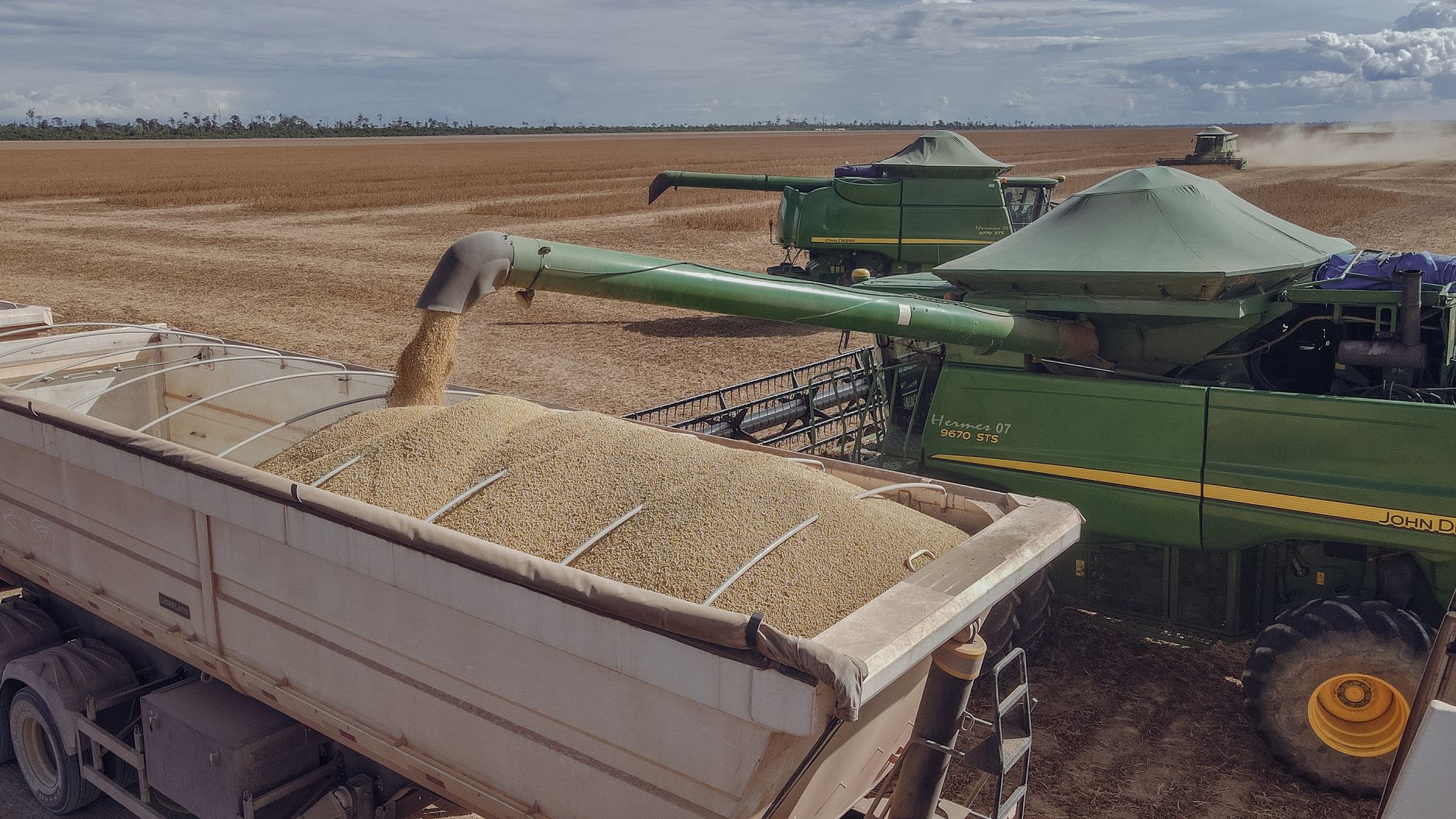
The co-op elevator in town sits by the railroad tracks with its white concrete bins standing up over everything, the tallest thing in forty miles. At harvest, the trucks line up on the street from the scale house back past the Casey’s. You sit, you inch forward, you sit some more. A good morning is twenty minutes. A bad afternoon is two hours.
On that first Tuesday I made four trips. On my second trip, around eleven, I passed Dad’s field again going back out, and the combine was sitting still in the middle of the beans with the unloading auger folded. The white Ford was gone. Cody’s Chevy was gone.
Dad was standing beside the combine with his hands on his hips.
I drove past at thirty-five. I did not look away from the road. My hands were shaking so hard I had to grip the wheel at ten and two like a student driver.
That afternoon, after my third load, I pulled over on the section road beside Marv’s field to wait for Tyler to fill the hopper again. I got out to stretch. The light had gone gold the way it does in October about four o’clock, and the dust from the combine hung over the stubble.
I stood by the open door of Marv’s truck with my gloves in my hand, and I looked across the creek toward Dad’s eighty. The combine was moving again, slowly. Somebody had gotten the Ford back.
I found out later it was Dad himself. He had climbed down off the combine, walked to the Ford, and driven his own beans to town.
Wednesday
I want to tell you I felt good. I did not.
I lay awake Tuesday night with Aaron snoring beside me and thought about my father driving the Ford into town at sixty-six years old, with his bad knee, while his combine sat in the field. I thought about him in the elevator line, losing an hour of daylight. I thought about how easy it would be to call him and say, Dad, I’m sorry, I’ll come back.
And then I thought about Emma, who is nine and watches everything.
At supper on Tuesday she had asked me why I was driving Mr. Ostendorf’s truck instead of Grandpa’s.
I had told her the truth. “Because Mr. Ostendorf pays his drivers.”
She thought about it. “Doesn’t Grandpa?”
“He pays Uncle Cody.”
“Why not you?”
I did not have an answer that I wanted my daughter to hear. So I said, “That’s what I’m trying to find out,” and she nodded like that made sense, and went back to her macaroni.
I was not going to teach my daughter that the girl hauls for free. Not with my own two hands on the wheel.
So on Wednesday I went back to Marv’s at seven.