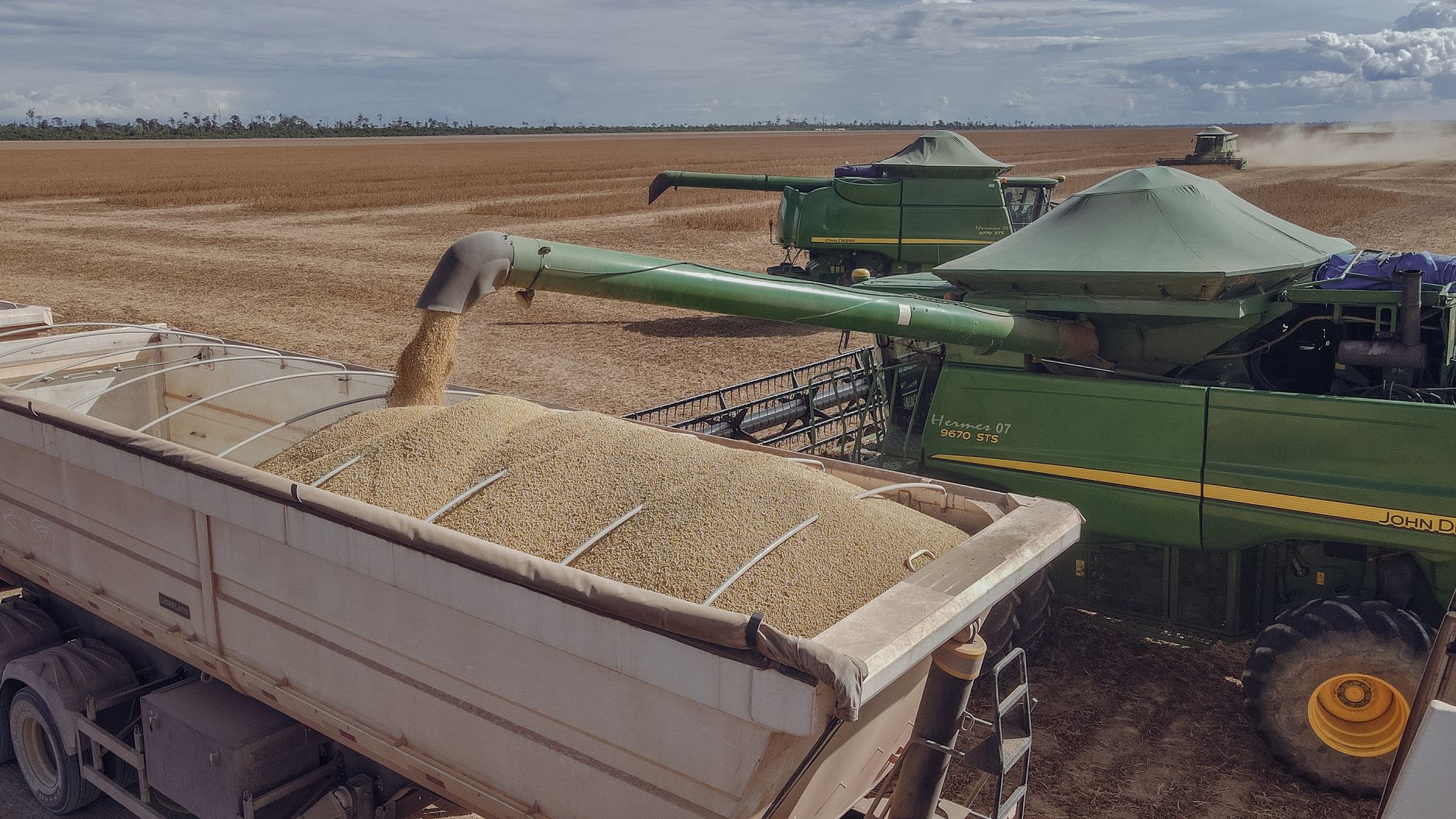
The Grain Truck Past My Father’s Field
Fourteen harvests
I should explain who I am, so you understand why I did not just laugh it off.
My name is Kelsey Riedel. I kept my name when I married Aaron, mostly because Dad liked having a Riedel on the truck. I am thirty-six. I work three days a week as a vet tech at the clinic in town, mostly calves and dogs, the occasional barn cat that has met a fan belt.
I grew up on this farm in central Nebraska, four miles of gravel from the nearest blacktop. We farm about eleven hundred acres, corn and beans in rotation, and most of it is ground my great-grandfather broke with horses.
I started driving the grain truck the fall I turned twenty-two. I had just come home from Kearney with an animal science degree, and Dad’s hired man had moved to Grand Island for a job at the packing plant. Dad needed a driver. I needed something to do until a clinic job opened up.
“Just this fall,” Dad had said. “Until I find somebody.”
He never found somebody, because he never looked. I was somebody.
The truck was a white Ford L9000 tandem with a twenty-foot box and a roll tarp that stuck on cold mornings. It held about six hundred bushels of beans, a little more of corn.
I learned to back it under the auger at the home bins in one try, and I learned to sit in the elevator line in town with the window cracked and a thermos of coffee between my knees.
Every October and into November, I took my vacation days from the clinic. When I had babies, I hauled with an infant seat strapped in the passenger side and a bottle warming on the dash vent. When Emma was four and Wyatt was a baby, Mom watched them in the farmhouse while I drove, and I nursed Wyatt in the cab at the field edge while Dad’s combine filled.
Fourteen harvests. I never once got a check.
I never asked, either. That is the honest part. The first year, Dad slipped me two hundred dollars in a feed store envelope at Thanksgiving and said, “Gas money.” The second year it was a hundred. By the fifth year there was no envelope, and nobody mentioned it, and I did not either.
Because in our family, family does not get paid. That is what Dad said the one time Aaron raised it, about eight years ago, at a Fourth of July picnic with a beer in his hand.
“Family doesn’t get paid, Aaron,” Dad had said, not unkindly. “Family gets the farm.”
Aaron had looked at me, and I had looked at the potato salad.
The answer
So that Sunday at the table, when I asked what about me, I already knew some version of the answer. I just wanted to hear him say it out loud with the payroll sheet between us.
Dad took his glasses off his forehead and folded them. He does that when he is about to say something he has already decided. “Cody has a family to support,” he said.
There was a little silence. Cody’s wife, Jenna, looked down at the baby. Cody kept cutting meat that was already cut.
“I have two kids, Dad,” I said.
“You have Aaron.”
“Cody has Jenna. Jenna works at the bank.”
“That’s different.”
“How?”
He did not answer that. He picked up his fork. Mom set a basket of rolls on the table harder than she needed to, and the rolls jumped. Cody’s baby started to fuss.
“I’m not asking you to take anything from Cody,” I said. “I’m glad he’s getting paid. I am. I’m asking if I’m getting paid too.”
“You’ve never been paid,” Dad said, like that settled it. Like the thing that had always been true was the reason it had to stay true.
I want to be fair to him here, because he is my father and I love him. He did not say it to be cruel. He said it the way he says the ground is too wet to plant. A fact about the weather.
But it landed like weather, too. It landed like hail on a field that is three days from cutting.
“Okay,” I said. I finished my pot roast. I helped Mom with the dishes. I loaded Emma and Wyatt into the car and drove the mile home on the section road, and I did not cry until the kids were in bed.