The Grain Truck Past My Father’s Field
The section road from Marv’s place to the cemetery quarter runs straight east for two miles and passes the eighty acres my father has farmed since he was nineteen. There is no other way to get there unless you want to go eleven miles around on the highway.
I pulled out of Marv’s yard at ten after seven. The sun was coming up behind the trees along the creek, and the dust off the gravel hung pink in the air behind me.
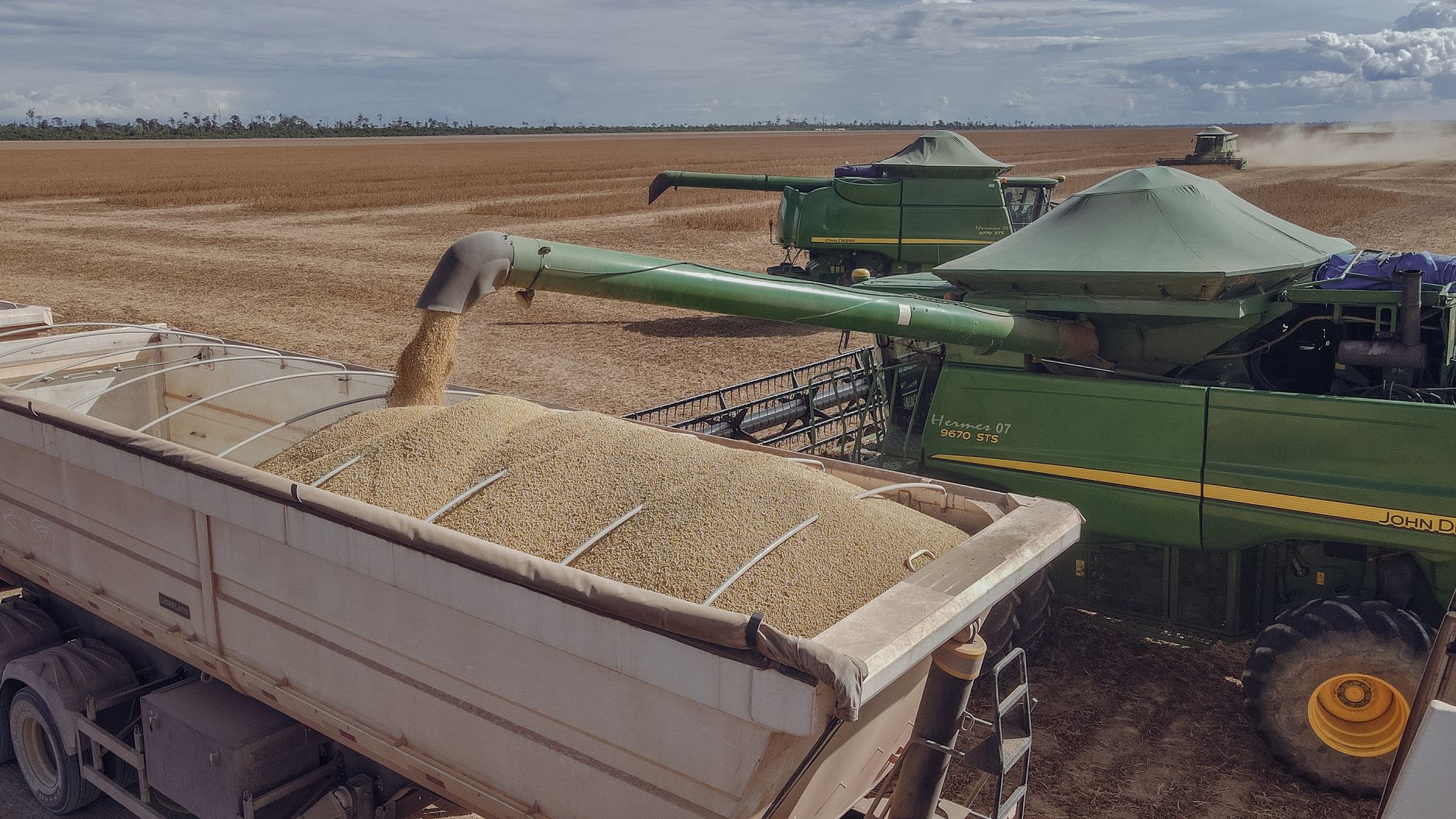
I could see Dad’s combine from a mile away. The green John Deere, the header down, eating its way along the first rounds of the beans. I could see the white Ford parked at the field edge. My truck. Waiting with nobody in it.
As I got closer I saw Cody in the old single-axle Chevy, pulled up behind the Ford, with the auger wagon hitched. I saw Dad’s cap through the combine glass. I saw him turn his head when he heard a truck on the road.
I did not wave. I did not honk. I did not slow down and I did not speed up. I held Marv’s red International at thirty-five miles an hour on the gravel, the speed I always drove that road, and I went past my father’s field with both hands on the wheel.
In the side mirror, I watched the combine stop.
The first day
It is hard to explain to somebody who has not done it how a harvest works, so let me try.
A combine can only hold so much. Dad’s John Deere holds about three hundred bushels in the hopper. When it fills, it has to unload into something, or it stops. On our farm that something was always my truck, parked at the field edge or creeping along the end rows.
When my truck was full, I drove it to the co-op in town, eleven miles, waited in line, dumped, and came back. Meanwhile Cody hauled the old Chevy to the home bins and ran the auger to fill them. That is the whole system. One combine, two trucks, two drivers, and the auger in between.
Take one driver out, and the system does not just slow down. It stops. The combine fills and has to wait. Cody cannot be in two places. He cannot drive the Ford to town and stand at the auger at the home bins at the same time.
I knew all of that on Tuesday morning. I had known it for fourteen years. That was what I had been worth to my father, in bushels, every fall, and he had never once said it.
Marv’s grandson Tyler ran the combine like a kid who had been driving one since he was twelve, which he had. Marv rode along with him for the first hour, then climbed down and stood at the edge of the field with his hands in his coat pockets, watching me load.
“You’re quick,” he said, when I pulled out with the first six hundred bushels. “I’ve had practice,” I told him, and he said, “I’d say you have.”