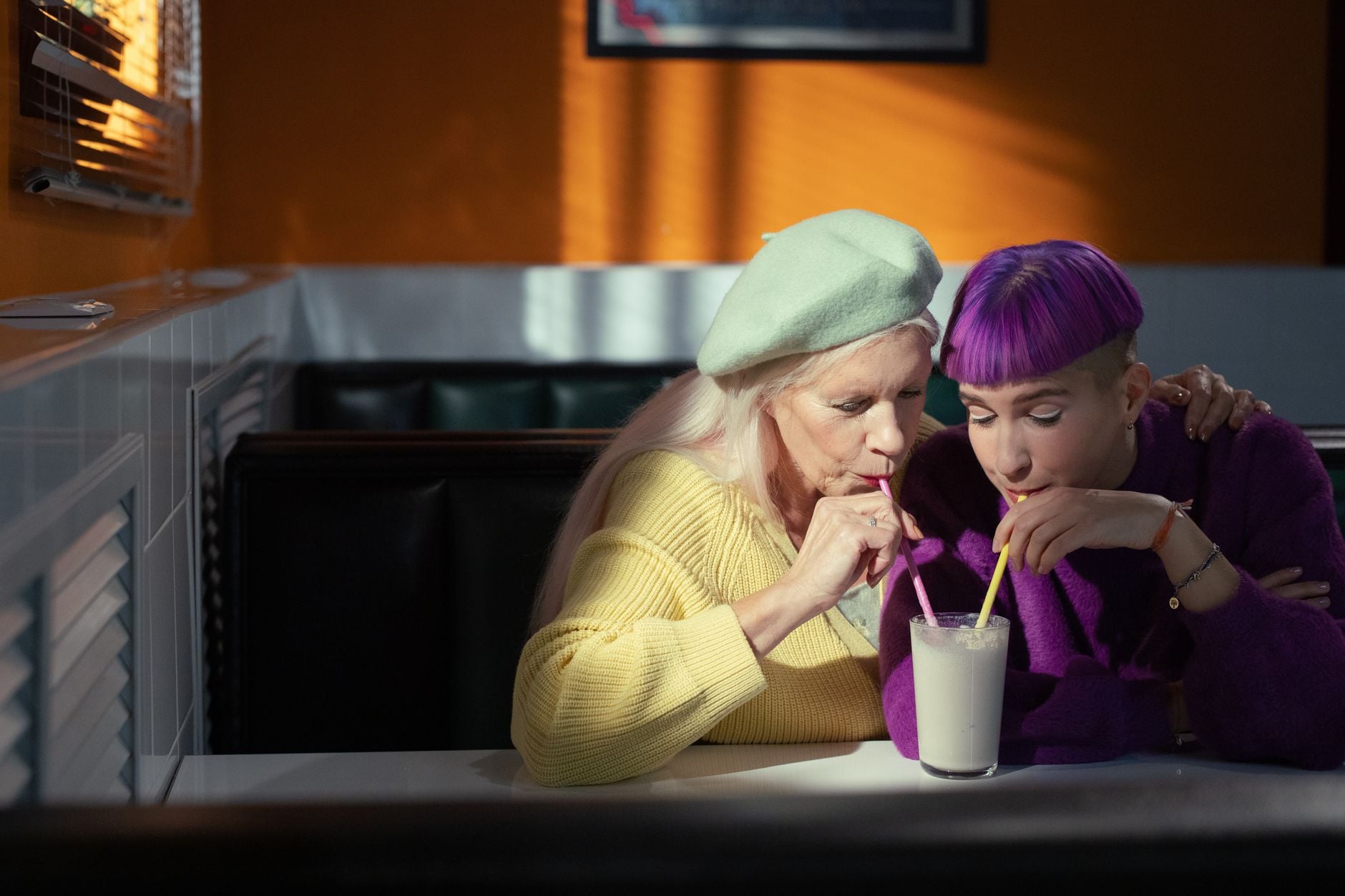
The Diner That Kept Her Husband’s Seat Warm
I asked her the only question left in me. “Who wrote my name in?”
“Katie did,” Vera said. “Same morning you ordered two coffees. She came back here crying before she’d even set the cups down, and she wrote your name in this book in her own hand before her break was even over, and called me, and I called Lois, and Lois called the Pastor, and the Pastor called Harold. Wasn’t an hour old, your grief, before this whole book already had your name in it and a list forming under it.”
I sat with that for a minute. An hour. My grief had not even cooled and already a girl of twenty three had decided, on her own, with nobody telling her to, that an old woman’s two coffees were not going to sit on that table alone.
Then Vera turned the notebook back further, past names I did not know, past a decade of them, to a page gone soft gray at the fold, and she set her finger on one line, and told me to read it myself.
It was Carl’s handwriting. I would know that hand anywhere, the same square, careful print he used on every invoice he ever wrote out for a load of wheat. Nineteen ninety eight. Arlene Kowalski, it said. Tuesdays, for as long as it takes. Signed, C. Behrens.
“Arlene lost her Theodore the same year,” Vera said quietly. “Nobody remembers that now but me and this book. Your Carl sat with her every single Tuesday morning for better than a year, in the booth right behind yours, until the day she told him she finally felt strong enough on her own two feet again.”
I put my hand flat on that page the way you put your hand on a grave you have finally found after looking a long time, and I understood, all at once, sitting at that counter with my own name written three pages further on in Katie’s hand, that I had not been taken in by this town out of pity.
I had been paid back.
My husband had spent a Tuesday morning a year, twenty seven years before his own death, sitting in a booth with a grieving stranger so she would not have to drink her coffee alone, and he had never once told me, because that was not the kind of man who told you the good things he did, only the kind who did them and let the wrench stay where the next person could find it.