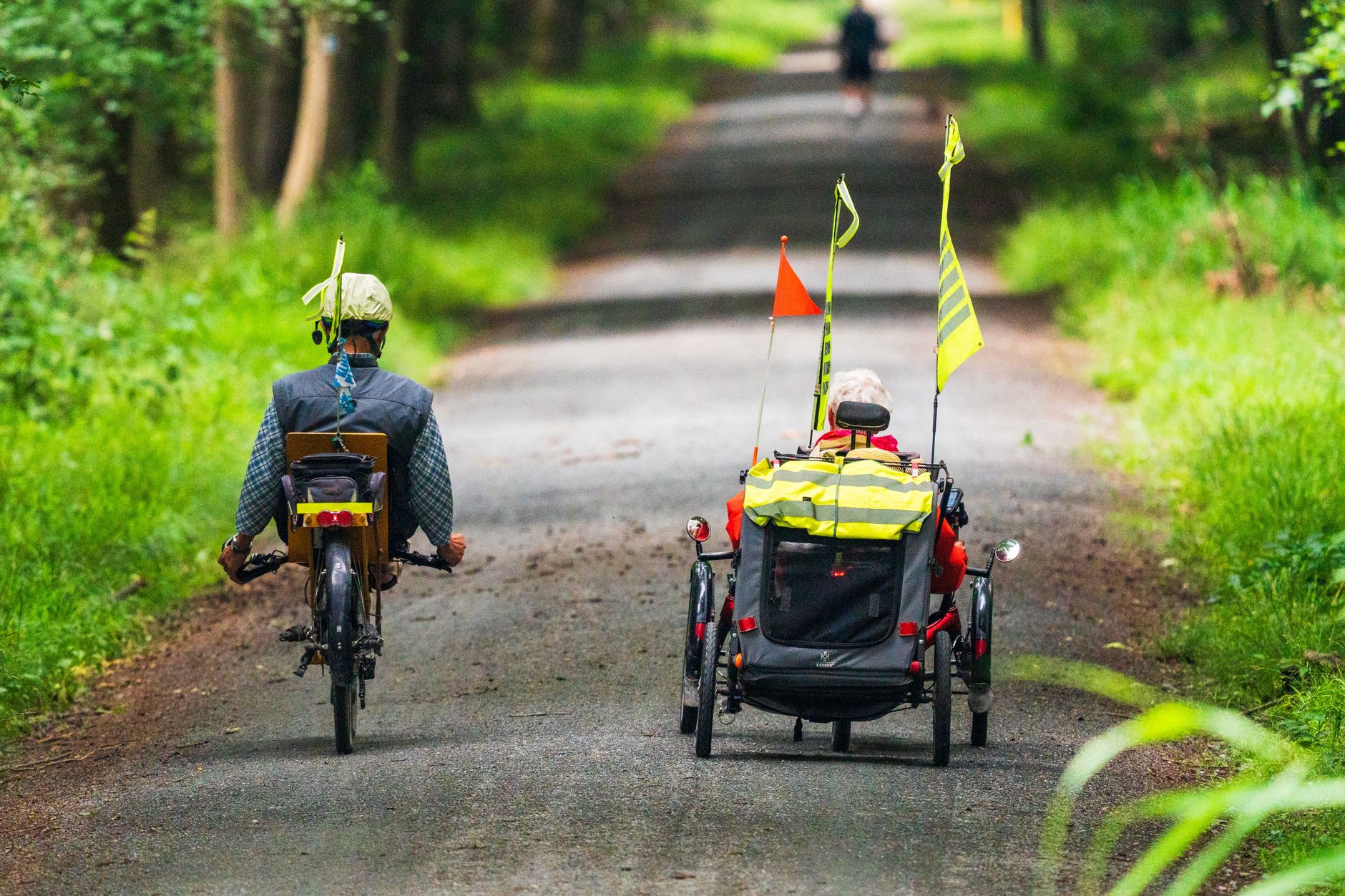
The Red Tricycle Outside His Office Window
“I’m sorry,” he said. “Mom, I am so sorry. I’ll get it back. I’ll get the Buick back. I’ll call him right now.”
“You don’t have to do that.”
“I do, though.”
He found the number on a slip in his desk drawer and he dialed it with the speaker on, so I would hear it for myself. A man answered on the fourth ring.
He was very nice about it. He had bought the LeSabre for his granddaughter, who was starting at the college in Platteville in the fall. He had already put new tires on it. She had named it.
“She calls it Walter,” the man said. “There was a roll of mints in the console with a little note rubber-banded to it, said Walter’s, do not throw out. She thought that was the sweetest thing she ever saw. She left them right where they were.”
I had forgotten I ever wrote that note.
Brian opened his mouth to offer the man more money. I put my hand on his arm and shook my head.
“You tell her,” I said toward the telephone, “that it likes to be warmed up a full two minutes in winter. And that the mints stay.”
“Yes, ma’am,” the man said. “I surely will.”
So the Buick was gone, and that was that, and I found I could stand it. A girl of eighteen was driving it to college with my husband’s name on it. There are worse ends for a car.
Brian hung up and sat looking at his hands.
“Then I’m buying you another one,” he said. “And it’s not a discussion.”
“I have the forty-two hundred, less a tricycle.”
“You keep that. This one’s mine to do.” He swallowed. “Let me do it all the way through, Mom.”
I thought of Eli and the bell.
“All right,” I said.
He found it that same week at the Toyota dealer in the county seat. A silver Corolla, a 2015, with 82,000 miles and a clean little back seat. He wanted me to have something newer. I told him a woman my age does not need a car that will outlive her by thirty years.
He paid $9,600 for it. At the title desk the girl asked how the names should read, and Brian said, before I could, “One name. Dorothy M. Hale. Just hers.”
Then he wrote the policy on it himself, and he gave me the safe-driver rate, because I had the paperwork to prove it.
I let him believe that was the end of it.
It was not the end of it. I am his mother, and I was not going to let him off the hook entirely.
“There is one more thing,” I told him in the dealer’s parking lot, with the new keys in my hand. “Wednesday. Ten o’clock. My carport.”
“What’s Wednesday?”
“You said I could have been killed. I want you to see what you were so afraid of. You are going to ride the route.”
“Mom, I’ve got appointments.”
“Mandy has already moved them. I called her this morning.”
He came straight from the office, which is how he ended up in a white shirt and a striped tie on Wilma’s blue spare, the tall one, with his knees still coming up too high.
Wilma looked him up and down.
“Don’t lean,” she told him.
“I know how to ride a bike, Wilma.”
“That’s what’s going to tip you over,” she said, and rang her bell, and we went.
Five of us, down Cedar Street in a line, at four miles an hour. Brian leaned on the first corner and his inside wheel came up, and Shirley, who is eighty-one, called out, “Grocery cart, dear!” without even turning her head.