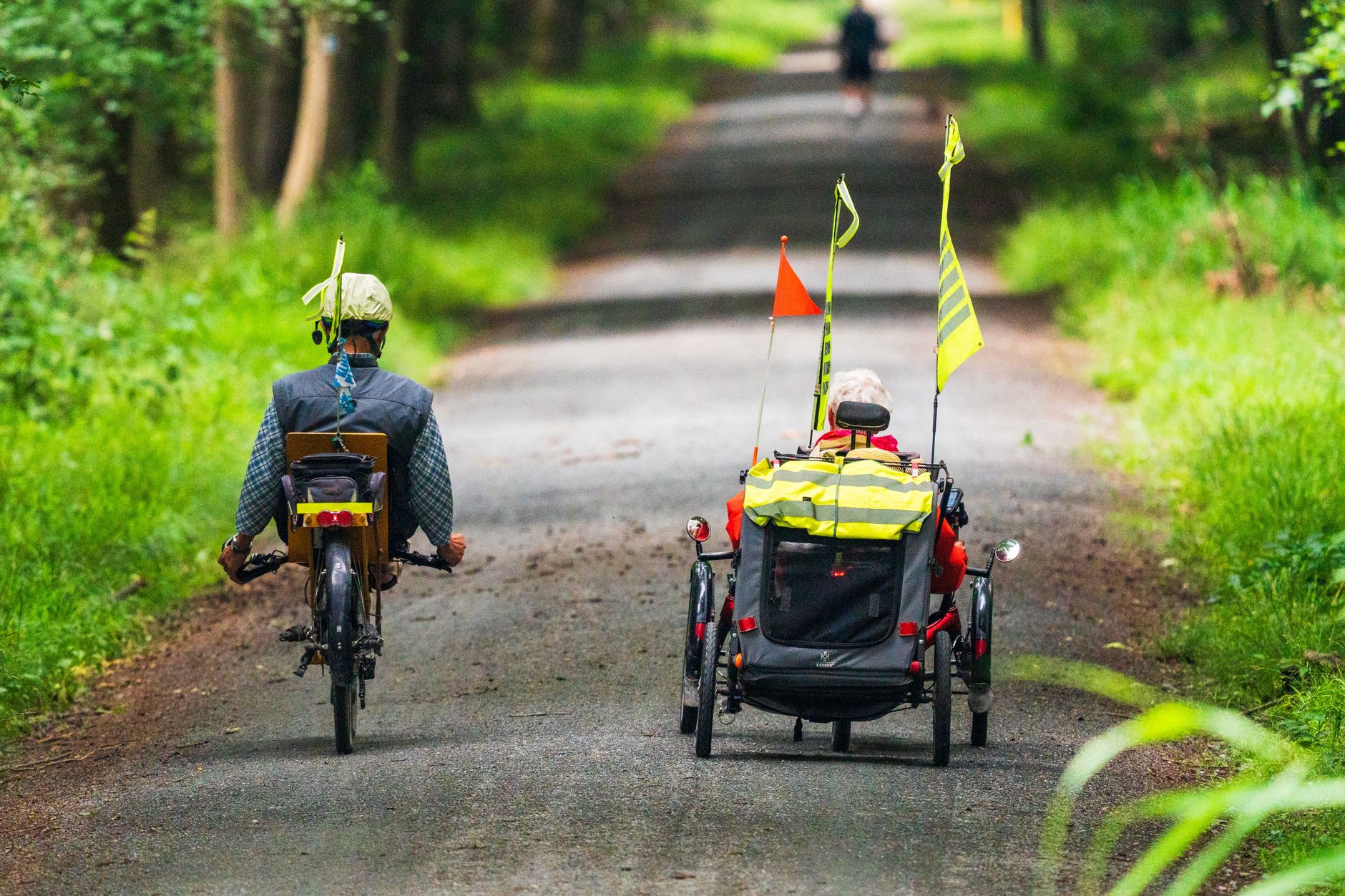
The Red Tricycle Outside His Office Window
And I knew this, too. A seventy-six-year-old woman raising her voice in a supper club about her car keys does not sound like a woman who is right. She sounds like the proof.
So I opened my purse, took out my key ring, worked the Buick key and the fob off it with my thumbnail, and set them on the tablecloth next to the envelope.
“There,” I said. “Now, is somebody going to cut this cake, or do I have to do that myself as well?”
Kim cut it. Her hands were shaking worse than his.
Brian drove me home in his truck. Nobody said much. The lilacs were out all along Cedar Street and the smell came in through the vents.
My carport was empty. There was the oil spot, and my garden hose on its hook, and the coffee can of sand I keep for ice. That was all.
He walked me to the door. He is fifty years old and six foot one, and standing on my step under the porch light he looked about nine.
“I’ll take you anywhere you need to go,” he said. “Groceries, church, the doctor. You call me, or you call the office and Mandy will find me. Any time. I mean that.”
“I know you do.”
“You’re not mad?”
I looked at my boy for a long moment.
“Thank you for the ride home, Brian,” I said, and I went in and shut the door, gently, so he would not be able to tell himself I had slammed it.
I did not cry. I want that understood. I sat at the kitchen table with the envelope in front of me and the clock ticking over the stove, and I did arithmetic.
I had enough in the bank to buy another car in the morning. I thought about it for a good ten minutes. But then it would be a fight about a car, and he would have that fight with me at every Thanksgiving until one of us died, and every dent in every parking lot in Wisconsin would be mine.
He had not taken a car. He had decided what I was. A car would not change his mind about that.
He needed to see me. Hearing me was not going to do it.
At a quarter past eight I called Wilma.
Wilma and I have sat in the same pew at First Lutheran since 1974. She is seventy-eight, a widow like me, and she drives a Ford in town and nowhere else.
“He did what?” she said.
“I need a ride at nine in the morning.”
“Where to? The lawyer?”
“The bike shop.”
There was a silence on the line. I have heard a great many silences in my working life and that was one of the better ones.
“Dorothy Hale,” Wilma said. “I will be there at ten to.”
The bike shop is in the old depot at the far edge of town, where the rail trail starts. A young man named Eli has it. He could not have been thirty. He came out from the back wiping his hands on a rag, and he looked at two old women in cardigans standing among his racing bicycles, and to his everlasting credit he did not ask if we were lost.
“Morning, ladies. What can I do for you?”
“I saw a three-wheeler in your window at Christmas,” I said. “A red one. With a basket.”