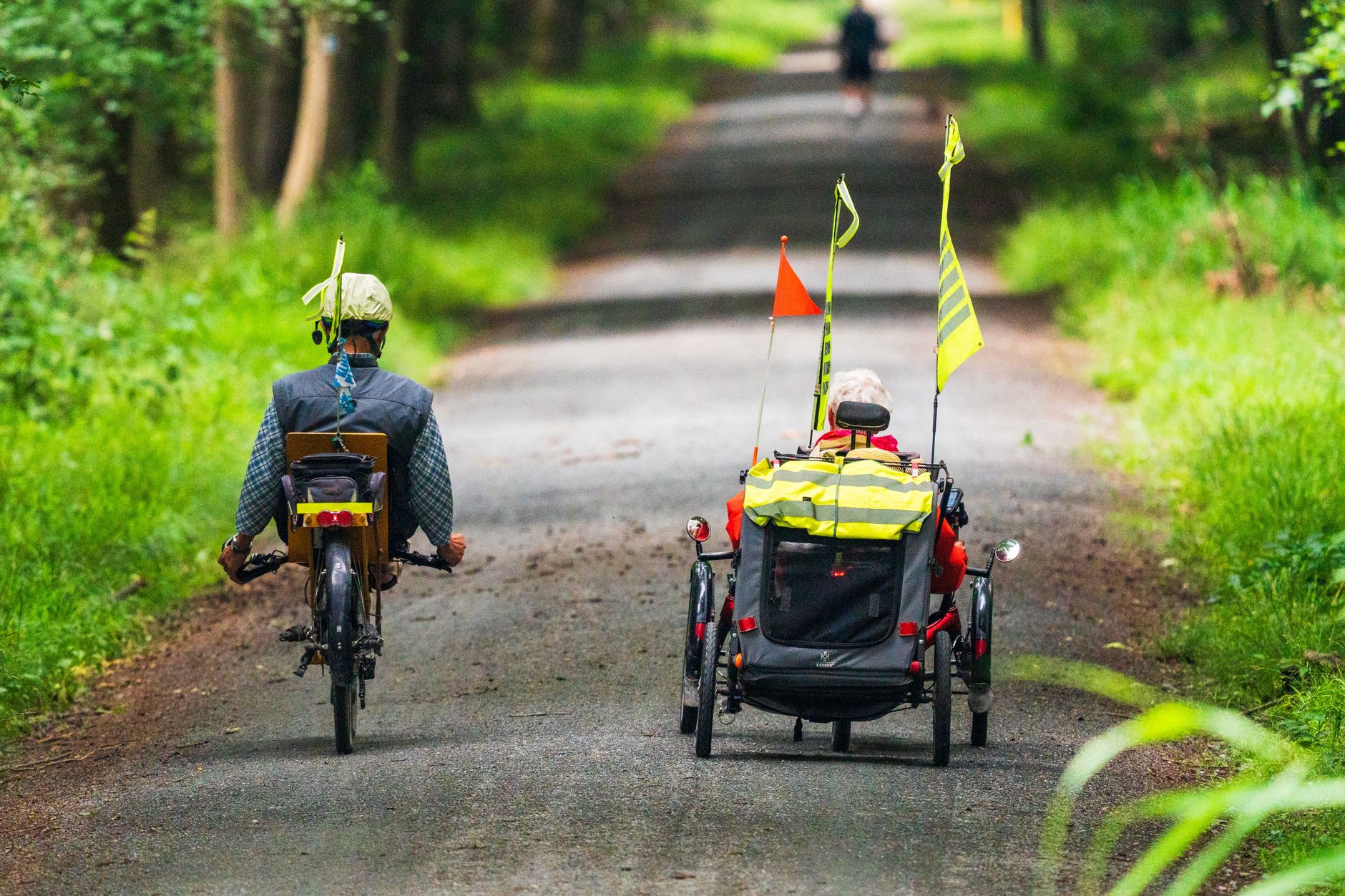
The Red Tricycle Outside His Office Window
“When you decided I wasn’t fit to drive,” I said, “who did you ask?”
“What do you mean, who did I ask?”
“Did you call Dr. Keller? Did you call my eye doctor? Did you ride with me, even once around the block, to see how I did?”
He did not say anything.
“Did you ask one person who would know?”
“No,” he said finally.
“Then what did you go on, Brian?”
His mouth opened. For a second I thought he was going to tell me. I saw it come right up to the surface, whatever it was, like a fish in a pond.
Then Mandy tapped on the glass and held up the telephone receiver, and it went back down.
“I’ve got a ten thirty,” he said.
“Then I’ll let you get to it.”
I rang my bell once, to clear the sidewalk, and I rode to the Piggly Wiggly and bought a quart of milk, a loaf of bread, a pound of butter and a small ham, and I carried them home in my basket, six blocks, with the bag not even shifting.
That was a Monday.
By Wednesday the whole town knew. In a town of four thousand people, nothing travels faster than an old woman on a red tricycle, and I mean that in both senses.
I rode it to the library. I rode it to the bank and deposited the cashier’s check, less what I had spent. I rode it to prayer circle and parked it by the church kitchen door, and eleven women came out to look at it and three of them sat on it.
I rode it up Cemetery Hill on the Thursday. I had to get off and push the last hundred yards, and I am not ashamed of that. I sat on the grass by Walter’s stone with my purse in my lap and told him the Buick was gone and who had sold it.
“Don’t be too hard on him,” I said, out loud. “He’s got something stuck in him. I just don’t know what yet.”
The second week, Wilma bought one.
She had driven behind me three times by then, and on the third time she pulled up beside me at the stop sign on Cedar and rolled her window down and said, “I feel like a fool in this car.” She went to a rummage sale in the next town and came home with a blue trike for $75, which turned out to be built for a much taller woman. So she went to Eli and bought a new one, green, and kept the blue one in her garage.
“For company,” she said.
Then Shirley bought one. Shirley is eighty-one. She gave up her own car two winters ago, by her own choice, and had been waiting on her daughter’s Saturdays ever since.
Then Donna, who is only seventy and whose knees are better than all of ours put together.
Eli told me he had sold more trikes in May than in the three years before it. He started keeping a red one in the window.
Wilma named us. She stood in my kitchen with a pencil behind her ear and said, “Wednesdays, ten o’clock, from your carport. Library, then the Pig, then the Dairy Queen. We are the Wednesday Riders, and I am having that put on a sign.”
“You are not having it put on a sign.”
“A small sign,” said Wilma.
The second Wednesday, Shirley asked if we could add the cemetery.