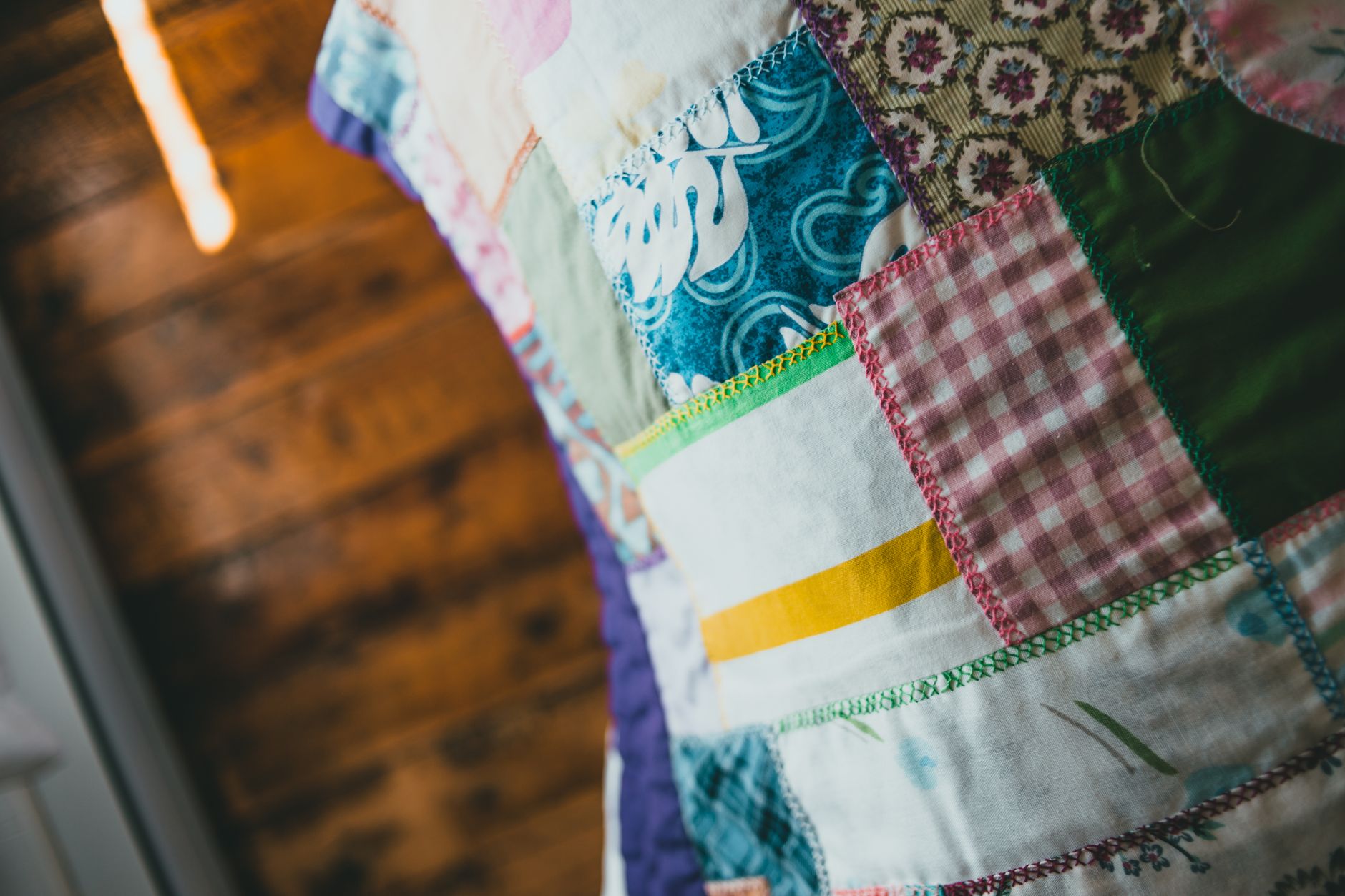
The Quilt in the Dog Crate
My brother was standing against the back wall in his work jacket with his cap in his hand. He had come straight from the plant. There was salt dried white on his boots. He was not looking at Dale, and he was not looking at me. He was looking at the quilt.
“Thirty-one hundred from the gentleman in the back,” Dale said. “Doctor?”
“Thirty-two,” said Dr. Reyes.
“Thirty-three,” Jeff said.
Up front, Courtney had turned clear around in her chair. Her lips moved. I think she said his name.
“Thirty-four,” said Dr. Reyes.
Jeff came up the side aisle then, along the wall, not hurrying. He stopped when he got to my chair and he crouched down beside it, the way he used to crouch by the frame.
“Neesy,” he said, low. Nobody has called me that but him since Grandma died. “Why is Grandma’s garden hanging on a rack?”
“How’d you know it was hers?” I said. It was all I could think of.
“I laid under that pattern every winter till I was nine.” His eyes were wet and he was angry at them. “Bottom row. There’s a red one.”
“Third from the left.”
“That’s Hattie’s quilt.”
“It was,” I said.
“She told me it was in the cedar chest.”
I did not say anything. I had promised myself I would not tell it for her, and I did not. I only looked at him, and my brother has known my face a long time.
He stood up.
“I have thirty-four hundred,” Dale said. “Sir?”
“Thirty-five,” Jeff said.
Dr. Reyes turned and looked back at him. I saw her look at his jacket, and his boots, and his face. I saw her know him. A father who sits by an isolette every night for nine days in his work clothes is a thing a doctor remembers.
She looked at the quilt once more. Then she looked at Dale.
“Thirty-five fifty,” she said, and I believe to this day she did it on purpose, so the babies would get a little more.
“Thirty-six hundred,” said Jeff.
Dr. Reyes smiled and laid her card down.
“Thirty-six hundred once,” Dale said. “Twice.” He waited the way a good auctioneer does. “Sold, to the man in the back, and God bless you, sir.”
The room stood up. I do not mean a few people. Kim was crying and so was the farmer’s wife who had quit at two thousand. Mark stood up beside me and clapped those big hands, and I sat there in my folding chair because I did not trust my legs.
It is the custom at that auction for the maker to meet the buyer. Mrs. Lindahl came and got me herself and walked me back to the cashier’s table by the kitchen.
Jeff was already there. He had a bank envelope out of his jacket, soft at the corners, and he was counting hundreds onto the table.
I knew that envelope. It had lived in his sock drawer for three years. It was for a used bass boat a man in Nickerson had promised to hold for him till spring.
“Jeff,” I said. “That’s your boat.”
“It’s a boat,” he said, and kept counting. There was thirty-one hundred in the envelope. He wrote a check for the other five. “Those people kept my daughter alive, Neesy. I’ve owed them more than this since June. I just didn’t know how to pay it.”
Mrs. Lindahl looked from him to me.
“You know each other.”
“She’s my sister,” Jeff said. “She made it for my little girl.”
Mrs. Lindahl took that in. She took her glasses off and let them hang.