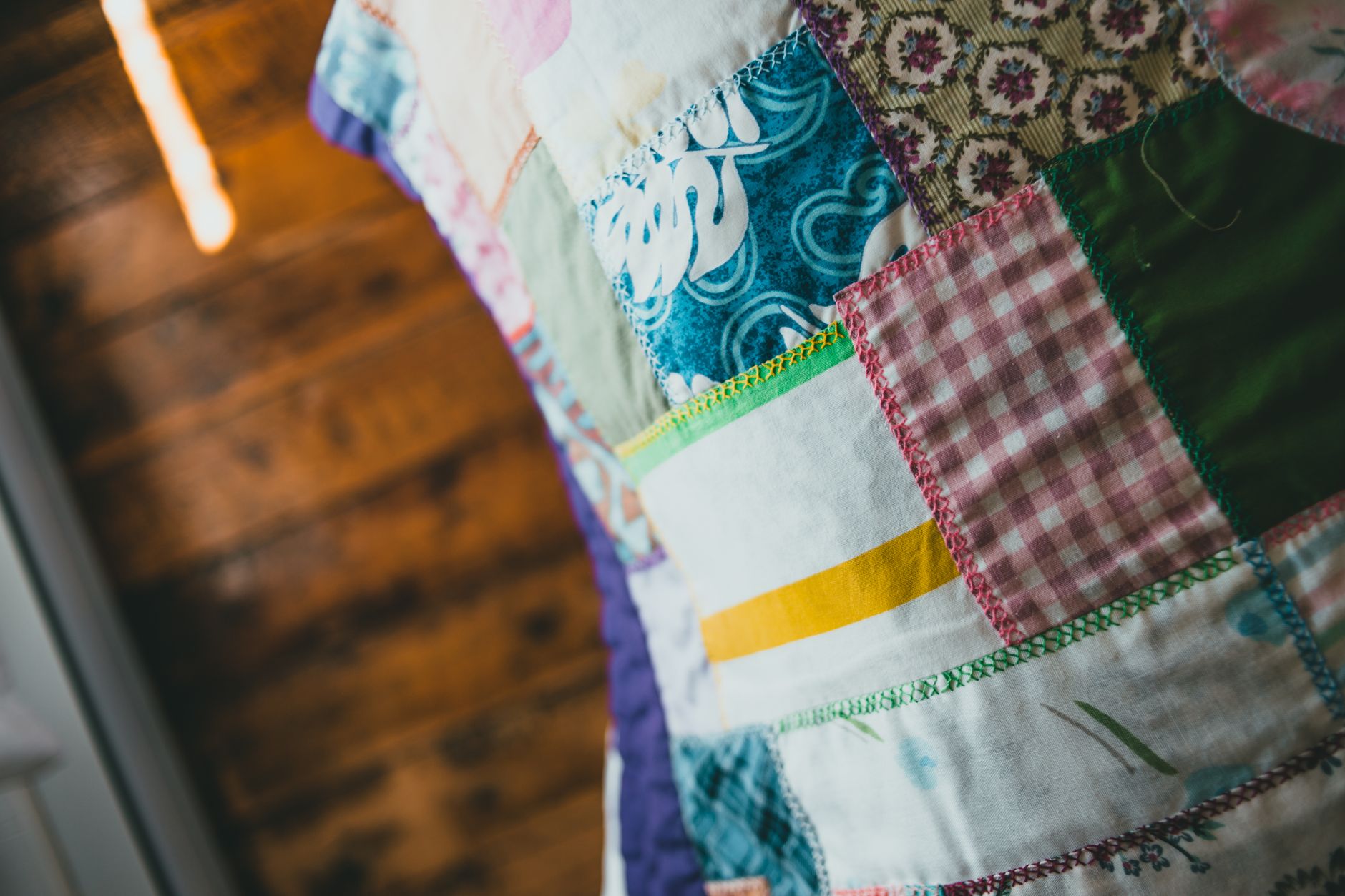
The Quilt in the Dog Crate
I slid it out of the pillowcase. She put on the glasses that hung around her neck and did not say anything. She turned back one corner and looked at the wrong side, which is where a quilter looks. She ran her thumb along the stitches.
“This is all hand.”
“Yes, ma’am.”
“Twelve to the inch.”
“Eleven, some places. My eyes aren’t what they were.”
She turned it right side up again and stood looking at it a long time.
“English paper pieced,” she said. “I have not seen one done this small since my mother died. Who was this for?”
I had thought about how to answer that. I had practiced in the car.
“A baby who spent her first nine days in your NICU,” I said. “She’s home and fat and doing fine. It didn’t suit the house it went to, so I asked for it back. I’d rather it helped the next baby than sat in my closet.”
Mrs. Lindahl looked at me over her glasses. She is no fool. But she did not ask, and I did not offer.
“We ask every maker to fill out a card,” she said, and handed me one. “Pattern, how it was made, and the hours, if you know them. People have no idea, dear. You have to tell them.”
I wrote: Grandmother’s Flower Garden. Hand pieced and hand quilted. 400 hours. Made for a baby girl who spent her first nine days in the NICU.
I did not put Hattie’s name. I did not put Courtney’s.
Under “Maker” I wrote Denise, of Hutchinson, taught by her grandmother, Helen.
The auction was a Saturday night, and it had turned cold. You could smell the chili from the parking lot.
In Kansas a chili supper means chili and cinnamon rolls on the same tray. Ten dollars a plate. The fellowship hall was set with long tables and folding chairs, and along the far wall the quilts hung on wooden racks under clip lights the men had strung up that afternoon. There were forty-four of them. Mine was number thirty-one.
Mark and I sat with Kim and her husband about halfway back. I could see my quilt from there. Under those lights the yellows looked like butter.
This was not a little church supper, whatever the chili might make you think. It was the Auxiliary’s big night of the year, every dollar to the NICU, and the front tables were doctors and their wives and half the hospital board, with their checkbooks out.
Courtney was up front at the board table with Mrs. Lindahl and the Auxiliary officers and two of the doctors’ wives. She had on a cream sweater and her hair done, and Hattie was beside her in the carrier, asleep, in a headband with a bow on it. Courtney saw me and gave a little wave with her fingers. I waved back.
“Where’s Jeff?” Mark said.
“Working till seven. She said he’d come if he wasn’t dead on his feet.”
The auctioneer was Dale, who sells farm equipment and estate sales all over Reno County and does this one for free every year. He started at half past six. Mrs. Lindahl stood beside him with the cards and read each one into the microphone before he opened the bidding.
The quilts went the way they go. A machine-pieced log cabin, a hundred and eighty dollars. A pretty appliqué with tulips, three twenty-five. A king-size Lone Star, hand quilted by the ladies at the Mennonite church in Buhler, went for fourteen hundred and fifty, and the room clapped. The most that auction had ever seen was the year before, when a queen-size wedding ring brought twenty-two hundred dollars, and people still talked about it.