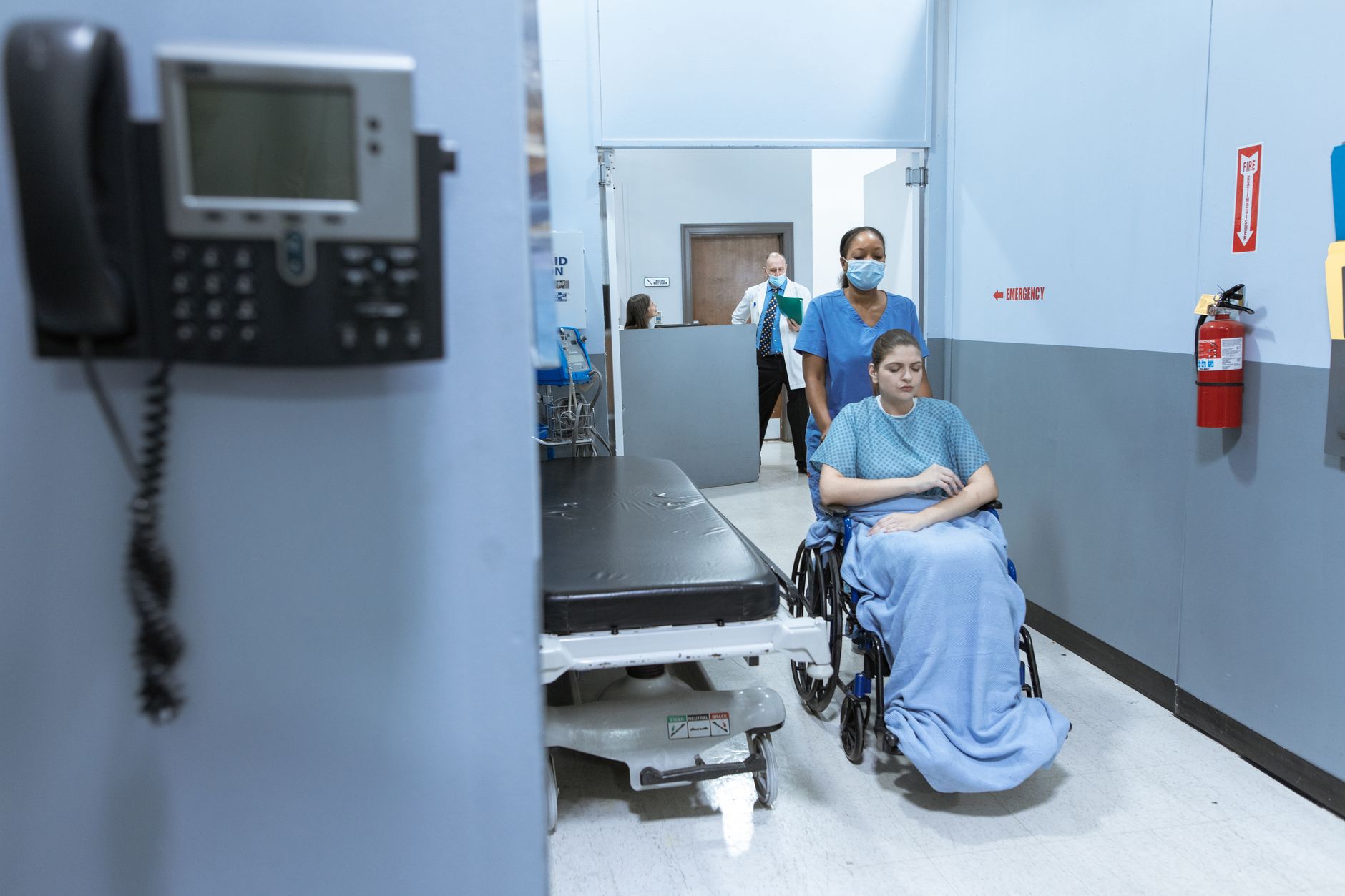
The Trauma Bay My Sister Entered
Kristy never had a single thing she wanted that clearly. She was a good kid, funny, quick, the one who could make our mother laugh so hard she had to sit down, but she drifted. She tried community college two towns over for a year and came home. She worked the register at our father’s store, Hartley Hardware and Feed, for a while, then worked at the diner on Main Street, then came back to the store again. I do not say this to make her sound lesser. I say it because I think it matters to understanding what happened later, that for most of our childhood and all of our twenties, I was the daughter with a clear, visible, expensive plan, and Kristy was the daughter still finding hers, and in a house like ours, where love was real but also finite in the way it gets measured out in attention and pride, that difference accumulated the way interest does on a debt nobody is paying down.
Our parents are Ron and Pat Hartley. My father ran the hardware store his own father built, a long narrow building with creaking wood floors and a bell over the door that has rung the same note since before I was born. My mother taught second grade at Caldwell Elementary for thirty one years, which means half the adults in that town learned to read in her classroom, which means she has a particular kind of standing in a small place like ours, the standing of a woman who shaped two generations of children and is not accustomed to being told she misjudged anyone, least of all her own daughter.
I left for college at eighteen with a partial scholarship and a lot of loans, and I never really came home again except for holidays, because the track I was on did not allow for much else. Four years of undergraduate biology, taking extra labs in the summers to finish faster and save money. Medical school three states away, which felt like another planet to a girl from Caldwell, four years of material I had to learn twice as fast as some of my classmates because nobody in my family had ever gone to medical school and there was no map at home for how it was supposed to go. Residency after that, which is its own particular kind of exhausting, the twenty eight hour calls, the years where you forget what your own apartment looks like in daylight.
I called home every week through all of it. I want that on the record, because what happened later made it sound, in the version my sister told, like I had simply disappeared into my own ambition and stopped caring about anyone back in Caldwell. That was never true. I called my mother every Sunday night for nine years. I sent money home twice, once for a roof repair and once, more significantly, for the month that mattered most, which was the month my father had his heart attack.