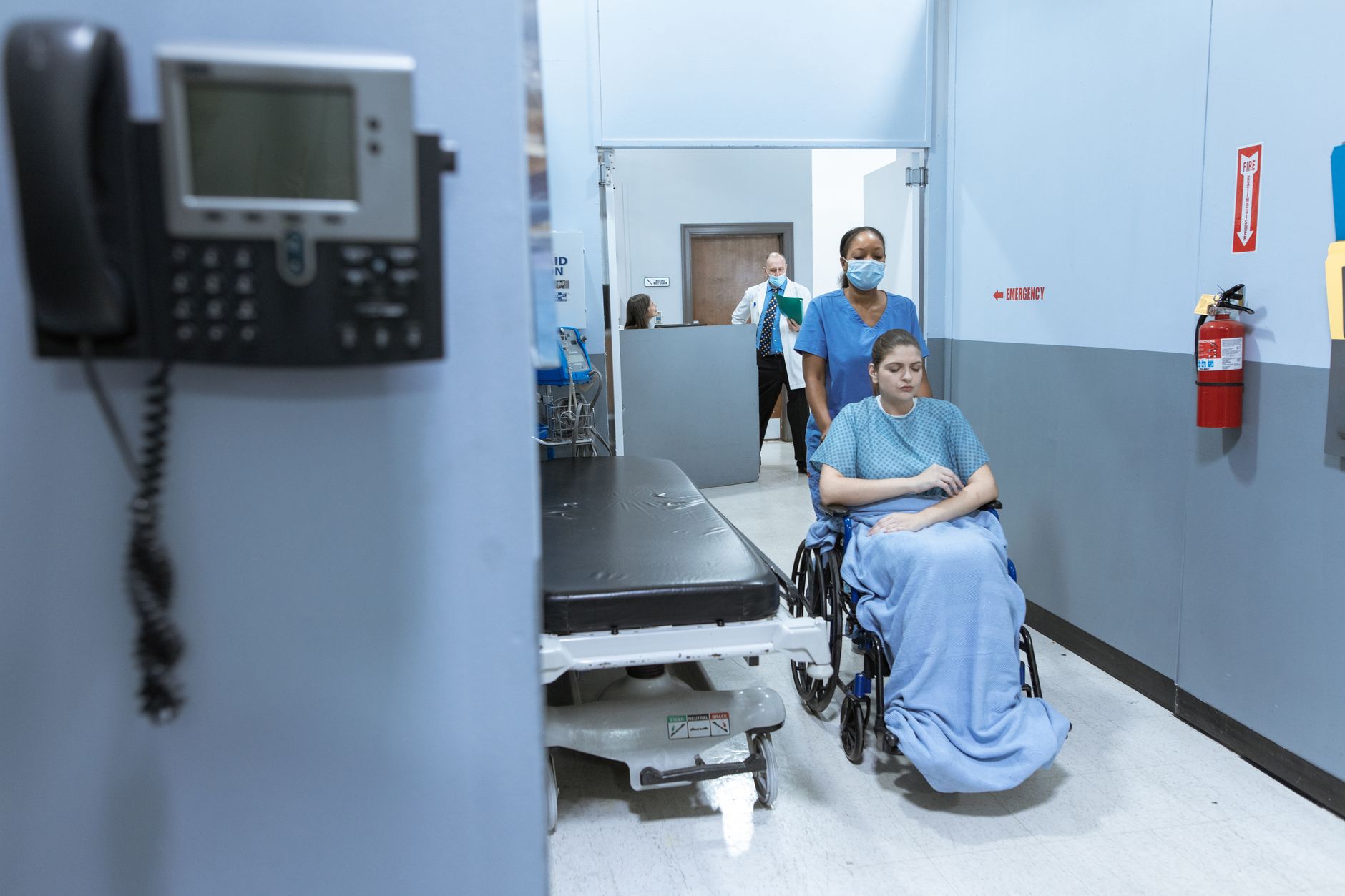
The Trauma Bay My Sister Entered
I did not find any of this out for four more years. All I knew, from my side of it, was that sometime in the weeks after my father’s heart attack, the calls stopped being returned. Texts went unanswered, then showed as undelivered, then I understood I had been removed from contacts entirely, no explanation given to me directly, ever, by anyone in my family. My mother’s Christmas card, which I had received every year of my life, did not come that December. My father, when I called the store directly and Lloyd picked up, told me, with obvious discomfort, that my parents had asked him not to put my calls through anymore.
They did not come to my residency graduation, a ceremony I had pictured since I was nine years old watching an ambulance roll past our porch. They did not come to my wedding two years later, where I stood at the front of a small church with my husband Nathan and a bridal party of six people who were not related to me by blood, with one entire side of the aisle nearly empty except for a few of Nathan’s relatives who had driven in, and I smiled through all of it because what else do you do, and I told people afterward, for years, that my family and I had simply grown apart.
I built a career instead. I finished my surgical residency with some of the best outcome numbers in my program. I did a trauma fellowship in a city hospital that saw more penetrating trauma in a single weekend than Caldwell saw in a decade, and I learned, under genuine pressure, how to make fast decisions that keep people alive. Three years ago, Caldwell Regional Medical Center, the hospital serving my own home county, offered me the position of chief of trauma surgery, and I took it, partly because the job was an excellent one, and partly, I will admit now, because some small stubborn part of me wanted to be close enough to the town that raised me that it would have to acknowledge, eventually, that I had not failed at anything at all.
I married Nathan, a physical therapist I met during my fellowship, steady and quiet in exactly the way I needed after years of chaos, and we built a life in a house twenty minutes from the hospital, close enough to Caldwell that I drove through it on the way to the grocery store sometimes, close enough that the woman at the gas station still called me “the Hartley girl” without knowing anything about what had happened to the rest of the Hartleys. I had not spoken to my mother, my father, or my sister in five years. I told myself I had made my peace with it. I told myself that on the good days. On the bad ones, usually in October, around the anniversary of my father’s heart attack, I would sit in my car outside my own house for a few extra minutes before going in, and Nathan learned not to ask what was wrong, because we both already knew.