The Survey That Ended the Feud
You don’t buy two and a half acres outside a small town because you’re chasing excitement. You buy it because you want the opposite. Quiet mornings. Soil under your fingernails. The kind of stillness that lets you breathe again after you’ve spent a decade holding your breath.
I was forty three when I signed the deed on the old Haskins place outside Harlow’s Bend, in Ashford County, a stretch of land nobody would call remarkable except for the fact that it was mine, free and clear, bought with money I hadn’t expected to have left over after the divorce. Twenty years of doing other people’s books, other people’s taxes, other people’s spreadsheets, and somewhere in the middle of that my marriage had quietly gone bankrupt without either of us noticing the balance was negative until it was too late to fix. I didn’t want a settlement. I wanted a floor that was mine, a roof that was mine, and enough distance from town that I could hear myself think again.
That’s what I believed I was buying when the closing papers were signed. A backyard garden. A workshop I’d build with my own hands. Space that felt earned instead of divided.
Then Jolene moved in next door, six months after me, with a pie balanced on one hip and a smile that promised neighborly peace. And exactly six months after that, she stood in my yard, pointed at my garden fence, and informed me that I’d built it on her land, because she’d “looked into it.” I laughed. I honestly thought she’d catch herself, feel foolish, and let it drop.
A week later I came home from a bookkeeping job in town to find a brand new fence running straight through the center of my garden, like she’d measured my whole life with a tape and decided exactly where it should end.
That was the day I learned something nobody tells you about property lines. The real line isn’t always land. Sometimes it’s how far a person is willing to go to take what was never theirs, and how far you’re willing to go to prove it, calmly, on paper, until there’s nothing left for them to argue with.
I want to tell you the whole thing, from the beginning, because the ending is worth waiting for.
When I first bought the house, I didn’t unpack a single box before I walked the property. Mr. Haskins, the man I’d bought it from, met me out by the mailbox that morning with a cane in one hand and a folded survey map in the other. He was somewhere north of eighty, white haired, with hands that had clearly spent sixty years doing something useful with them. He walked me along the fence line at the pace an old man walks when he still means every step, and he showed me the iron pins driven into the ground at each corner of the property like he was handing down something sacred.
“Those stakes are law,” he told me, tapping one with the rubber tip of his cane. “Somebody argues with you about where your land ends, you don’t stand out here and debate it with them. You go straight to the county. Let the paper do the talking. Paper doesn’t get tired and it doesn’t get mad.”
At the time it felt almost old fashioned, the kind of thing a man says out of habit rather than necessity. Nobody was going to challenge me over a fence line. This was the country. People waved from their trucks. People kept to their own business and expected you to keep to yours. That was half the reason I’d moved out here in the first place, to get away from people who wanted something from me.
For the first year, that belief held up fine. My neighbors on the other side, Marshall and Delphine, were exactly the kind of quiet and kind you hope for. A wave from the porch most mornings. A hand pulling a fallen limb off my driveway after a storm without being asked. A loaf of zucchini bread on my step in August with a note that just said glad someone young is caring for that old place again.
I built a small workshop behind the house that first spring, nothing fancy, just lumber and sweat and more trips to the hardware store than I want to admit. On weekends I made furniture. Tables, chairs, a set of shelves for the mudroom. Things that felt solid when you ran your palm across the grain, the kind of solid I hadn’t felt in my own life in a long time.
The garden came after the workshop. Tomatoes, pole beans, three kinds of peppers, a row of herbs along the south fence where the sun sat longest. It wasn’t a big plot, maybe thirty feet by forty, but it made the land feel alive in a way the empty lawn hadn’t. You could smell it on your hands after an hour of weeding, and some nights that was the best part of my day, standing at the kitchen sink scrubbing dirt out from under my nails and feeling, for the first time in years, like I’d earned something with my own two hands instead of a signature on somebody else’s paperwork.
Then Jolene arrived.
She showed up on a Saturday in early spring, six months after my own closing, holding a pie like a peace offering and smiling the particular smile people wear when they want to be liked immediately and aren’t quite sure yet how to earn it honestly. “The city finally wore me down,” she told me, standing in my driveway with her arms crossed loosely over a cardigan that still had the store fold creases in it. “I just want quiet. Somewhere I can finally slow down.”
I believed her. I had no reason not to. I told her that was exactly why I’d moved out here too, and for a minute we stood there like two women who’d found the same doorway out of the same kind of noise. That didn’t last.
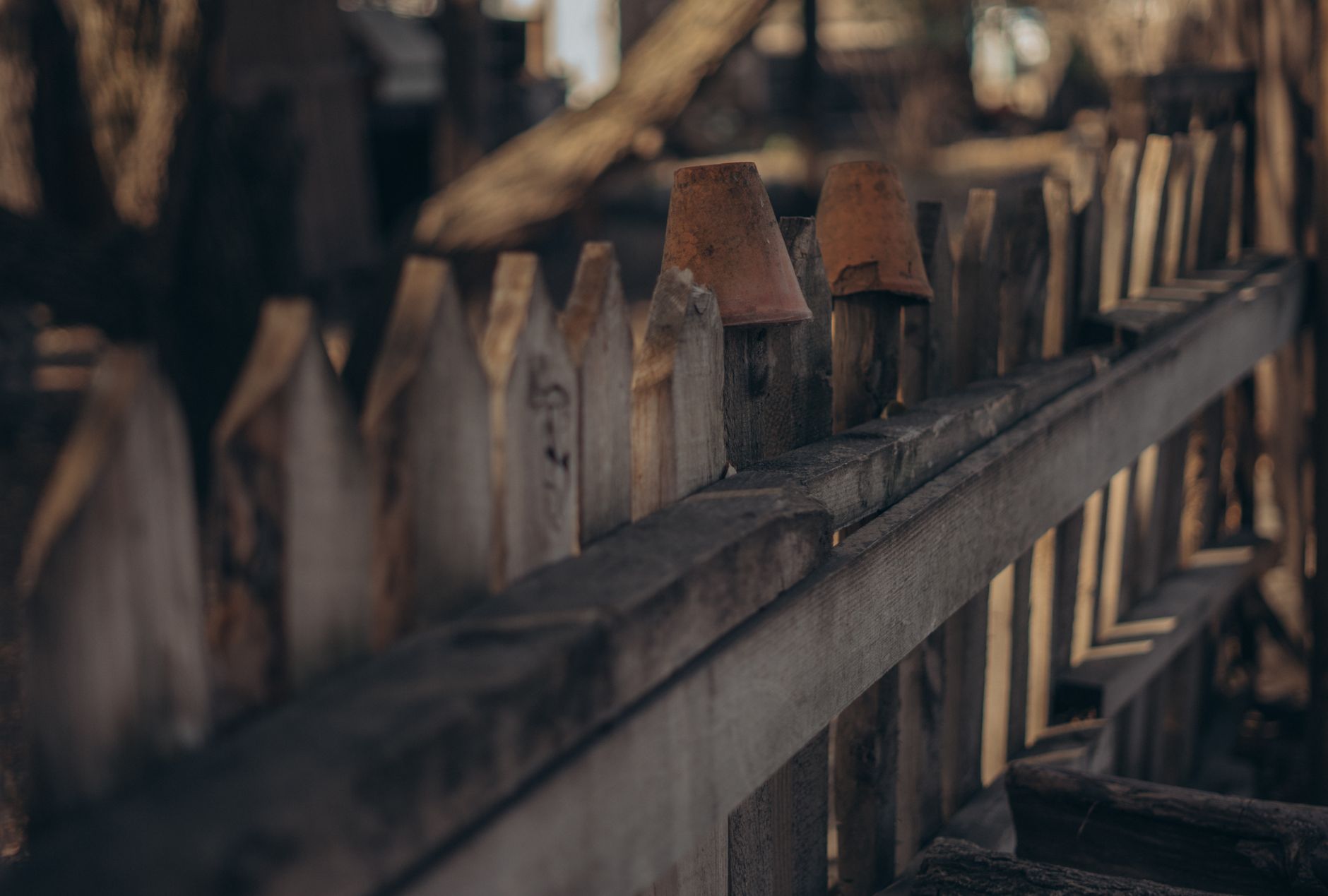
The trouble started small, the way it usually does. The deer began treating my garden like an open invitation somewhere around the end of May. One morning the beans were gone down to nubs. Two days later my tomato plants looked chewed down to lace, stems stripped bare like something had run a comb through them. So I did what anyone with a garden and a rifle’s worth of patience does. I built a simple fence. Cedar posts, two feet of woven wire, a gate with a latch high enough that a deer couldn’t nose it open. Nothing dramatic. It took me most of a Saturday and I was proud of it in the small, private way you’re proud of something you built with your own hands and didn’t need to ask anyone’s permission to put up.
The same afternoon I finished, Jolene appeared at the edge of my yard like she’d been waiting for the sound of the last screw to stop. “What’s this?” she asked, nodding at the fence.
“Keeping the deer out,” I said, wiping sweat off my face with the back of my wrist.
Her eyes traced the fence line, then the garden inside it, then drifted, slow and deliberate, toward the boundary markers Mr. Haskins had shown me on my very first walk of the property. Her expression tightened in a way that made my stomach drop before she’d said a single word.
“You know that’s my property, right?” she said.
I laughed, because the alternative flat out didn’t make sense to me. “The line’s over there,” I said, pointing at the nearest iron marker, half sunk in the grass where it had sat for who knows how many decades.
She walked over to it, crouched, stared at it like it had personally offended her, and shook her head. “Those are wrong,” she said.
“How?”
“I’ve done research,” she said, standing back up, brushing grass off her knees with the kind of confidence that makes plain ignorance dangerous. “Land records around here are a mess. Everybody knows it. My family owned this land years ago, before any of this was subdivided. People remember.”
“That’s not really how ownership works,” I said carefully, trying to keep my voice level, the way you talk to a client who’s convinced their spreadsheet is wrong when it’s actually their math. “It’s deeds. It’s recorded boundaries at the courthouse. Family memory doesn’t move a property line.”
Her smile thinned into something closer to a warning. “You’re being difficult,” she said, and then she turned and walked back toward her own porch like she’d delivered a verdict rather than an opinion.
I told myself it was nothing. New neighbor nerves, maybe some old family story she’d half remembered and was testing out loud before she thought better of it. It would blow over. It didn’t.
A week later I pulled into my driveway after a long day of closing out a client’s quarterly books and saw it before I’d even put the car in park. A fence, brand new, cutting straight through the center of my garden. Not a stake marking a proposed line. Not a string tied between two posts as a suggestion. A real fence, posts sunk deep into the ground, panels locked into place with the kind of permanence that told me this hadn’t been a weekend impulse. She’d hired someone. She’d planned it.
My tomato plants, the ones that had survived the deer, sat on the far side of it now. Months of early mornings and evening watering, claimed by a line she had simply decided to draw through the middle of what was mine.
For a second my whole body went cold in a way that had nothing to do with the weather.
Then I saw her on her own porch, arms folded, watching the whole thing like it was dinner theater. “What is this?” I called across the yard, and I heard my own voice crack on the word this in a way I wasn’t proud of.
She didn’t hesitate for even a second. “Defending my land.”
“You built a fence through my garden.”
“You shouldn’t have been gardening on my property,” she said, and there was something almost pleased in the way she said it, like she’d been rehearsing the line.
I didn’t sleep much that night. I sat at my kitchen table with a cup of coffee going cold in front of me and I thought about Mr. Haskins tapping that iron stake with his cane. Those stakes are law. You go straight to the county. Let the paper do the talking.
So the next morning, before I even opened my laptop for work, I drove into Harlow’s Bend and walked into the Ashford County Recorder’s office.
The clerk, a woman named Ruth who’d clearly seen every version of this argument a hundred times over the years, pulled up the parcel on the GIS mapping system without so much as raising an eyebrow. Five minutes, maybe less. She turned the monitor so I could see it. My deed, recorded in book 214, page 87. The subdivision plat from 1968, when the old Weller family farm had first been split into smaller parcels and sold off. My property’s metes and bounds description, matching, almost to the inch, the exact spot where that iron pin sat in my yard.
The line was precisely where Mr. Haskins had told me it was on the very first day I owned the place. Jolene’s fence sat nearly eleven feet inside my recorded boundary.
Ruth printed everything for me without my even having to ask twice. The plat map. The deed. A copy of the original 1968 survey filed by the county surveyor when Ezra Weller, Jolene’s great grandfather as it turned out, though I didn’t know that yet, sold off the back half of his farm to a man named Corwin, whose family owned it for two generations before it eventually became the Haskins place, and then mine.
I drove straight from the courthouse to Jolene’s front door with the papers still warm from the copier.
She barely opened the door more than a crack. She glanced at the papers in my hand the way you glance at junk mail you’ve already decided to throw away.
“The county confirmed it,” I said, holding the stack out toward her. “This is the deed. This is the plat. This is the original survey. The line is exactly where it’s always been. I need you to remove the fence.”
Her eyes hardened in a way I hadn’t seen from her before, not even during our first confrontation. “The county’s corrupt,” she said flatly.
“Corrupt?”
“They’re in bed with developers,” she snapped, taking half a step back like the papers themselves might contaminate her doorway. “They steal land from real families all the time. Everybody around here knows it. You just haven’t lived here long enough to see it yet.”
That was the moment I understood something I should have understood a week earlier. Facts weren’t going to be part of Jolene’s story, because facts were never what she’d actually wanted. She didn’t want accuracy. She wanted possession, of the land and of the narrative both, and she was going to hold onto whichever one she could get her hands on first.
She refused to take the fence down. And then, instead of the conflict cooling off the way I kept hoping it would, it escalated.
She dragged two folding lawn chairs onto what was unmistakably my side of the disputed strip and sat out there some evenings like she was staking a claim by presence alone. She let her dog run loose through what remained of my yard, no leash, no apology when it dug up a bed of marigolds along the workshop wall. She knelt down one Saturday morning and planted a row of vegetables in the strip of garden soil that had been mine for over a year, patting the dirt into place with the same proprietary tenderness a person uses on something they’ve always owned. When I walked over and asked her, as evenly as I could manage, to please stop, she looked up at me from her knees and told me I was harassing her. That afternoon she called the sheriff’s non emergency line and reported me for it, and a deputy came out, looked at both of our stories, looked at the fence sitting eleven feet on the wrong side of a recorded boundary, and told her gently that this was a civil property matter, not something he could arrest anyone over, and that she’d be wise to talk to a lawyer before doing anything else. She didn’t like that answer either.
Then she started talking around town.
At first I didn’t understand what was happening, only that something had shifted. The diner on Main Street went quiet in a specific, deliberate way when I walked in for my usual Tuesday coffee, conversations trailing off mid sentence instead of just naturally winding down. At the hardware store, a clerk who used to talk my ear off about lumber prices barely made eye contact while ringing up a box of screws. People looked at me like they’d already reached a verdict and were simply waiting for me to notice.
Then I heard it directly. I stopped for gas on my way back from a client meeting one evening, and a man at the next pump, someone I didn’t even recognize, said it loud enough that he clearly wanted me to hear. “Word is you’re trying to steal that woman’s family land. Real classy move on somebody who just moved here.”
I stood there with the nozzle still in my hand, gas fumes and cold air and the particular sting of being accused, out loud, in public, of the exact thing that had been done to me.
That was the moment I understood this had stopped being about a fence. Jolene wasn’t just defending a boundary she’d invented in her own head. She was rewriting who the victim was, in real time, in front of an entire town, and she was better and faster at it than I was at defending myself with a plat map nobody in that gas station line had seen.
I want to tell you what I did next, because I think it’s the part of this story that actually matters.
But before I get to that, I want to tell you about the night Delphine showed up on my porch with a thermos of coffee and sat with me for an hour without either of us saying much at all. She’d heard the gas station version by then too, the same as everyone else, and she never once asked me if it was true. She just set two mugs down on the step between us and said, “Marshall and I have lived out here going on thirty one years. We’ve seen two or three of these before. They never end the way the loud one thinks they’re going to end.” I asked her what she meant. She just patted my knee and told me the land always remembers, even when people don’t, and that I should sleep on it before I did anything I couldn’t take back. It wasn’t advice exactly. It was just a woman who’d watched enough seasons turn to know which arguments burn out fast and which ones need a slower kind of ending. I didn’t understand it fully that night, but I held onto it anyway, the way you hold onto something somebody older than you says with that much certainty in their voice.
I didn’t argue back at the pump. I didn’t post anything online, didn’t write an angry letter to the local paper, didn’t confront the man over his coffee cup opinion of a dispute he knew nothing about. I went home, and I sat with it for exactly one night, and then I did the thing I’m actually good at. I got organized.
The next morning I called a licensed land surveyor out of the county seat, a firm that had been doing boundary work in Ashford County for almost forty years, and I paid for a full, professional, court recordable survey of my property. Not a GIS printout this time. Not a five minute favor from a clerk at a counter. A real survey, with a licensed surveyor’s stamp on it, cross referenced against the original 1968 plat, the Corwin deed, the Haskins deed, and my own, driving new, permanent survey markers at every corner of my property and filing the completed survey with the county recorder where it would sit on public record forever, immune to anyone’s opinion about who was corrupt.
The survey crew came out on a cold, clear Thursday, three men in orange vests dragging a chain and a total station tripod across ground I’d walked a hundred times without ever really seeing it the way they saw it. I stood out there in my coat most of the morning just watching, and the lead surveyor, a heavyset man named Gil who’d clearly done this a thousand times, walked me through it while his crew worked. “Half my job anymore is boundary disputes between neighbors who both think they’re right,” he told me, driving a fresh iron pin into the exact spot where Mr. Haskins’s old marker had sat for decades, off by less than an inch. “Ninety percent of the time, somebody’s grandparents told them a story fifty years ago and it hardened into fact somewhere along the way. Paper doesn’t care how good the story is.” He said it so plainly, so without judgment toward either of us, that it settled something in me I hadn’t known was still unsettled.
While I waited on the survey crew to finish their fieldwork, I spent two afternoons in the deed room at the courthouse, the kind of research that used to be my whole career before I burned out on it, except this time I wasn’t doing it for a client. The deed room smelled like every courthouse basement does, old paper and cold concrete, and the ledgers were heavier than they looked, leather bound books with handwritten entries going back to before the county had electricity. I ran my finger down page after page of names I didn’t recognize until I did, and I was doing it for myself this time, and it turned out to be strangely satisfying in a way twenty years of other people’s tax returns never had been.
Here’s what I found. Ezra Weller, Jolene’s great grandfather, had indeed owned the whole stretch of land, mine and hers both, back in the 1950s. That part of her story was true, and I want to be fair about that, because it matters. But in 1968, Weller sold off the back forty, the exact acreage that would eventually become the Haskins place and then mine, to a man named Corwin, in a deed recorded in the county’s book 89, page 412, complete with a surveyor’s plat filed the same year showing the new boundary line down to the foot. Weller kept the front parcel for his own family, the parcel that eventually passed down, through two more sales and one long stretch of inheritance, to Jolene.
Her family had owned this land. And her family had also, sixty years ago, sold this exact piece of it, on paper, with a recorded deed and a filed survey, to a stranger who eventually became my own property’s chain of title. Somewhere across three generations, the sale had faded out of the family’s memory and only the ownership had survived as folklore, the kind of half true story that gets passed down at holiday tables until nobody remembers it was ever a transaction and not a birthright.
I don’t think Jolene was lying, not entirely. I think she truly believed what her family had told her, and I think that made her more dangerous, not less, because a person defending a lie they know is a lie will eventually crack under enough pressure. A person defending a story they actually believe will hold that line forever, right past the point where holding it costs them everything.
I had the surveyor’s report and the deed history bound together, two copies, and I drove one of them straight to the county attorney’s office instead of back to Jolene’s front door. I’d learned that lesson already. I filed a formal boundary encroachment complaint, the kind of paperwork that exists specifically for situations like this one, where a fence has been built on land it has no legal right to occupy. The county attorney’s office reviewed the survey, cross checked it against their own recorded plat, and sent Jolene a certified letter giving her thirty days to remove the fence voluntarily before the matter proceeded as a civil trespass action, one that would leave her liable not just for removal costs but for the value of a full growing season’s worth of garden she’d destroyed.
She didn’t answer the first letter. She didn’t answer the second, either, the one that came from an actual attorney I’d hired with money I’d honestly rather have spent on lumber for the workshop, but some things are worth the invoice.
What finally moved her wasn’t the threat of a lawsuit. It was the sheriff’s deputy showing back up at her door, the same one who’d been called out for the harassment complaint weeks earlier, this time standing on her porch with a copy of a licensed survey stamped and filed at the courthouse, explaining, patiently and a second time, that this was no longer a matter of two neighbors disagreeing about a story. It was a matter of public record, and public record doesn’t change no matter how many times you insist it’s corrupt.
She had the fence removed eleven days later. I watched from my kitchen window as two men she’d hired pulled the posts out of the ground, one at a time, and hauled the panels away on a flatbed trailer, and I didn’t feel the triumph I thought I’d feel. Mostly I just felt tired, the particular tired that comes after you’ve spent a month holding your spine straight in front of someone who wanted you to bend.
The garden underneath the fence line was ruined for the season. Root systems torn, soil compacted where the posts had gone in, two months of tomatoes and beans lost to a line that had never belonged to anyone but me in the first place. I replanted what I could that same week and let the rest of the bed rest until spring.
What I didn’t expect was how the town turned back around.
It happened the same way the silence had, slow and then all at once. Ruth at the recorder’s office, it turned out, mentioned to a friend at the diner what the actual paperwork had shown, and diners talk the way diners always do, except this time the story moving through town was the true one instead of the convenient one. Marshall stopped me at my own mailbox one evening, cap in hand in that way older men still do out here, and told me plainly that he and Delphine had never believed the other version, not for a second, they’d just been waiting to see how I’d handle it before saying so. The man at the gas station, the one who’d said his piece loud enough for me to hear, never apologized directly, but he nodded at me the next time our paths crossed at the pump, and out here, that nod is its own kind of admission.
Jolene and I have not become friends. I don’t expect we ever will. She still keeps to her side of the yard, and I keep to mine, and the new survey stakes sit exactly where the old iron pins always did, driven in a little deeper now, a little more permanent, with a filed report at the courthouse that will outlast both of us and every story either of us ever tells about it.
I rebuilt the garden fence that fall, cedar posts again, the same simple design, set a foot inside my own recorded line just so there could never again be a single inch of argument about where it started. I planted garlic along the border in October, the way my grandmother used to, and by the following June the bean rows had climbed all the way back up their trellises like nothing had ever cut through the middle of them.
Some evenings I still think about Mr. Haskins tapping that iron stake with his cane, telling me those stakes are law, telling me to let the paper do the talking. I understand now what he meant in a way I couldn’t have understood it that first morning, still boxes deep in a new house, still raw from a marriage that had taught me exactly nothing about standing my ground. He wasn’t just handing down a fact about surveys. He was handing down a way of fighting that doesn’t require you to raise your voice even once, a way of winning that doesn’t leave you feeling like you won a shouting match, only like you finally, quietly, got to keep what was already yours.
I bought this land for the stillness. It took a neighbor with a fence and a fistful of half remembered family history to teach me that stillness isn’t something you’re given out here. Some days it’s something you have to go down to the courthouse and prove, in triplicate, with a stamp on it, before anyone will finally leave you alone long enough to enjoy it.
But once you’ve proven it, once it’s sitting on public record where nobody’s opinion can touch it anymore, it’s yours in a way that feels sturdier than it ever did on the day you first signed for it. I stand out by that fence line some mornings now with my coffee, and I don’t feel like I’m defending anything anymore. I just feel like I’m standing on ground that’s finally, unmistakably, entirely mine.