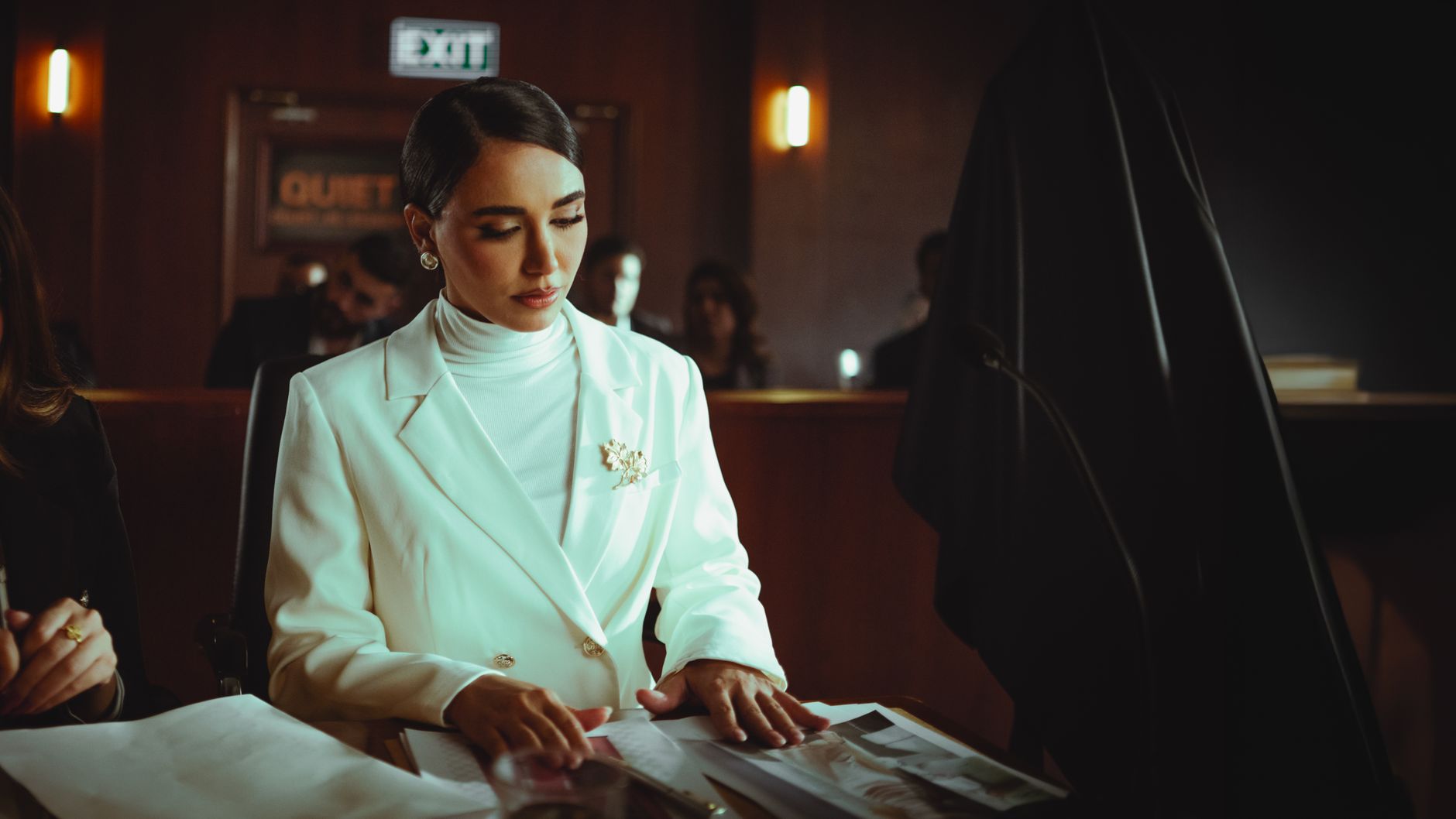
The Mother They Thought Was Powerless
The thing nobody at Millbrook Elementary ever bothered to learn about me was the simplest thing of all. They knew my daughter’s name. They knew I drove a nine-year-old Corolla with a cracked taillight and a booster seat in the back. They knew I showed up in jeans and a faded cardigan on the days I picked Sofia up, and they had decided, somewhere along the way, that a woman who dressed like that and spoke softly and never made a fuss was a woman they could handle however they pleased.
They never asked where I went in the mornings after I dropped her off. They never asked why I sometimes wore a plain dark blazer and pulled my hair back tight and looked like I was going somewhere that mattered. They saw a single mother in a small farm town, and they filled in the rest of the story themselves.
I let them. That was my mistake, and it was also, in the end, the reason everything turned out the way it did.
My name is Elena Reyes. I am a circuit judge for the county that Millbrook sits in, and I had spent eleven years learning how to sit still while people underestimated me. I did not know, that spring, that the two people who underestimated me worst would be a fourth-grade teacher and the man who ran my daughter’s school.
The Town That Raised Us Both
We moved to Millbrook when Sofia was four, the year after her father died. Daniel had been a wheat farmer’s son and a high school science teacher, and when the cancer took him it took the version of my life I had planned on too. I could have stayed in the city where I clerked and later took the bench. Instead I asked for a transfer to the rural circuit, the one that covered three counties of soybean fields and gravel roads and towns so small the diner and the church and the feed store were sometimes the same three buildings on the same short street.
People thought I was running away. I was not. I was running toward the kind of place where a little girl could ride her bike to the end of a county road and wave at every truck that passed, where the Friday-night football stadium lights could be seen from our back porch, where the woman at the post office knew you by your first name and asked after your family like she meant it. Daniel had grown up in a town like that. I wanted Sofia to grow up in one too.
Millbrook took us in the way small towns do, slowly and then all at once. The ladies at St. Bridget’s put us on the potluck rotation before I had unpacked the kitchen. The old man who ran the hardware store fixed our porch railing and would not take a dime. I liked that nobody there treated me like the judge. In the city I was “Your Honor” at the grocery store. In Millbrook I was Elena, Sofia’s mom, the one who brought the good enchiladas to the fall festival. I did not correct anyone. I did not want to be handled with the careful distance that a title puts between you and everyone else. I wanted, for a few hours a day, to just be a mother.
I kept my work quiet on purpose. I did not put it on the school forms beyond “county employee.” I did not mention it at pickup. When the other parents asked what I did, I said I worked at the courthouse, which was true, and let them assume clerk or secretary, which they always did. It felt like a kindness to myself, that anonymity. It felt like a small vacation from the weight of the robe.
I did not understand, until that April, that anonymity is only a gift when you are surrounded by decent people. Around the wrong ones, it is an invitation.
The Teacher With The Cold Hands
Sofia was in the third grade, and her teacher was a woman named Karen Webb.
Mrs. Webb had taught at Millbrook Elementary for nineteen years, and she wore those years like a badge of unquestionable authority. She was the kind of teacher who talked about “kids these days” and “back when parents backed us up” and treated every child’s struggle as a personal insult to her methods. She was famous in town, though it took me too long to understand that famous and respected are not the same word. Parents were afraid of her. I mistook that fear for reputation.
Sofia had never been a difficult child. She was dreamy and careful and slow to warm up, a little girl who needed a moment longer than the others to feel safe before she would speak. She read above her grade level and she cried when she saw a dead bird on the road and she still slept with the stuffed rabbit Daniel had given her the week she was born. She was not slow. She was gentle. There is a difference, and a good teacher knows it in her bones.
Mrs. Webb decided, early, that Sofia was a problem. She sent notes home that used words like “defiant” and “attention-seeking” for a child who had simply frozen up when called on. She started keeping Sofia in from recess. Then she started something worse, though I did not know it yet.
Sofia stopped talking about school. A child who had once narrated every hour of her day in the car home went quiet. She chewed her sleeves. She started asking, in a small voice, whether she could stay home, whether she was in trouble, whether she was bad. I asked her what was wrong and she said nothing, the way children do when they have learned that telling makes it worse.
I should have pushed harder. I have replayed that so many times. But I was a working mother running a courtroom full of other people’s disasters all day, and I told myself it was a phase, and I was wrong.
The Afternoon Everything Changed
It was a Thursday in late April. I remember because I had a light docket, three hearings that finished early, and I decided on impulse to pick Sofia up myself instead of sending her to the after-school program. I wanted to surprise her. I wanted to take her for ice cream at the Dairy Barn out on the highway and ask her, gently, one more time, what had been making her so quiet.
I got to the school forty minutes before the last bell. The front office was empty except for Marge, the secretary, who waved me through when I said I wanted to catch Sofia’s teacher for a quick word. I walked down the third-grade hall, past the construction-paper flowers taped to the walls, past the drinking fountain that only came up to my hip, and I heard it before I saw anything.
Crying. Muffled. Coming from behind a door.
Not a classroom door. A supply closet, the kind with a heavy handle and a small square window, halfway down the hall. The crying was coming from inside it, and it was my daughter’s voice, and it was saying the same word over and over, which was “please.”
I do not remember crossing the hall. I remember the handle. It was locked from the outside, a simple slide bolt, and my hands were shaking too hard to work it on the first try. When I got it open Sofia fell against me. She had been sitting on the floor in the dark among the mops and the boxes of paper towels, and her face was swollen from crying, and there was a red mark on her upper arm, four small marks in the shape of a grip.
She had been in there, she told me later, for the better part of an hour. Mrs. Webb had put her there for “talking back,” which meant Sofia had said she did not understand a math problem. The teacher had taken her by the arm hard enough to leave those marks and had walked her to the closet and had slid the bolt and had gone back to teaching the other children as though nothing at all had happened.
I want to tell you that I stayed calm. I am trained to stay calm. I have sat on the bench across from men who did unspeakable things and kept my voice level. But this was my child, in the dark, saying please, and something in me that has no title and no training simply came apart.
And then, because eleven years on the bench does leave marks of its own, another part of me came back together and got very, very quiet.
I took out my phone. I helped Sofia up, and I walked her to the classroom, and I opened the door, and Mrs. Webb turned around with an expression of pure irritation at the interruption. And I did something I have never regretted. I asked her, in front of the room, why my daughter had been locked in a closet. And I recorded her answer.
The Line She Should Never Have Said
Karen Webb was not a stupid woman, but she was an arrogant one, and arrogance and stupidity look identical from the outside when the camera is rolling.
She did not deny it. She did not soften. She looked at me, this soft-spoken single mother in a faded cardigan, and she decided I was no threat, and she told me the truth as she saw it.
“Your daughter is too slow,” she said. “She holds up the whole class. This is how I handle students who won’t listen. It’s worked for nineteen years and it’ll work for nineteen more.”
I asked her to repeat that Sofia was too slow. She repeated it. She added that if I did not like her methods I was welcome to homeschool, and that she would be putting a note in Sofia’s file about this “disruption” I was causing. Twenty-two children watched her say it. My phone caught every word.
I did not raise my voice. I said, “Thank you for clarifying.” Then I took my daughter home.
That should have been the end of it. A teacher had confessed, on video, to locking a child in a closet and physically handling her, and had defended it as policy. In a just world I would have taken that to the principal and the principal would have been horrified and Karen Webb would have been gone by Monday.
I did not yet understand what kind of world Millbrook Elementary was on the inside.
The Office Where They Threatened My Child
Principal Dale Corbin’s office had a big oak desk that he had clearly bought to make himself feel larger than he was. I sat across from it the next morning, in my plain blazer, having dropped Sofia with my neighbor because I could not bear to send her back into that building yet. Karen Webb stood by the window with her arms folded, and she had already rearranged her whole face into the mask of a wronged professional.
I laid it out plainly. I told Corbin what I had found. I told him I had video. I told him I expected Mrs. Webb to be removed from the classroom immediately, and I expected the school to report the incident as the law required, and I expected, at minimum, an apology to my daughter.
Corbin folded his hands and gave me a smile I have seen a thousand times from a thousand men who thought their position made them untouchable.
“Mrs. Reyes,” he said, and the way he said Mrs. told me everything about how he had decided to play this. “Context matters here. Your daughter can be difficult. Slow to follow instruction. Mrs. Webb is one of our most respected educators. Her methods are firm, but firmness is what some children need. Sometimes discipline requires a strong hand.”
“You’re calling a locked closet discipline,” I said. “You’re calling bruises on an eight-year-old’s arm a strong hand.”
“I’m calling it necessary.” The smile thinned. “Now. About that video. I’m going to need you to delete it.”
I said nothing. I have learned that silence makes people who are about to make a mistake go ahead and make it faster.
He leaned forward over the big desk. “Let me be clear. We understand your situation. A single mother, trying to keep up. It can’t be easy. But if that video gets out, if you try to make trouble for this school, I will personally see to it that Sofia is expelled. I will document that she attacked a teacher. She will be barred from every reputable school in this county, and I promise you, people talk. Her file will follow her. Her whole future, over one bad afternoon. Is that what you want?”
Karen Webb laughed then, a small ugly sound from the window. “Who do you think anyone will believe? A school that’s stood here fifty years, or one parent with a phone and a story?”
And there it was. The threat, spoken out loud, in a room where they believed they held all the power. Delete the evidence, apologize, and maybe they would generously decline to destroy my child’s life. That was the deal. That was the mercy they thought they were offering.
I looked at Dale Corbin for a long moment. I thought about the courtroom eleven miles away where I would be sitting by two o’clock. I thought about the robe hanging on the back of my chamber door. I thought about the fact that this man, who had just threatened to blacklist a traumatized eight-year-old to protect a woman who locked children in the dark, had no idea, none at all, who he was talking to.
I could have told him right then. I did not. I have found that the most important thing you can ever do, in a room with people who have shown you exactly who they are, is let them finish showing you.
“So this is your final position,” I said, standing slowly. “You’ll threaten a child’s future to protect yourselves.”
“Absolutely,” Corbin said, without a flicker. “Delete it, apologize, and we’ll consider letting her stay.”
I smiled at him. I could not help it. And I saw it land, saw the first small crack of doubt cross his face, because a frightened single mother does not smile in that moment, and some animal part of him knew it.
“I’ll be in touch,” I said, and I walked out.
What They Didn’t Know
Here is what Dale Corbin and Karen Webb did not know, that morning, as they congratulated themselves.
They did not know that the woman they had just threatened had spent eleven years reading the exact kind of confidence they had shown me and watching it collapse. They did not know that I had signed protective orders and heard from foster children and knew, precisely, chapter and verse, what the law said about a public employee physically confining and injuring a child in her care. They did not know that mandatory reporting is not a suggestion, that a principal who covers it up commits his own separate offense, that a threat to retaliate against a family for reporting is itself a violation you can lose your license and your pension over.
They did not know that I had not deleted anything, would not delete anything, and had, on the drive home the day before, already made three backup copies.
And they did not know that the county’s family services office, the one that would receive any report about a child harmed at a school, was run by a woman named Diane Pruitt who had testified in my courtroom two dozen times, who knew my face and my name and my title, and who would not need me to explain a single thing.
I want to be honest about something. In that office, with my daughter’s bruises still fresh in my mind, part of me wanted to slam my authority down on that oak desk and watch them beg. That is the part of every person that wants the villain to grovel. But that is not how justice works, and it is not the lesson I wanted Sofia to carry out of this. I did not want to win because I turned out to be more powerful than they were. I wanted to win because they were wrong, on paper, in the law, in front of anyone who would look. I wanted the kind of justice that would have protected her even if her mother swept the courthouse floors. Especially then. Because there are a hundred children in that county whose mothers do not wear a robe, and every one of them deserved a Karen Webb who was afraid to lock a door.
So I did not call in favors. I did it the right way, which was also, as it happened, the way that left them nowhere to hide.
Building It Right
I went home and I sat with Sofia and I told her, in words an eight-year-old could hold, that what happened to her was not her fault, that she was not bad, that she was not slow, and that the grownups who did it were the ones in trouble, not her. I told her she was never going back into that classroom. She cried, and then she slept for eleven hours, and when she woke up she asked for pancakes, and I made a mountain of them, and that was the first morning in months she talked to me the whole way through breakfast.
Then I got to work.
I took Sofia to our family doctor, old Dr. Meyer, who had delivered half of Millbrook. He photographed the marks on her arm and documented them in her medical record with the date and his professional opinion of how they were made. That is evidence that no principal can smile away.
I filed a report with Diane Pruitt’s office myself, as any citizen can, in plain language, with the video and the photographs attached. I did not mention the bench. I did not have to. Mandatory reporting law meant the school itself had been legally required to file within twenty-four hours of the incident, and had not, and that failure was now its own documented problem sitting on top of the first one.
I contacted the district superintendent, a careful man named Harold Voss who oversaw all four schools in the district, and I sent him the video and a written account, copied to the school board. I was polite. I was precise. I quoted the relevant statutes by number. I did not threaten. I did not need to. The facts did the threatening for me.
And then I waited, which is the hardest part, and the part where most people lose, because they cannot stand the silence and they cave or they explode. I had spent a career learning to sit in that silence. I sat in it.
The Wheels Turn
It did not take long. Facts like these, once they are properly filed, move on their own.
Superintendent Voss watched the video. I am told he watched it twice, and that the second time he stood up and closed his office door and made a phone call in a voice that carried anyway. A confession on tape does not leave a school district much room. A confession on tape from a nineteen-year veteran, corroborated by a doctor’s documentation of injuries and by twenty-two child witnesses, leaves it none at all.
Karen Webb was placed on administrative leave that Friday. Diane Pruitt’s office opened a formal inquiry the same week. And here is the part that Dale Corbin never saw coming, the part he had built himself with his own mouth in his own office. When the investigators interviewed him and asked whether the parent had brought concerns to his attention and how he had responded, he could not tell the truth, and he could not safely lie, because he did not know whether I had recorded that meeting too.
I had not. I want to be clear, I had not recorded the office meeting. But he did not know that, and the not-knowing did to him exactly what his own threat had been meant to do to me. He stumbled. He contradicted himself. Marge the secretary, when asked, confirmed that yes, the parent had come in that morning very upset, and no, no report had been filed, and no, she had not seen the principal take any action except close his door. The cover-up unraveled not because I pulled a thread but because there had never been any real fabric to it, only two people who assumed no one would ever check.
The board scheduled a hearing. And a strange thing happened once Karen Webb was on leave and the fear lifted a little off that building. Other parents came forward. A mother named Cheryl told the investigators that her son had been made to stand in the corner of that same closet with the door cracked, two years back, and that when she complained she had been told the same thing I was told, that her boy was difficult, that the teacher was respected, that she should be grateful. A father whose daughter had left Millbrook Elementary for the Catholic school three towns over said his girl still would not talk about Mrs. Webb’s class. It turned out I was not one parent with a story. I was the first parent who could not be frightened into silence, and the silence, once one person broke it, broke everywhere.
The Day I Stopped Being Anonymous
The board hearing was on a Tuesday evening in the Millbrook Elementary gymnasium, folding chairs on the basketball court, the same court where Sofia’s class had their Thanksgiving program. The room was full. In a town that small, a scandal is the only theater there is, and everyone came.
I sat in the third row in my plain blazer, the same anonymous mother they had all been so comfortable dismissing. Dale Corbin sat at the front table looking gray. Karen Webb sat beside her union representative with her chin up, still, incredibly, wearing the face of the wronged professional. She actually turned around once and gave me a look meant to remind me of my place.
Superintendent Voss ran the meeting. He played the video. In a silent gymnasium, over a cheap portable speaker, Karen Webb’s voice said your daughter is too slow, this is how I handle students, and you could hear the whole room stop breathing. He read Dr. Meyer’s medical documentation. He read the timeline of the school’s failure to report. He read Cheryl’s statement, and the other father’s, and two more that had come in that week.
And then, because the board had to establish the record of how the parent’s complaint had been handled, they called me to speak.
I stood up. I walked to the small podium they had set up at half-court. And the woman running the sign-in table, who was the district clerk and who had processed paperwork in my courtroom for years, said into the microphone, out of simple habit, the thing she had said ten thousand times.
“Please state your name and occupation for the record, Your Honor.”
Your Honor.
I have thought a great deal, since, about the sound that went through that gymnasium. It was not loud. It was a kind of intake, a hundred people understanding the same thing at the same moment. I watched it reach the front table. I watched Dale Corbin’s face as the two words landed and rearranged everything he thought he knew about the woman he had threatened across his big oak desk. I watched Karen Webb’s chin come down.
“Elena Reyes,” I said. “Circuit judge for this county.”
I did not say it to gloat. God knows I had wanted to, in that office, and had held it. I said it because it was true and because the record required it, and because there is a particular justice in a moment when the powerful discover that the person they chose to crush was never as small as they needed her to be. But I want you to understand the thing I said next, because it is the only part of that whole night that I am truly proud of.
I said: “I did not come here as a judge. I filed my report the same way any parent in this county can file one, with no name attached to it but my daughter’s. I want that on the record. Because if the only reason this school is finally listening is that one of the mothers turned out to have a title, then you have all learned exactly the wrong lesson. Cheryl doesn’t have a title. The Hendricks family doesn’t have a title. My daughter didn’t have a title in that closet. The law protected her, or should have, whether her mother scrubbed floors or wore a robe. That is the whole point of the law. It does not check your occupation before it decides your child matters.”
The gymnasium was very quiet. Then somebody in the back, one of the mothers, started to clap, and it spread, and it did not stop for a while.
What Justice Actually Looked Like
I will not pretend it was cinematic after that. Real justice rarely is. It is paperwork and hearings and slow official language. But it came, and it came thoroughly, and it came in the right order.
Karen Webb’s teaching certificate was suspended pending the state’s review, and the review, given a taped confession, went the only way it could. She did not teach nineteen more years. She did not teach one more day. Whatever pension she had been protecting when she looked at me and decided I was no threat, she spent the following year fighting to keep a piece of. There were consequences beyond the school, too, the kind that a confession to confining and injuring a child sets in motion, and I did not have to lift a finger to make any of them happen. She had done all the work herself, in front of my phone, because she could not imagine a world in which the quiet woman in the cardigan mattered.
Dale Corbin resigned before the board could vote on him. His threat to blacklist my daughter, the retaliation he had promised so confidently, turned out to be the single most damaging thing he could possibly have said, because threatening a family for reporting child abuse is not a gray area in any statute anywhere. He left Millbrook. I heard he tried to catch on with a district two states over and that the reference calls did not go well. His file, as he might say, followed him.
The school brought in a new principal, a young woman named Ms. Alvarez who had grown up on a farm outside of town and who cried, actually cried, when she read the case file, and who instituted a policy that no child is ever, for any reason, confined alone, and that every parent complaint is documented in writing the day it is made. Cheryl’s son went back to loving school. The Hendricks family drove their daughter back from the Catholic school. Something in that building healed, slowly, the way a town heals.
And Sofia. My Sofia.
She did not go back to Millbrook Elementary that year. I moved her to the little country school in the next township, where her teacher was a gray-haired man named Mr. Okafor who had taught for thirty years and understood, in the first week, that my daughter was not slow but gentle, and that gentle children bloom when they finally feel safe. She started talking again. She started sleeping without the light on. One evening in June she rode her bike to the end of our county road and back and came in breathless and pink and happy and said, “Mom, I waved at four trucks and every single one waved back,” and I had to turn around at the sink so she would not see her mother cry.
The Robe And The Cardigan
People in town know now, of course. You cannot un-say Your Honor in a gymnasium full of your neighbors. Some of them treat me a little differently, a little more carefully, and I have made my peace with that, mostly. But the ones who matter, the ladies at St. Bridget’s, the old man at the hardware store, they still call me Elena. They still put me on the potluck rotation. They still ask after Sofia like they mean it. To them I was never only the cardigan and I am not only the robe. I am just the mother who brings the good enchiladas, who had a hard year, whose little girl is doing better now, thank God.
I think about that spring more than I let on. I think about how close it came to going the other way. If I had picked her up ten minutes later. If I had not thought to record. If I had been the kind of mother who could be frightened out of a thing she knew was true. There are children whose mothers were frightened out of it, and I carry them with me now on the bench, every single one, every time a case comes before me where someone with a little power decided a child was too small to fight back.
Because here is the thing Dale Corbin and Karen Webb taught me, the thing I already knew but had to learn again from the wrong end of it. The world is full of people who look at a quiet woman and decide she is easy. They are not entirely wrong that quiet can look like weakness. But they never stop to wonder what the quiet is made of. Sometimes it is fear. And sometimes it is a person who has learned, over eleven long years, exactly how much noise the truth makes when you finally set it down on the table and step back and let everyone see.
They never asked what I did for a living. They assumed. And their whole plan, their threats and their smiles and their confidence across that big oak desk, was built on the sand of a single lazy assumption about a woman in a faded cardigan.
I would tell you to always tell people your title, to never let anyone underestimate you. But that is not the lesson, and Sofia is watching how I tell this story, so I will tell it the right way.
The lesson is that a child locked in the dark should be protected whether or not her mother turns out to be a judge. The lesson is that the law is supposed to work for the cardigan the same as the robe, and when it does not, that is not a failure of the mother. It is a failure of the people who forgot who they were supposed to serve. I got my justice because I knew the system from the inside. But I spend my days now trying to make sure the mother who does not know it from the inside gets the same thing. That is the only version of this story worth being proud of.
Sofia asked me, a while back, why the teacher did it. Why anyone would lock a little kid in a closet. I told her the truth, as much of it as an eight-year-old can carry. I said some grownups get so used to no one telling them no that they forget it can happen. And then someone finally does.
“Did you tell her no?” she asked.
“I did,” I said. “I told her no in front of the whole town.”
She thought about that. Then she nodded, satisfied, the way children are when the world has been set right, and she went back to her pancakes.
Outside, down the county road, a truck went by and honked, and my daughter waved, and everything, at last, was quiet in the good way.