
I was sitting in row eleven when I opened the program and stopped being able to feel my own hands.
The fourth performance was listed as Piano Solo by Marigold Colville. Underneath, in smaller print, a line I read three times before it made sense: Presented by the Colville Young Artists Fund.
Colville was not my daughter’s name. It was my sister-in-law’s married name. Marigold Duquette had been printed out of her own recital program, and I was sitting fourteen rows back from the stage where she was about to perform, close enough to see the lights but too far to reach her, because two days earlier my husband had told me she didn’t want me sitting close.
My name is Halcyon Duquette, and until that night in the Cedar Hollow Elementary gymnasium, I believed the worst thing happening in my marriage was that my husband had quietly stopped choosing me. I was wrong. The worst thing was already in motion, and it had my daughter’s real name crossed out in a printed program forty feet from where I sat with my hands frozen in my lap.
Cedar Hollow sits on a county road in the southern Missouri hill country, the kind of town where the feed store still runs a tab for families it’s known three generations, where the volunteer fire department sells barbecue plates every June to fund a new truck, and where everybody at the Wagon Wheel Diner knows whose kid got a solo before the family does. I’ve lived here my whole life except for four years in Springfield, and I came back the year Marigold was born because I wanted her raised the way I was, on a porch, in a pew, with dirt under her fingernails by August.
I was twenty-four and alone when I had her. Her father left before she could walk, and for three years it was just the two of us in a rented house on Route J, me doing bookkeeping from the kitchen table for half the farms and the feed store in the county so I could be home for every fever, every dentist appointment, every single day of her life. I was proud of that. I still am. I just didn’t know yet that a certain kind of family would one day use those years against me, would take the fact that I never once missed her like it was evidence against my character instead of proof of it.
Callahan Duquette came into our lives when Marigold was three. He worked the cattle and hay operation his family had run outside town for two generations, and the first time I saw him he was standing in line at the co-op with grease on his forearms and a shy, crooked smile he seemed almost embarrassed to be wearing. He was patient with Marigold in a way that had nothing to do with performance. He packed her lunches with little notes folded inside the napkin. He spent an entire Saturday afternoon down at the creek helping her collect smooth stones because she’d decided she wanted to paint them. He taught her to ride a bike in the church parking lot, running alongside her with his hand hovering an inch off the seat until she didn’t need it anymore, and then he let go.
That was the man I married. I want to say that plainly, because it matters for what comes later. Callahan was not always what he became in that gymnasium. Something got into him before it got into me, and it took me most of a year to understand where it had come from.
His sister Isadora moved back to Cedar Hollow when Marigold was six, after years away and after years of trying, without success, to have a child of her own. I want to be honest that my first instinct toward her was compassion. I understood, in the abstract, why a bright, easy-to-love little girl might pull at something raw in a woman who had wanted a daughter for a decade and didn’t have one. I told myself to be generous. I told myself there was room in Marigold’s life for an aunt who loved her.
But Isadora did not love quietly, and she did not love like an aunt.
She married a man named Rutger Colville not long after she came back, a man with money from his family’s stake in the regional co-op bank, and she started showing up at our house without calling first, always with something expensive in her hands. A dress Marigold had not asked for and I had not approved. A pair of shoes with a stiff sole Marigold complained pinched her feet, which Isadora wore herself in the same style and could not seem to understand anyone else’s foot might be different from hers. She started correcting what Marigold ate at our own table, in front of Marigold, telling her that sugar dulled a gifted mind. She told me, more than once, that my daughter needed “proper structure,” “real discipline,” “a future built by someone who understood what she actually had.”
As if Marigold were not a little girl who liked frogs and burnt marshmallows and the smell of her grandmother’s, my grandmother’s, kitchen. As if she were a resource that had been misfiled with the wrong family and needed to be corrected.
I remember the exact week it stopped feeling like generosity and started feeling like a takeover. Marigold had a routine checkup scheduled with Dr. Okafor over in the next county, the same pediatrician she’d seen since she was born, and I found out after the fact that Isadora had called the office herself, introduced herself as “the family’s arts coordinator,” and tried to have Marigold’s file flagged for a referral to a specialist in the city who evaluated children for what she called “accelerated placement.” The receptionist called me to confirm before she’d release anything, thank God, and I sat in my kitchen that afternoon with the phone still warm in my hand, trying to understand how a woman who wasn’t Marigold’s mother, wasn’t even her stepmother, had gotten far enough into our lives to be calling my daughter’s doctor’s office on my daughter’s behalf.
When I brought it to Callahan, he told me Isadora meant well. He always told me she meant well. I started to notice that “she means well” had become the sentence that ended every conversation about his sister, the way a period ends a sentence, no matter what came before it.
Callahan’s mother, Delphinia, encouraged every bit of it. She had a way of saying things that sounded like praise and worked like erosion.
“Isadora has such an instinct with Marigold,” she’d say, refilling her own coffee before offering to refill mine. “She knows how to bring gifted children along.”
Gifted children. Not my daughter. Not Marigold. A gifted child, generic and interchangeable, that the family had quietly decided needed better management than a bookkeeper’s daughter from Route J could give her.
Get a new story in your inbox every morning.
Facebook doesn’t show you every story we post. Our free newsletter does. Join 2,500+ readers.
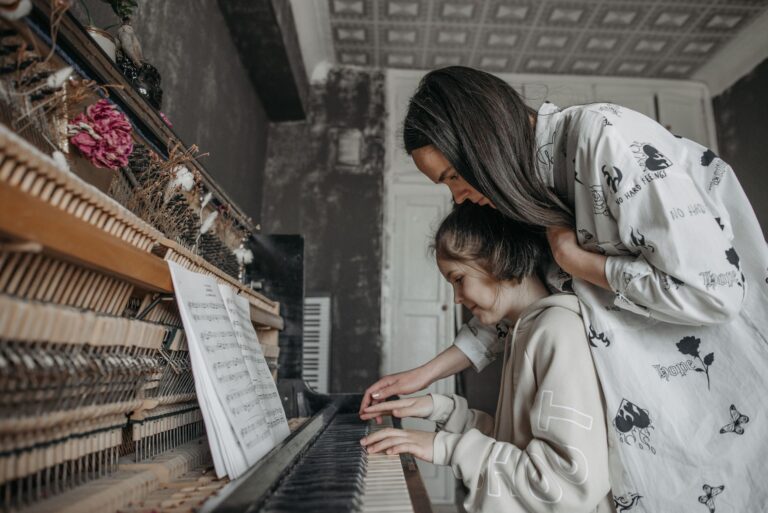
For a long time I told myself I was being small about it. Insecure. Marigold really was talented, more than I could take credit for. She could sit down at the secondhand upright in our front room and pick out a song by ear after hearing it only once. When she was nervous, really nervous, she hummed without noticing she was doing it, a habit she’d had since she was small enough to ride on my hip.
Music had always been the thing that belonged only to the two of us, long before Callahan, long before Isadora ever set foot back in this county.
When Marigold was five and terrified of starting kindergarten, so scared she vomited in the driveway the first morning, I sat with her on the porch steps and made up a little melody on the spot, four notes and one line, nothing fancy, the kind of thing a scared mother invents because she needs her hands to be doing something other than shaking.
Little bird, come back home.
I hummed it to her every morning that whole first month until she stopped needing it, and somewhere in there it turned into something else. It became our signal. If she was ever overwhelmed, or scared, or unable to say out loud that she needed me, all she had to do was hum those four notes, or play them if she was near a piano, and I would know. I would come. No explanation required, no question asked in front of anyone who might make her feel small for needing her mother.
Nobody else on this earth knew what that song meant. Not Callahan. Not Delphinia. Not Isadora with her pink dresses and her fund with her own name on it.
That is why every part of me went cold on the night of the concert when I heard four notes I recognized before I understood what I was hearing.
But I’m getting ahead of the part that still doesn’t sit right in my chest, the part from two days before, because I think it’s the part that explains how I ended up in row eleven in the first place instead of front and center where a mother belongs.
Callahan found me at the kitchen sink on a Tuesday evening, working my thumbnail against a coffee stain on a mug that didn’t need that much attention. He had the careful voice he used when he’d rehearsed something.
“Marigold doesn’t want you sitting up close Thursday,” he said. “At the concert.”
I turned off the water. “She told you that?”
“She didn’t want to upset you by saying it herself.”
“That doesn’t sound like her.”
He sighed the sigh he’d started using on me that year, the one that made me feel like a problem he was managing instead of a wife he was talking to. “Halcyon, not everything is aimed at you. Sometimes a kid needs a little breathing room from her mother.”
It landed exactly where he meant it to land, because he knew where to aim by then. He knew about the years before him, the years I did everything alone and people in this town, kind people, church people, still occasionally called it “overprotective” when I picked her up from every practice myself. Lately he’d started using that word too. Isadora called it smothering. Delphinia called it an unhealthy attachment, said gently, over coffee, like she was doing me a kindness by naming my flaw for me.
They always said it softly. That was the worst part. Soft cruelty doesn’t leave a mark you can point to. It just moves you back a row at a time until one day you’re in the back of the room at your own daughter’s concert, and you agreed to it, and you can’t even say exactly when you started agreeing.
So on Thursday night, when a volunteer with a clipboard at the gymnasium door smiled at me and said, “You’re in row eleven, hon,” I swallowed it down and walked to the back.
Delphinia was already seated front row center. Isadora sat beside her in a blush pink dress that matched, I would realize with a sick drop in my stomach, the dress Marigold had on. Callahan sat on Isadora’s other side. There was one more seat open beside him, and I assumed, for one stupid hopeful second, that it might be saved for me.
It wasn’t. Rutger Colville slid into it two minutes before the lights dimmed, holding a bouquet of white roses too large for an eight-year-old’s piano recital, roses meant for the kind of debut a family throws a party for afterward.
I sat in the back with a bulletin in my lap and my throat tight, and that was when I opened the program and found my daughter’s name gone.
I want to describe exactly what I felt reading Colville Young Artists Fund under a child I had raised alone for three years and shared for four more, because I think anyone who has ever been quietly written out of their own family’s story will recognize it. It isn’t only anger. It’s a kind of vertigo, like the floor under a fact you were sure of has been swapped out while you weren’t looking.
Before I could stand, before I could do anything but sit there with my fingers gone still on the page, the principal stepped up to the microphone.
“We’re proud tonight to introduce a young musician who’s been accepted into a private advanced arts program beginning next term,” he said, beaming out at the crowd like this was the good news of the evening. “Please welcome Marigold Colville.”
The gymnasium clapped. I could not make my hands do the same thing.
Marigold walked out under the lights looking smaller than I remembered her being that morning at breakfast. Her hair had been curled into ringlets so tight they didn’t move when she turned her head. She had on the stiff white shoes I knew for a fact hurt her feet, because she’d told me herself, twice, that she hated them. A little pearl clip sat pinned above her ear even though she has never once in her life asked for anything clipped into her hair.
She sat at the piano bench, and she did not look at the front row. She did not look at Callahan, or Delphinia, or Isadora glowing in her matching pink dress.
She looked past every one of them, all the way to the back of the room.
At me.
And then, before she played a single note of the piece she’d rehearsed for six weeks, she played four other notes, soft, almost lost under the shuffle of two hundred people settling into their seats.
Little bird, come back home.
My body was moving before my mind caught up to why. I stood and slid down the side aisle while she began her actual piece behind me, her fingers moving perfectly and her face not matching them at all, the face of a child working very hard not to cry in front of a room that thought she was smiling.
Near the stage door, her piano teacher, Mrs. Kettering, stepped straight into my path with her hand already reaching for my arm. Her face had gone the color of the gymnasium wall.
“Mrs. Duquette,” she whispered, “thank God you heard it. I’ve been trying to reach you all week.”
“Reach me about what?”
“The consent form.” She was already pulling a folded paper from the tote bag over her shoulder, her hands shaking a little. “For the academy. I told Isadora three times I wasn’t comfortable submitting Marigold’s audition tape without hearing back from you directly, and she kept telling me you’d already signed off, that you two had talked it through at home. I finally called the school office this afternoon to confirm before tonight, since they wanted it locked in before the announcement, and they read me your signature over the phone. H. Duquette. I thought that was the end of it.”
She held the paper out to me with two fingers, like it might be hot.
I looked down at a signature at the bottom of an enrollment and consent packet for something called the Colville-Voss Young Artists Residency, a six-week summer intensive two hundred miles away in the city, with a fall placement option that would have pulled Marigold out of Cedar Hollow Elementary starting in October. The line read H. Duquette in a careful, looping hand.
It was not my signature. I have signed my name on report cards and permission slips and the back of a hundred paychecks for eight years. I know exactly what my own hand looks like, and that was not it. It was close. It was close enough to fool a school office over the phone, close enough to fool a principal reading it off a page. It was not close enough to fool me standing in a hallway holding it in my own two hands.
There was a second page stapled behind the first, a billing summary showing a two-thousand-four-hundred-dollar non-refundable deposit already paid to hold Marigold’s spot, drawn from a joint account Callahan and I kept for property taxes and the truck payment. Two thousand four hundred dollars is not a fortune, but it is not nothing either, not to a family that budgets grocery trips around the co-op’s Tuesday discount and drives a truck with a hundred and ninety thousand miles on it. It was money we didn’t have loose to spend, moved without a conversation, to fund a program I hadn’t agreed to send my daughter to.
“I never saw this,” I said. My voice came out steadier than I felt, which surprised me later when I thought back on it. “I never signed this. I didn’t know this existed until thirty seconds ago.”
Mrs. Kettering’s face did something complicated, relief and horror arriving at the same time. “I knew something was wrong,” she said. “I knew it in my stomach for two weeks and I let Isadora talk me past it because she’s so, she’s very convincing, Mrs. Duquette. I am so sorry. I should have called you myself the first day she brought it in.”
Behind us, through the door, I could hear the piece ending, the small ripple of applause, and I knew I had maybe ninety seconds before Marigold came off that stage looking for the one face in the crowd she’d risked everything to signal.
I want to tell you I had some brilliant, composed plan for what happened next. I didn’t. I had a forged signature in my hand, my daughter’s tight ringlets and pinching shoes in my memory, and eight years of soft comments finally arriving somewhere solid enough to stand on.
I walked back into that gymnasium, down the center aisle this time, not the side one, and I did not stop at row eleven.
Marigold saw me coming before anyone else did. She came off the last stair of the stage and ran, not toward the front row where her grandmother and her aunt were already rising to intercept her with a professional photographer someone had apparently hired, but straight into me, hard enough that I had to catch myself on a folding chair to keep us both upright. She was shaking. Up close, under the gym lights, I could see the ringlets had been sprayed so stiff they’d left a rash along her hairline, and the pearl clip had been pinned in tight enough to pull.
“I didn’t want the shoes,” she said into my shoulder, so quiet only I could hear it. “I didn’t want any of it. I tried to tell Daddy I wanted you close and he said it would hurt Aunt Isadora’s feelings if I said so.”
I held her and I looked over the top of her curled head at Callahan, who had gone very still in his seat, and at Delphinia, who was already composing her face into something that could pass for surprised, and at Isadora, who had not composed hers fast enough. For one unguarded second before she caught herself, Isadora looked like a woman who had just watched a very expensive plan come apart in front of two hundred witnesses.
I didn’t make a scene in front of the whole gymnasium. I’d had eight years of watching this family use quiet, reasonable-sounding cruelty as a weapon, and I wasn’t going to hand them a loud, easy-to-dismiss one of my own to point at afterward. I asked Mrs. Kettering, in a low voice, if there was an office we could use, and she walked us there herself, past the punch table and the folding chairs, with the forged form still in my hand.
Callahan followed. Delphinia and Isadora followed too, Isadora already talking before the door was fully shut, already reaching for the word she’d used on me for two years running.
“You’re overreacting,” she started. “It’s a wonderful opportunity, Halcyon, it’s fully funded, I only wanted to spare everyone the drama of a big discussion, you know how you get about her going anywhere without you, I was trying to help.”
“You forged my name on a legal consent form,” I said. “That isn’t help. That’s a crime with my daughter’s name attached to it.”
“It is not forgery, it’s a formality. Rutger’s lawyer looked at the whole thing.”
“Then Rutger’s lawyer can explain to me why my signature is on a document I never saw, for a program that would have put my eight-year-old on a bus two hundred miles from home in October, and why the only person in this room who told the truth tonight is the piano teacher standing by that door.”
Callahan had not said a word yet. He was staring at the form in my hand like it had rearranged itself into a shape he didn’t recognize, and something in his face had started to crack open, the practiced patience gone, something rawer underneath it.
“Isadora,” he said. “Is that Halcyon’s real signature or isn’t it.”
The silence that followed answered him better than anything Isadora could have said.
“I traced it off a permission slip,” she finally admitted, quieter now, the performance draining out of her voice for the first time all night. “From her school pickup file. I was going to tell her eventually, once the acceptance was official, once she saw how good it would be for Marigold, I knew if I asked first she’d say no before she even heard the whole plan.”
“I would have said no,” I said, “because nobody asked an eight-year-old’s mother whether her daughter could leave home for six weeks. That isn’t a detail you skip. That’s the whole conversation.”
Delphinia tried, one more time, to smooth it into something survivable, something about how families help each other and how Isadora’s heart had always been in the right place even when her methods weren’t perfect. I let her finish. I’d spent two years absorbing that particular tone and telling myself I was the unreasonable one for flinching at it. I wasn’t flinching that night.
“Delphinia,” I said, “your granddaughter curled her own signal into that piece because she didn’t think anyone in her own family would hear her any other way. I heard her. That’s the only part of tonight that matters to me right now.”
Callahan crossed the room and crouched down in front of Marigold, who was still holding onto my side with both hands. “I’m sorry, bug,” he said, and his voice broke clean in half on the second word. “I should have asked you what you wanted instead of telling your mama what I thought you wanted. That was wrong of me, and I’m going to fix it.”
I won’t pretend that one sentence unwound two years of erosion in a single night. It didn’t. But it was the first true thing he’d said to me about his family in longer than I could remember, and it was a start, and starts matter.
We didn’t finish that conversation in a school office with punch cups and a hired photographer waiting outside the door. It took three more weeks, a deeply uncomfortable dinner at Delphinia’s table where Callahan, for the first time in our marriage, sat next to me instead of near his mother, and one difficult call to the residency program’s admissions office, made with Mrs. Kettering’s help, to formally withdraw a consent that had never legally existed in the first place. The program’s director was, to her credit, appalled once she understood what had happened, and the form was pulled from Marigold’s file entirely. Rutger’s lawyer, it turned out, had never actually reviewed the signature page at all. Isadora had told him it was handled. The two thousand four hundred dollars came back to our joint account eleven days later, not because anyone felt generous about it, but because Callahan drove to Rutger’s office himself and asked for it in person, the first time in our marriage I ever heard him raise his voice at anyone in his own family.
I didn’t press charges. I thought about it, sat with the idea for a long week, and decided in the end that the thing I actually wanted wasn’t a courtroom, it was my daughter’s whole name back in her own life and a family that couldn’t do this to her again without me finding out before the ink dried. Callahan and I sat down with Delphinia and Isadora together, all four of us at the kitchen table on Route J instead of the front room where the piano sits, and we set terms that had never existed before: no unsupervised outings, no purchases, no enrollment paperwork of any kind, without my direct, in-person, spoken agreement. Not a note passed through Callahan. Not a form slid in front of a piano teacher. Me, asked, out loud, first.
Isadora didn’t love that. She apologized in the stiff way people apologize when they’re sorrier about getting caught than about what they did, and it took months, not one dinner, before I trusted a single thing she said around my daughter again. But she kept the terms. Delphinia, to my surprise, kept them harder than her daughter did, maybe because watching Callahan’s voice break in that office had scared her more than anything I’d said.
Word travels fast in a town the size of Cedar Hollow, faster than I would have liked, and by the following Sunday half the pews at church already had some version of the story, most of it wrong in the details and right in the shape of it. I braced myself for the kind of soft judgment I’d absorbed for two years, the raised eyebrow, the pitying head tilt. It didn’t come. Instead, the woman who runs the Wagon Wheel Diner slid me a free slice of pie the next time I came in and said, low enough that only I could hear it, “Good for you, hon. I’d have torn that gymnasium apart.” Mrs. Kettering kept teaching Marigold, free of charge, for the rest of that school year, and never once mentioned the residency program again except to say she was glad Marigold got to stay a little girl a while longer instead of a project.
Callahan changed slower than I wanted and faster than I expected. He started coming to Marigold’s lessons instead of just paying for them. He asked me, out loud, before he agreed to anything involving his mother or his sister, a habit that took real effort for a man raised to smooth things over rather than name them. Some weeks he slipped back into the old patterns, defending a comment of Delphinia’s before he caught himself, and I told him plainly when he did. He didn’t sigh at me anymore when I said it. That alone told me something in him had actually shifted, not just apologized.
Marigold had another recital that spring, a small one at the county library this time, nothing with a printed program or a private academy attached to it, just folding chairs and lemonade in paper cups. I sat in the front row. Nobody moved me. When she came out to play, she looked for me first, the way she always used to before any of this started, and when she found me she didn’t need four secret notes to say anything at all. She just smiled, sat down, and played the piece she’d chosen herself, the whole way through, her own name printed correctly on a single half-sheet of paper someone had run off at the library copier that morning.
Little bird, come back home isn’t an emergency signal in our house anymore. Marigold still hums it sometimes, but now it’s just a song, the one her mama made up for her on a porch step when she was five and scared of the world, the one that means home is right here whenever she wants it, no forged signature required, no back row, no gymnasium full of people clapping for the wrong name.
She has mine now, in every program that gets printed for the rest of her life, and I intend to be sitting close enough to see her face every single time.
This story is a dramatization. Names, characters, and details are invented, and any resemblance to real people or events is coincidental.