The Daughter Who Saved The House
My mother’s hand was already moving before I understood what I had said wrong.
I felt the slap before I heard it, a flat crack across my cheek that turned the whole living room of the Ashcombe home into a single held breath. The band, a local four-piece that had been playing forty-year-old covers all night, stumbled and quit mid-verse. My ears rang. My daughter’s small hand tightened in mine, her fingers cold with spilled grape juice. Somewhere behind my mother, my sister Wexley stood with her ruined cream shoe held out like evidence in a courtroom, and behind her, close to two hundred people I had known my whole life stood frozen with paper plates of brisket in their hands, watching me stagger back a step and catch myself on the edge of a folding table someone had set up for the cake.
I want you to picture that room exactly as it was, because it matters later. String lights looped along the porch rails outside the open windows. A rented dance floor sat unused in the corner because nobody had worked up the nerve to be the first couple on it. My aunt Idella stood near the punch bowl with her hand already half raised to her mouth. My father stood by the fireplace with a paper plate balanced on his palm, a man who has spent his whole life finding somewhere else to look when the room turns hard.
“What have you ever done for this family,” my mother said, loud enough for the band to stop playing. “Get out.”
I want to tell you I said something sharp and perfect in that moment, the kind of line you think of three days later in the shower. I did not. I stood there with my mouth tasting of copper and my eight-year-old daughter Briar pressed against my hip, shaking, and for one long second I almost did what I have done my whole life at that house. I almost apologized and left quietly so nobody’s evening would be spoiled.
Then I thought about the courthouse steps in February. I thought about eleven months of double shifts and a pickup truck I sold for four thousand dollars and a folder of paperwork sitting in a lawyer’s office eleven miles from where I was standing, paperwork nobody in that ballroom knew existed.
I wiped my mouth with the back of my hand, and I picked my phone up off the floor where it had fallen, and I made one call.
But to understand why that phone call mattered, and why my mother’s slap was the last one she ever got to give me, you need to know what actually happened to that house, because it was not what anyone in Dunmore, Kansas believed.
*The house on Section Line Road*
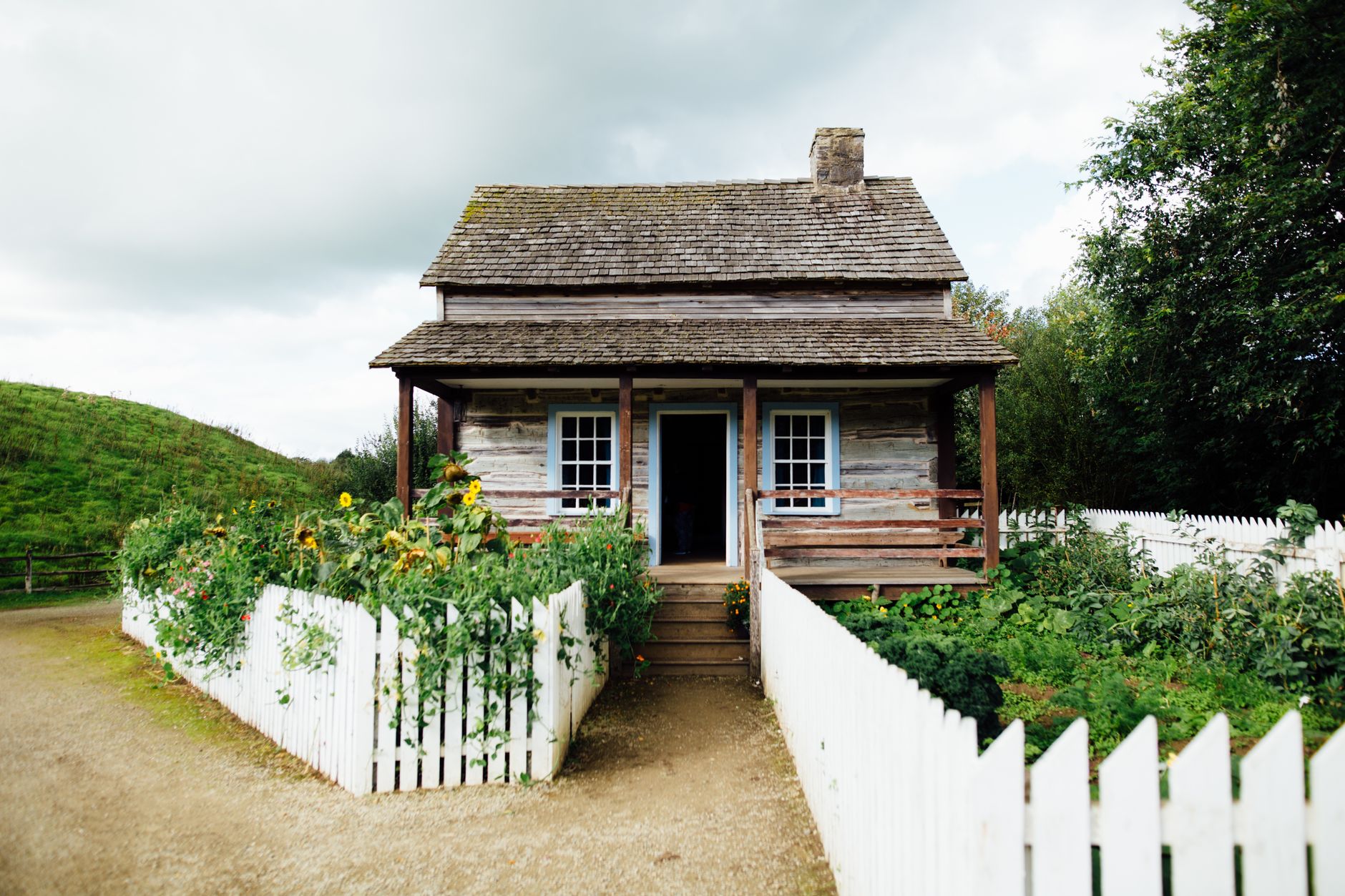
I grew up in that farmhouse two miles outside Dunmore, a town of about eleven hundred people if you count the ones who moved to Wichita but still claim it on Facebook. My grandfather built the house himself in 1958, added the porch in the sixties, and my father spent forty years running two hundred acres of wheat and milo off the same land. It is not a mansion. It has never been a mansion. But it has a wraparound porch and a kitchen big enough for the whole extended family at Thanksgiving, and every person in three counties who ever needed a plate of food or a place to sit through a bad night knew our door was open. That house was the center of everything good my family ever did, back before it became the center of everything I am about to tell you.
I am the older daughter. Wexley is two years younger and was, from the time she could walk, the daughter my mother, Winslet, understood. Wexley was easy to love in the specific way that costs nothing. She was pretty in school pictures, she married a man named Dell who managed the Ford lot in the county seat and drove a truck nicer than anything our father ever owned, and she had a gift for saying exactly the thing a room wanted to hear. I was the other one. Quiet, useful, the one who drove Daddy to dialysis and kept the church nursery and never once, not one time in thirty-nine years, heard my mother introduce me to a stranger as “my daughter who.” Wexley always got the “who.” I got “and this is Cormorant, she’s a nurse’s aide over at the home health agency.”
I remember being nine years old and winning the county spelling bee, and coming home with the little gold ribbon to find my mother already on the phone telling my aunt about how Wexley, who was seven, had just learned to whistle. I do not say that to sound bitter, though I suppose it does. I say it because it was the pattern of my entire childhood, repeated so many times it stopped registering as unfair and started registering as simply how the world was arranged. Wexley got new dresses for the county fair. I got Wexley’s old ones, taken in at the waist. When Daddy’s truck broke down my junior year and there was only enough saved to fix it or send one of us to the class trip to Topeka, I stayed home and told everyone I did not want to go, and I do not think my mother ever once asked whether that was true.
That was true, as far as it went. I have worked home health for sixteen years. I bathed dying men and changed dressings and drove forty miles round trip on ice more times than I can count, and it paid me eleven dollars an hour for most of that career and fourteen by the time this all happened. My husband Rowdy died in a combine accident when Briar was two, and after that it was just the two of us in a rented duplex in town, and I made peace a long time ago with being the daughter nobody bragged about at church potlucks. What I did not make peace with, what I never once accepted, was the idea that our family home might not survive to see Briar grow up in it the way I had.
Rowdy used to tell me, back when he was alive and we still had a whole life ahead of us we thought we could plan for, that my family treated me like the load-bearing wall of a house nobody ever bothered to admit was holding the roof up. You do not thank a wall, he said. You just lean on it and assume it will always be there. I laughed at the time because it sounded like something off a bumper sticker, but I thought about it constantly in the years after he died, especially on the nights I sat up with strangers’ dying fathers and drove home past my own family’s porch light and did not stop, because nobody had asked me to.
Briar has her father’s eyes and my stubbornness, and she is the reason none of what follows was ever really a hard decision, whatever it looked like from the outside.
*What actually happened to the house*
Here is what the family believed, and what Wexley let them keep believing: that after Daddy’s stroke in 2023 and the two years of hospital bills that followed, the farmhouse fell behind on property taxes, and that Wexley and Dell, out of the goodness of their hearts and the strength of Dell’s dealership commissions, stepped in and “saved” it.
Here is what actually happened.
Daddy’s stroke put him in a rehab facility for four months, and between that and Mama’s diabetes supplies and two mortgage modifications that never quite modified anything, the county property taxes on the house went unpaid for three years running. In Kansas, that is enough. The county treasurer’s office sells the tax lien, and if it is not redeemed, eventually the whole parcel goes up for auction on the courthouse steps. I found out about the sale date the way I find out about most things in that family, which is secondhand and too late to feel comfortable. I was at the feed store picking up a bag of scratch grain for Daddy’s chickens when Orval Kepner, who has run the county auction rolls for as long as I have been alive, mentioned in passing that “the old Ashcombe place” was on the list for the March sale.
I did not tell my parents I knew. I did not tell Wexley. What I did was call the treasurer’s office myself, sitting in my car in the feed store parking lot with my hands shaking, and ask exactly how much it would take to redeem the lien before the sale, and how much more it would take after, if a stranger bought it at auction and I had to buy back the redemption right within the state’s grace period. The number was not the kind of number that shows up in most of these stories. It was not six figures. It was eight thousand, four hundred dollars to redeem it clean, before auction, and I had eleven days.
I did not have eight thousand dollars. I had eleven hundred dollars in a savings account and a fourteen-year-old pickup that had belonged to Rowdy, the one thing of his I had kept instead of selling after he died because Briar liked riding in it, her booster seat still buckled into the middle. I sold the truck in nine days to a wheat farmer outside Pratt for four thousand two hundred, and I cried in the parking lot of the feed store afterward in a way I had not let myself cry since the funeral, because it felt like losing Rowdy twice.
I picked up every extra shift the home health agency would give me, including three overnight hospice cases in a row that I am still not sure how I survived. One of those cases was an eighty-nine-year-old widower named Foss who could no longer speak but who squeezed my hand every time I adjusted his pillow, and I sat with him at three in the morning doing math in my head, adding up what I still needed, while his oxygen machine ticked like a clock counting down a different kind of deadline. I cashed out a small whole life policy Rowdy had taken on himself through the co-op, which came to just under two thousand after fees. I asked my supervisor for an advance against my next two paychecks, and she signed off on it without a single question, which is more than my own mother would have done. And twelve hundred dollars short with three days left, I did something I am not proud of and would do again without hesitation: I drove to Hutchinson and sold my wedding ring and Rowdy’s wedding ring both, to a pawn shop with a bell over the door and a man behind the counter who did not haggle much once he saw my face, because a house Briar could grow up knowing her grandfather in was worth more to me than two rings sitting in a drawer.
I redeemed the lien on a Tuesday morning, four days before the auction, standing at the treasurer’s counter in a home health uniform that still smelled like somebody else’s house, my hands raw from three straight nights of hospital-grade hand sanitizer. The clerk, a woman I had gone to high school with, stamped the receipt and said, “Well, somebody’s happy today,” and I remember laughing, a strange wet laugh, because nobody in my family knew yet that anybody needed to be happy about anything. I sat in my car in the courthouse parking lot afterward for a full ten minutes before I could make myself drive, not crying exactly, just breathing, the way you breathe after you set down something heavy you have been carrying so long your arms forgot they could hang straight.
*Why I kept it secret*
I want to explain why I did not walk straight from that courthouse to my parents’ kitchen table and tell them what I had done, because I have turned that decision over so many times since.
Part of it was practical. The redemption cleared the lien, but the house and the underlying mortgage were still a mess, still technically vulnerable, and I did not trust my mother not to panic and do something rash if she heard “the tax people almost took the house” without also hearing “and it is handled.” Part of it was that I did not want it to become a performance. My family has a way of turning every act of care into a stage for who gets to look generous, and I did not want to stand in that kitchen and watch my mother’s face do the math on what it meant that the daughter she introduced as “the nurse’s aide” was the one who had quietly emptied her savings, sold her dead husband’s truck, and pawned her wedding ring to keep the family land in the family.
So I went to a lawyer in the county seat, a woman named Delphine Ochoa who has handled half the estate work in that part of the state, and I asked her to draw up something I had been thinking about since before Daddy’s stroke: a family land trust, my name as sole trustee since I held clear title through the redemption, but with a life estate written in so my parents could live in the house as long as they wanted, and Wexley’s two boys named as remainder beneficiaries alongside Briar. Delphine sat across her desk from me that first meeting, reading over the redemption receipt, and asked me plainly why I was not putting my own name down as the sole owner outright, since legally I had every right to. I remember telling her that I did not want to own that house the way you own a thing you plan to lord over people. I wanted the tax mess handled, the family protected, and Briar and her cousins to have a home to come back to, and I did not particularly need anyone to know it had been me who did it. Delphine looked at me for a long moment and said, “You understand most people would want the credit,” and I told her most people had not spent their whole life being told they were the one nobody credited for anything, so it had stopped being the point a long time ago.
I signed the trust documents in April. I did not file the deed transfer into the trust yet, because I told Delphine I wanted to see how the next few months went first. I could not have told you exactly what I meant by that. I understand it now. Some part of me, even then, was waiting to see whether my family would find out the truth on their own, notice the truck missing, notice my ring finger bare, ask a single question about how an eight-thousand-dollar tax debt had simply stopped existing. Nobody asked. Nobody noticed the ring. My mother complimented Wexley’s new manicure at Easter dinner and never once looked at my hands.
*The reopening*
By June, word had gotten around Dunmore that the Ashcombe place had been “saved from the bank,” which was close enough to true that nobody questioned it, and Wexley let the story grow the way you let a garden weed grow if it happens to be pretty. She told our aunt Idella that Dell had “worked some numbers” with a friend at the bank. She told the ladies at the Baptist church quilting circle that she and Dell had “quietly handled it, we don’t like to make a thing of it,” which was rich, because within a month she had planned an entire reopening party at the house, complete with a rented dance floor for the wraparound porch and a hired caterer out of Wichita, to celebrate the family home being safe. She called it a homecoming. She invited two hundred people. She did not once ask me if I minded, and I did not tell her why I might.
I told myself I would let her have this. That sounds foolish now, and it sounded a little foolish to me even then, but I have spent my whole life being the quiet one, and some old habits do not break just because you finally have the leverage to break them. I decided I would go to the party, I would bring Briar, I would eat the good barbecue, and I would let Wexley have her moment, because making a scene has never once in my life gotten me anything but exhausted.
I want you to understand that I went into that living room on a Saturday night in June with no plan to say a single word about the courthouse, the truck, the ring, or the trust sitting unfiled at Delphine Ochoa’s office. I went in planning to be exactly what my family has always needed me to be: quiet, useful, invisible.
*What happened at the party*
The party was loud in the specific way that things are loud when everyone is trying too hard. String lights wrapped the porch rails. A local four-piece band played covers of songs from forty years ago. Wexley stood in the center of the living room in a cream dress and matching heels, holding court while our aunts and cousins told her how proud our grandfather would be, how she had “carried this family,” how blessed we all were to have a daughter like her. My mother stood at Wexley’s elbow the entire evening, beaming, refilling nobody’s glass but her own pride. At one point I heard Wexley tell a cluster of church ladies that “some things you just do for family, you don’t need a thank you,” and I remember thinking, with a strange detached calm, that she had just said the truest sentence of the whole party without meaning a word of it toward me.
I stayed near the kitchen doorway with a tray of deviled eggs I had made myself because nobody had thought to ask the caterer for anything besides brisket, and I let Briar run around with her cousins the way children do at these things, half wild with cake and too much noise. I remember watching her laugh with Wexley’s boys, unbothered by any of the currents running under that room, and thinking that whatever else happened that night, at least she got this: cousins, a yard to run in, a grandfather who still knew her name. I told myself that was enough of a win for one evening, whatever else I had to swallow to get it.
It happened fast. Briar, chasing one of Wexley’s boys past the dessert table, caught her sneaker on the edge of a rented rug and went sideways, and her cup of grape juice went straight across the toe of Wexley’s cream suede heel.
“Get away from me,” Wexley snapped, and before I had crossed half the room she had shoved my daughter backward hard enough that Briar sat down on the floor, stunned more than hurt, one hand pressed flat against her own chest like she was checking her heart was still going.
“You little disaster,” Wexley said, looking at her shoe instead of my child. “Just like your mother.”
I dropped the tray. I do not remember deciding to drop it. I got to Briar and pulled her up against me and turned around, and I heard my own voice come out low and shaking in a way I had never used with my sister in thirty-nine years.
“You put your hands on my child.”
That is when Winslet pushed through the crowd, and for one half second I let myself believe she was coming to check on her granddaughter. She was not. Her eyes went straight to Wexley’s ruined shoe, and then she turned to me, and the room fell quiet enough that I heard the slap before I felt it.
“Get out,” she said. “You are a disgrace to this family. Wexley saved this house, and all you ever do is bring shame to it.”
Wexley, dabbing at her shoe with a caterer’s napkin, added her own line for the room’s benefit. “Leave, Cormorant. And teach your daughter some manners. I might not be so patient next time.”
I looked at my father, standing near the fireplace with a paper plate in his hand, and he did not meet my eyes. He looked, more than anything, like a man waiting for an unpleasant scene to be over so the band could start again.
*The phone call*
Something in me went very still. Not calm, exactly. Past calm. The hurt was there and the humiliation was there, but underneath both of them was a clean, quiet certainty I had never felt in that house before.
“Fine,” I said. “I’ll leave.”
Wexley smiled. My mother lifted her chin like a woman accepting an apology she had not been offered. My father’s shoulders dropped in relief.
“But I’m taking what belongs to me,” I said.
I pulled out my phone, found Delphine Ochoa’s office number saved under “D. Ochoa, Attorney,” and put it on speaker, and held it up so the whole room could hear it ring. It picked up on the second ring. Delphine’s paralegal answered, and I said, clear enough to carry to the back of that ballroom, “This is Cormorant Ashcombe. Do not file the trust transfer. Cancel the contract.”
For a second, nobody in that room understood what they were hearing. Then I turned to my sister.
“There is no bank loan,” I said. “There was never a bank loan. Dell never called anybody. I redeemed this house from a county tax auction in February. I sold Rowdy’s truck. I sold my wedding ring and his. I worked three hospice overnights in a row I still have nightmares about, and I paid eight thousand four hundred dollars out of my own name to keep the county from selling this land to a stranger from Wichita, which is exactly what would have happened four days after I paid it. The deed is in my name. It has been in my name since February. I had a lawyer draw up papers to put this house in a family trust so all of you, including your boys, Wexley, would have a share of it, because I did not want to own it over anyone. I was going to file that trust next month. I am not filing it now.”
The room stayed dead silent. Somewhere near the porch door, my aunt Idella had a hand pressed over her mouth. My mother’s face went through three or four expressions I had never seen on her before, and none of them landed on an apology.
“You’re lying,” Wexley said, but her voice had lost its whole floor.
I reached into my bag and pulled out the folder I had, in fact, brought with me, though I had told myself I only carried it out of habit, the same folder I had carried in my car for four months without admitting to myself why. I set it on the dessert table, on top of the ruined tablecloth, next to Wexley’s abandoned napkin. The county redemption receipt was on top, my name typed clean across it, dated the Tuesday morning in February I had stood at that counter still smelling like somebody else’s oxygen tank.
“You can all read it,” I said. “I’m not asking anyone to believe me.”
*What the room did*
I have thought a great deal since about what I expected to happen next, and I honestly do not think I expected anything. I think some part of me had made peace with saying it out loud and walking out the door regardless of how the room reacted, because I had needed to say it for eleven months and the saying of it mattered more to me than the reaction.
What actually happened was this. My aunt Idella picked up the receipt off the table and read it twice, her lips moving. Orval Kepner’s wife, who had come to the party as a neighbor, said quietly but not quietly enough, “That’s the auction list I told Orval about back in February, I remember him saying somebody redeemed it clean before it ever went up.” A man I barely knew, one of Dell’s coworkers from the dealership, said to no one in particular, “Wait, so whose truck did y’all say Dell traded in for that Bronco?” which was its own small, ugly answer to a question I had not even thought to ask.
My mother did not apologize that night. I want to be honest about that, because I know how these stories usually end and I do not want to promise you a moment that did not happen. She stood very still with her hand still faintly red from where it had struck my face, and she said, in a voice smaller than I had heard from her in years, “Why didn’t you tell us.”
“Because you would have made it about who gets credit,” I said. “You just proved that.”
I picked up my folder. I picked up my daughter. I did not look at Wexley again. I walked out through the same porch where the string lights were still glowing, past the rented dance floor, past two hundred people who would talk about that night at every church potluck in Dunmore for the next year, and I drove home with Briar quiet in the seat beside me, her hand finding mine at the first stop sign.
*Afterward*
I did not evict my parents. I want to say that plainly, because I know some people reading this will expect the story to end with me changing the locks the way it almost happened to me and Briar that night. I did not. My father is seventy-one years old and has lived on that land his whole life, and my mother, whatever she is, is still my mother, and I was not raised, despite everything, to put an old man and a sick woman out of the only house they have ever known.
For the first week after the party, the phone in my duplex rang constantly, mostly relatives wanting details, a few wanting to relitigate whether I should have humiliated Wexley in front of the whole county the way I had, as if the humiliation had been mine to hand out rather than a fact I had simply stopped hiding. I did not answer most of those calls. Orval Kepner’s wife brought me a casserole two days later and stood on my porch and told me, unprompted, that half the women at that party had gone home and told their husbands they hoped their own quiet daughters had it in them to do what I did. I did not know what to do with that, so I just said thank you and put the casserole in the freezer, where it sat for a month because I could not bring myself to eat something that felt like it belonged to a version of that night I had not lived through. What I did do was file the trust the following month exactly as originally written, my parents as life tenants, Briar and Wexley’s two boys as remainder beneficiaries, myself as sole trustee with the authority the redemption had always given me. I added one clause Delphine had never seen a client ask for before. Any resident of the property agrees, as a condition of residency, to treat every other beneficiary and every other beneficiary’s children with basic respect. It will probably never hold up cleanly in a courtroom. It held up fine at my kitchen table, which is where these things actually get decided.
Wexley did not speak to me for two months. When she finally called, in August, it was not really an apology, more a long explanation of how hard things had been for her that year, how Dell’s commissions were down, how she had never meant for it to go that far, and somewhere in the middle of it, almost as an afterthought, she said she was sorry Briar got hurt. I told her I appreciated her calling. I did not tell her it was enough, because it was not, and I have stopped pretending things are enough when they are not.
My mother came to see Briar in September, alone, without calling first, and stood on my porch for a long minute before she said anything. What she said was not a real apology either, not the kind you see in movies. She said, “I should have looked at that child first.” That was all. I let her in anyway. I am still working out what I think that says about me.
The house still stands two miles outside Dunmore, and the wheat still comes up gold every June, and Briar still knows her grandfather, who taught her to shell peas on that same porch this summer, slower than he used to but patient in a way I do not remember him being with me at that age. I go out most Sundays now. Not because everything is fixed. It is not fixed. But because I finally own, in every sense a person can own something, the one thing in that family that was always actually mine: the truth of what I did, and who I did it for, and the fact that I do not need anyone at that kitchen table to say thank you in order to know it was worth every dollar, every double shift, and both of the wedding rings I will never see again.
I bought that ring back too, eventually, from the pawn shop in Hutchinson, six weeks later with my first overtime check after the party. Not to wear it. Just to have it. I keep it now in a small dish on my dresser next to a photograph of Rowdy standing in front of that same farmhouse porch the summer we got married, and some mornings I catch Briar looking at both of them before school, like she is memorizing something she is not old enough yet to have words for.
People in Dunmore still ask me sometimes, at the diner or after church, whether I regret making that phone call in front of two hundred people instead of handling it quietly, the way I handled everything else. I tell them the truth, which is that I spent thirty-nine years handling things quietly, and it earned me a slap across the face and a daughter shoved to the floor in front of a crowd that had already decided who deserved credit before either of us said a word. I am done being quiet about the things that are actually mine. The house still stands. My daughter still has a grandfather. And for the first time in my life, when somebody in that family tells the story of who saved this place, the name they say is the right one.
This story is a dramatization. Names, characters, and details are invented, and any resemblance to real people or events is coincidental.