
The appraisal came back at $438,700, and that number is the only reason I ever found out I had disappeared.
I was not looking for anything that afternoon. I was sitting at my kitchen table with a mug of the ginger tea I still drink most days, nine months out from my last round of chemo, going through the refinance packet Corbett’s loan officer had emailed me because my name is still on the deed to our father’s house. Half of that house has been mine since the day the will was read, mine and my brother’s, fifty-fifty, on paper, in ink, in a county file that nobody can argue with. I had planned to sign the authorization page, initial where the yellow arrows told me to, and be done with it in ten minutes. Instead I scrolled past the loan terms and the disclosures to the appraisal report itself, the one with the interior photographs the appraiser takes for the file, because I wanted to see the house. I wanted to see the living room where I grew up.
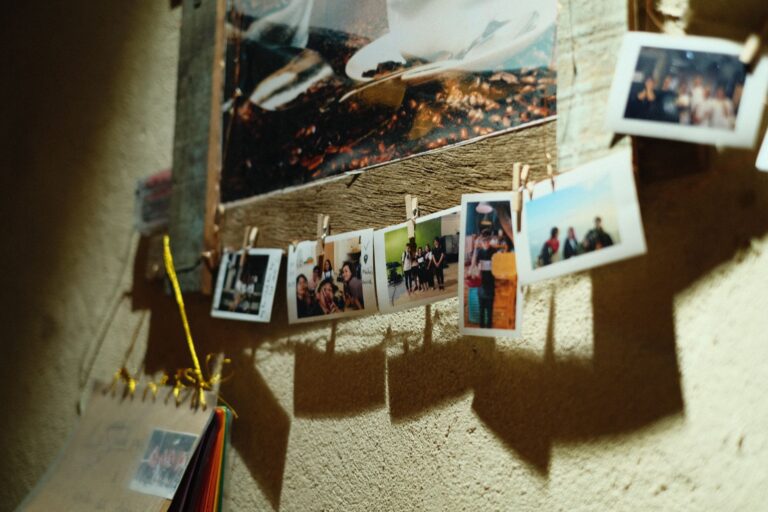
I found it on page fourteen. A wide shot, taken from the doorway between the kitchen and the front room, labeled in small gray type: Living Room, North Wall. And there was the wall. The gallery wall, my mother used to call it, the long stretch of plaster between the two front windows where three generations of frames had hung for as far back as I could remember. I zoomed in without thinking much about it, the way you’d glance at an old photo of your own kitchen just to see the wallpaper again.
And then I sat very still for a long time, because I had counted the frames on that wall twice, and there was not one photograph of me on it. Not one. In a house I had visited every single year of my fifty-seven years on this earth, in a room where I had opened Christmas presents in my pajamas and sat on my father’s lap and stood at nineteen in a cap and gown while my mother cried and took my picture against that very wall, there was, as of the day a stranger with a clipboard and a tape measure walked through for a bank, no evidence that I had ever existed.
I want to tell you how that wall used to look, because I have spent thirty-some years walking past it without once thinking I needed to memorize it, the way you never think you need to memorize the sound of your own front door, until one day it makes a different sound and you realize you knew the old one by heart.
My father was named Roscoe Tillman. He ran a small engine and tractor repair shop out past the edge of Cedar Bend, Nebraska, a town of about eleven hundred people if you count the ones who only come back for Decoration Day. My mother, Idette, kept the books for him and kept the house and kept, above every other thing she kept, that wall. She started it the year she and my father married, with a single photograph of the two of them on the courthouse steps, and she never once let it go empty for long. By the time I left for college the wall held maybe thirty frames, and I could have told you, blindfolded, by feel and by memory, the order they hung in.
There was the photograph of me at nine, missing both front teeth, holding up a bass I’d caught off the dock at Miller’s Pond, my father grinning behind me like I’d landed a marlin. There was my high school graduation photo, me in the blue gown squinting into the sun on the porch steps because my mother refused to let me go inside for it, said the light was better where God put it. There was a photograph from my college graduation, the one my mother took herself, standing on a folding chair somebody at the ceremony lent her so she could get the angle right, me at twenty-two in my cap with my whole life still ahead of me and no idea yet how much of it would run through that farmhouse. There was my wedding photo, my father in his one good suit walking me down the aisle of the little Lutheran church on Route 14, his hand shaking slightly the way it had started to even then, years before anyone had a name for what was wrong with him. There was a photograph, my favorite one, that nobody but our family would have understood, of my father and me standing in the doorway of his shop, both of us covered in grease to the elbow, both of us laughing at something the camera never caught, taken the summer I was thirty and drove out from the city every weekend to help him rebuild a combine engine because he’d rather teach me than hire a man he didn’t trust. And there was the last one, the one that mattered most, taken two Christmases before he died: my mother, gone by then eleven years, was not in it, but my father was, sitting in his recliner with me on the arm of it, both of us laughing at some joke my brother had made, my hand on my father’s shoulder. That is the one I think about the most. That is the one I would have wanted, if I only got to keep one.
I am telling you all of this in such detail because I need you to understand that this was not a wall of anonymous relatives. This was the record of a life, my life, kept faithfully by a mother who is gone and a father who is gone, in the one house on earth that was supposed to remember me even after they no longer could.
My brother Corbett is four years younger than me, and for most of our childhood he was the person I trusted most in the world. We built a treehouse together out of scrap lumber from Dad’s shop. We split a paper route. When our mother died of a stroke the spring I was twenty-six, it was Corbett who sat with me on the back porch steps at two in the morning, both of us too shocked to cry properly, and said, “It’s you and me now, Mar. Whatever happens to this family, it’s you and me.” I believed him. I still believe he meant it, that night. I think what happened after is a longer, sadder story than either of us understood we were writing.
Corbett met Deandra when he was twenty-eight. She came from Ogallala, from a big, loud, close family of her own, five siblings, a mother who hosted every holiday like a general running a campaign. I liked her, in the beginning. I want to be fair about that. She was quick and funny and she made my brother happier than I had ever seen him. I stood up at their wedding and gave a toast that made her mother cry, and I meant every word of it.
What I did not understand, not for years, was that Deandra had grown up the third of six children in a house where you had to fight for a place on the mantel, and that some deep, old part of her had never stopped fighting for it. I do not say that to excuse what came after. I say it because I think it explains the why, even if it never justified the how.
Get a new story in your inbox every morning.
Facebook doesn’t show you every story we post. Our free newsletter does. Join 2,500+ readers.
The changes started small, the way these things always do, so small that for years I told myself I was imagining them, or worse, that I was being petty about a piece of drywall while my own family was falling apart around it.
Our father had his first stroke when I was thirty-nine. It was mild, as strokes go, but it scared all of us badly enough that Corbett and Deandra, who had been renting a place in town, moved into the farmhouse within the month “to keep an eye on him.” I want to be honest and say I was grateful. I had a husband, Dean, and by then two kids of my own three hours away, and a full-time job that did not bend easily. Corbett and Deandra were there every day. I was not. I sent money. I drove out every third weekend I could manage and every holiday without fail. But I was not there, and being not-there, I have since learned, is a debt that gets called in eventually, whether you meant to run it up or not.
The first Christmas after they moved in, I noticed the fishing photo, the one of me and the bass, was gone from its spot by the window and had been replaced by a school portrait of a niece of Deandra’s I had met exactly once. I asked about it, lightly, the way you ask about a small thing you don’t want to make into a big thing. “Oh, that old fish picture,” Deandra said, waving a hand, “I think it fell behind the couch when we moved the sectional. I’ll find it.” I believed her. Why wouldn’t I have?
The next visit, my high school graduation photo had moved from the center of the wall to a lower corner, and a large new frame, a professional shot of Deandra’s parents on their fortieth anniversary, silver frame, ivory mat, had taken the center spot. “Doesn’t that look nice there,” Deandra said, not really asking. I said it did. I did not say anything else, because my father was in the next room in a wheelchair by then, learning to eat with his left hand, and I had exactly so much fight in me and I was spending it all on him.
Year over year, visit over visit, it went like that. A frame here, replaced with something of hers. A frame there, quietly relocated, and then, the visit after, simply not relocated back. I told myself each time that I was misremembering, that grief and distance were playing tricks on my memory of a wall I no longer saw every day. I told myself Deandra was just a woman who liked to decorate, who took pride in her own big loud family the way anyone would. I told myself, more than anything, that it did not matter, that photographs were not the same as love, that what mattered was that I called my father every Sunday and drove three hours whenever I could and held his hand in the ICU both times his heart gave him trouble before it finally did him in for good.
My father died on a Tuesday in March, seven years ago now, with Corbett and Deandra in the next room and me on a plane that landed forty minutes too late. I have made my peace with that. He was not alone; Corbett was holding his hand when he went, and I have never once resented my brother for being the one who was there, because he had earned it, every single day of those years, in a way that mattered more than I always wanted to admit at the time.
The will split the house and the eleven acres it sits on fifty-fifty between Corbett and me, in writing, notarized, unambiguous. It also said, in my father’s own plain words, that Corbett and Deandra could go on living there “so long as the house stays a home for the whole family, and Constance is always welcome in it.” I did not fight that arrangement. I did not want to sell my father’s house out from under my brother, and I did not want to move back to Cedar Bend myself. I wanted, simply, to still belong to the place. I thought a piece of paper had guaranteed me that. I have since learned that a deed can guarantee you a percentage of a house. It cannot guarantee you a place on a wall.
Two years ago, I was diagnosed with stage two breast cancer. I will not walk you through all of it, the surgery, the four months of chemo that took my hair and most of my appetite and, for a while, most of my hope, because that is its own story and not the one I am telling here. What I will tell you is what it does to a person, lying in a recliner at two in the morning with a bag of ice on your scalp because the cold cap makes it easier the next morning, to start doing the arithmetic of your own life. What will be left of me. Who will remember what I looked like at twenty-two, at my own wedding, standing next to my father in his one good suit. I thought, more than once, in the ugliest hours of that year, about the wall in that farmhouse, and I found a strange, small comfort in it. I thought: whatever happens to me, I am hanging on that wall. My father put me there himself, some of those frames with his own two hands. Whatever else this disease takes, it cannot touch that.
I finished treatment fourteen months ago. I am, as of my last scan, clear, and I do not say that lightly or take it for granted for one single day. I was still finishing my last round of follow-up appointments when Corbett called to say that he and Deandra wanted to refinance the farmhouse, take out a chunk of equity to convert the old dairy barn into an event venue, Deandra had been wanting to start a business hosting weddings and family reunions out there for a couple of years, and because my name was still on the deed, the bank needed my signature too. I said of course. I would have said yes to almost anything Corbett asked me that year. I was just glad to be alive to be asked.
That is how the appraisal packet ended up in my inbox on an ordinary Thursday afternoon. That is how I found page fourteen.
I sat at my kitchen table for a long time after I understood what I was looking at. I zoomed in as far as the image would let me. I made myself count the frames twice, then a third time, because some part of me refused to believe it the first two. Thirty-one frames on that wall in the appraiser’s photograph. Deandra’s parents, twice, in two different frames from two different decades. Her sister’s wedding. Her brother in his Army dress uniform. A large collage frame of her nieces and nephews at what looked like a lake house I did not recognize. My niece Tansy’s school photo, my nephew Beckett’s Little League team photo, both of which I was glad to see, because I love those children and I am glad somebody photographs them. And beside all of it, filling the space, an already-framed rendering of the barn venue, a mockup some designer had made, hung on the wall like a family member before the business had hosted a single event.
Not my fishing photo. Not my high school graduation. Not the photograph my mother stood on a folding chair to take. Not my wedding, not my father in his good suit with his shaking hand on my arm. Not the grease-stained photograph from the summer we rebuilt the combine engine. Not the last Christmas photo, my hand on his shoulder, the two of us laughing.
Six years, I would learn later when I sat down and actually did the math against my visits, comparing them to old phone photos I had taken of the wall in the background of other pictures without ever meaning to document anything. Six years of small, deniable, one-at-a-time replacements, until the day a stranger with a clipboard, hired by a bank, for a business Deandra wanted, took a wide reference photograph of a wall that had quietly and completely stopped belonging to me.
I did not sign the refinance authorization that day. I sat with it for four days instead, which is longer than I have ever made my brother wait for anything, and I used those four days to pull every old photograph I had, on my phone, in boxes in my own hallway closet, of that wall across thirty years, to be sure, all the way sure, before I said a single word to anyone. I was not going to walk into that house and accuse my brother’s wife of something on a feeling. I was going to walk in with proof, the same way, I would think much later, that my own father had once walked into a lawyer’s office with proof of who had actually shown up.
I drove out on a Saturday. I did not call ahead, which is not like me, but I did not trust myself to explain it over the phone without breaking down before I ever got there. Corbett was in the yard when I pulled in, working on the tractor, and he lit up the way he always does when he sees me, wiped his hands on a rag and came over for a hug that I could not quite return the way I wanted to. Deandra was in the kitchen. I walked past both of them into the front room, and I stood in front of that wall, in person, for the first time in maybe two years, and it was worse than the photograph. In person you can see the ghost outlines on the plaster where the old frames used to hang, the faint rectangles where thirty years of Nebraska sun had not quite bleached the wall the same as the frame had protected it, like the wall itself remembered what the family had forgotten to.
“Constance?” Deandra had come up behind me, drying her hands on a dish towel, a bright, easy smile on her face, the smile she has always worn, the one I spent thirty years mistaking for warmth. “You should have called. I’d have had lunch ready.”
I turned around and I asked her, as calmly as I have ever asked anything in my life, where my photographs were.
She did not even blink. “Which photographs,” she said, not quite a question.
“All of them,” I said. “Every single one of me. My graduation. My wedding. Dad and me at the shop. There isn’t one photo of me on this wall, Deandra. Not one, in six years.”
And here is the thing I will remember for the rest of my life, the thing I keep coming back to, because it told me everything I needed to know about how long this had actually been on purpose. She did not apologize. She did not even pretend to be surprised. She folded that dish towel in her hands, very neatly, and she looked at me, and she said, “It’s my wall too now, Constance. Maybe if you’d shown up more, you’d still be on it.”
I have turned that sentence over in my mind a thousand times since. If you’d shown up more. As if the four months I spent bald and shaking in a recliner counted for nothing against her calendar of visits from three miles down the road. As if the years I spent driving three hours every third weekend, working full time, raising two children, sending money home every single month without ever once being asked twice, had simply not happened, had never once been enough to earn a single square foot of a wall in a house that was, on paper, half mine.
Corbett had come in behind us by then, and I watched something in his face when he heard her say it, something that had probably been sitting there unspoken for years finally breaking the surface. “Deandra,” he said, quiet, careful, the tone of a man trying to keep two things from colliding that he had spent a long time keeping apart on purpose. “That’s not fair. She had cancer, for God’s sake.”
“I know she had cancer,” Deandra said, and for the first time her voice cracked just slightly, the smile finally slipping. “I sat in this house with your father for eight years, Corbett. Eight years of his diapers and his doctors and his three in the morning falls, and everybody in this family still calls it ‘Constance’s house’ like I was never here at all. I wanted one wall. One wall in this whole place that was mine.”
I did not expect that. I want to be honest about that, because it would be a much simpler story if she had only ever been cruel, if there had been no truth buried inside the cruelty at all. There was a truth in it. She had given eight years of her life to my father, years I did not give, could not give, chose a different life instead of giving. I had never once, in all that time, told her I saw that, or thanked her for it the way it deserved. I had let my brother do all the thanking for both of us, and apparently, for Deandra, that had never once felt like enough, and now I understood it likely never would, no matter how much I said it standing in that room.
But a truth inside a cruelty is still a cruelty, and understanding where a wound comes from does not make it hurt any less when it lands, and I told her that, as steadily as I could manage with my heart going like a hammer in my chest. “I hear you,” I said. “I do. And I should have told you a long time ago that I saw what you did for him, because I did see it, even from three hours away. But you didn’t earn that wall by erasing me from it. You could have hung a hundred photos of your own family on there and I would never have said one word, not one, if mine had still been on it too. This was never about not having room, Deandra. There was room. You made a choice, one photo at a time, for six years, and you never once told me you were making it.”
Deandra did not answer that right away. She looked at the wall herself, really looked at it, maybe for the first time in a long time seeing it the way an outsider would rather than the way you see a thing you pass every single day without noticing. Corbett stood between us, his jaw working, and then he said the thing that, more than anything else that happened that afternoon, told me my brother was still the boy who sat with me on the porch steps the night our mother died.
“She’s right,” he said, to Deandra, not to me. “I let this happen. I watched it happen, a little at a time, and I told myself it wasn’t my business, that it was just decorating, because it was easier than saying something. That’s on me as much as it’s on you. Maybe more.” He turned to me. “I’m sorry, Mar. I should have said something the first Christmas the fish picture disappeared. I knew even then it wasn’t an accident. I just didn’t want to fight about a wall.”
“It was never about the wall,” I said, and my voice finally broke on it, six years of small quiet erasures coming out all at once. “It was about whether this family still remembers I exist. I sat in a recliner for four months wondering if I was going to die, and one of the only things that got me through some of those nights was thinking about that wall, thinking I’m still there, whatever happens, Dad put me there himself. And I wasn’t. I hadn’t been for years. I just didn’t know it.”
Nobody said anything for a while after that. Deandra sat down at the kitchen table, and after a moment I sat down across from her, because whatever else was true, we were not going to solve six years standing up in a doorway. Corbett stood behind his wife with his hand on her shoulder, and I watched something pass between the two of them, an old argument I had clearly never been told about, finally getting some daylight on it.
“I’m not going to pretend I did it by accident,” Deandra finally said, and her voice was smaller than I had ever heard it. “I told myself for a long time that it didn’t matter, that photographs are just photographs. But I knew. Every time I took one of yours down, I knew exactly what I was doing, and I told myself you’d never notice, because you were never here enough to notice. And when you did notice, today, some ugly part of me wanted to say what I said, because some ugly part of me has wanted to say it for years. I’m sorry. Not for wanting a place of my own in this house. I’ve earned that. I’m sorry for how I went and got it.”
It was not a perfect apology. I do not think perfect apologies exist outside of movies. But it was a true one, and after everything, a true one was worth more to me than a smooth one would have been.
We did not solve it all in that kitchen, and I do not want to tell you we did, because I think stories that wrap up too fast are usually lying to you a little. But we did agree, that same afternoon, on something concrete, which is more than I had walked in hoping for. Corbett went out to the shed and came back with a second, smaller frame set he’d had since Christmas and never used, and the three of us spent that evening, an evening I had expected to end in a shouting match and instead ended with all three of us on the living room floor surrounded by photo boxes, building a second wall, the short wall by the hallway that had always held nothing but a coat hook and a calendar. My fishing photo. My graduation, both of them. My wedding. The grease-stained shot from the combine summer. The last Christmas, my hand on my father’s shoulder. And beside them, at Deandra’s own insistence, which surprised me more than almost anything else that day, a new photograph, one none of us had, of her and my father from a Fourth of July I had missed, the two of them laughing at something on the porch, because, she said, quietly, not quite looking at me when she said it, “He was my father too, the last eight years. I never got a wall for that, either.”
I put that photo up myself. I want that on the record. I hung the photograph of Deandra and my father with my own two hands, and I meant it when I did.
That was four months ago. I have been back to Cedar Bend three times since, which is more than I managed in the two years before, some of that my illness and some of it, I will admit now, my own quiet withdrawal from a house that had started to feel like it no longer wanted me in it. The old wall still holds mostly Deandra’s family, and I have made my peace with that, because I understand now what it cost her to earn a place there and I am not interested in taking it from her the way I once feared she had taken mine. The new wall, the hallway wall, holds mine, and every visit, somebody adds one more photograph to it, my grandkids now, a photo of me at my last scan appointment ringing the little bell they give you when you finish treatment, a photo from Tansy’s confirmation that Deandra herself took and printed and framed without anyone asking her to.
Last month, Corbett called to tell me the venue business had its first booking, a wedding in October, and that the appraiser was coming back through for the final inspection before the loan closed. I laughed, the first real laugh I’d had about any of it, and told him to make sure the man got a good wide shot of the hallway this time too.
We are not the family we were before my father got sick, before Deandra moved in and gave eight years I never gave, before I got sick myself and learned exactly how much a person can lose without losing everything. We are something else now, something we built on the living room floor with photo boxes spread out between us, and I do not know that I would trade it for the family we used to be, even if I could. That old wall told a story about who had always belonged. The new wall tells a truer one, about who was willing to fight to still belong, and who was willing, finally, to make room.
I drove home that last visit past the shop, my father’s name still faintly visible on the window where the paint has worn thin, and I thought about the appraisal, the number that started all of this, four hundred and thirty eight thousand seven hundred dollars, a figure meant to tell a bank what a house was worth. It could not have told them the first thing about what that house actually held, or what it had quietly stopped holding, or what three people on a living room floor, four months ago, decided together it was going to hold from now on. Some things a camera catches by accident. What you do after you see the photograph, that part is nobody’s accident at all. That part is a choice, the same one my father made a long time ago, and the same one, six years too late but not too late altogether, my brother and his wife finally made too.
This story is a dramatization. Names, characters, and details are invented, and any resemblance to real people or events is coincidental.