
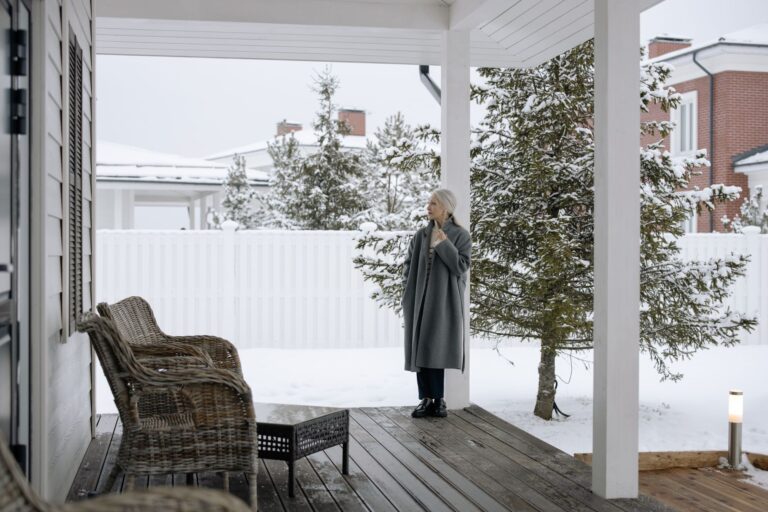
My phone is the newspaper now. Has been for eleven years, ever since the Tillerton Weekly folded and old Ferd Quackenbush packed his printing press into a horse trailer and drove it to an auction in Ottumwa. People asked who would tell them things after that. Who would tell them the Methodist roof fund came up short again, who would tell them the Ridenour boy made Eagle Scout, who would tell them which county road washed out after a hard rain. And I raised my hand the way I have raised my hand for every thankless job in this town since 1971. I said I would.
So now I sit at my kitchen table on a county road outside Tillerton, Iowa, a town of four hundred and eleven souls if you count the Pflueger twins twice, which most people do because nobody can tell them apart. I sit there with my coffee going cold and my thumbs going fast, and I send the news. Not gossip. I want that on the record before I tell you the rest of this. Gossip is a thing you whisper to hurt somebody. News is a thing you say plain to help everybody. I have spent thirty-some years learning the difference, and most days I land on the right side of it.
My name is Loveda Strommen. I am seventy-four years old. And six weeks ago my fat thumbs reunited two people this whole town had given up on, and I have not stopped smiling since.
Let me tell you how a person ends up being the news.
The list
It started small. After the Weekly folded I had maybe a dozen numbers in an old flip phone, the people who used to call me anyway because I always knew things first. I have always known things first. I do not say that to brag. I say it because it is a fact about me the way some people are tall or some people can sing. I notice. I have noticed since I was a girl. I noticed which barn cats were expecting before their own owners did. I noticed when the Hjelmstad marriage went cold a full year before they told a soul. My mother used to say I had a nose for what was coming, and she did not always mean it kind.
So I started texting that dozen people the things they used to find in the Weekly. The 4-H meeting moved to the Grange hall. The Lutherans and the Methodists were doing a joint fish fry, which was a small miracle in itself. Sterva Bachmeier broke her hip stepping off the church bus and would appreciate a hot dish.
And those dozen people told a dozen more. You want to hear something funny, here in a town that grumbles about technology, where half the men still keep a paper calendar from the implement dealer and the other half lose it, a town with one bar of cell signal if you stand near the grain elevator. Word of my list spread faster than any internet. By the second winter I had near two hundred numbers. By this spring I had three hundred and forty, which when you do the arithmetic is more people than actually live in Tillerton, because the list had jumped the county line and reached folks in Drakesville and Floris and a woman in Bloomfield I have never once laid eyes on who just likes to know what we are up to over here.
Every morning, six o’clock, I send the news. I have a system. I am not a careless woman, whatever my daughter Maribeth says. I keep the list in alphabetical order in the contacts. I draft the day’s news in a note first, then I copy it into a message, then I send it to the group I built, the one I named TILLERTON TODAY in all capital letters because it feels official and I am the only paper this town has got.
And every evening, if something happens, I send a second one. A man passed peaceful in his sleep, services Thursday. The high school took regionals in volleyball, God bless those girls. A black calf got loose on Route 2 near the Sundquist place, drive careful. I am the thing this town leans on without thanking, and I made my peace with the no-thanks part a long time ago. You do not do a thing like this for thanks. You do it because somebody has to, and because in a place this small the alternative to knowing is being alone, and I have watched what alone does to people out here on these long flat roads.
That is the part the young ones never understand when they tell me to just let people find things out for themselves. There is no for-themselves out here. There is the church, and there is the feed store, and there is me. Take away one of those three and a whole class of widow is suddenly facing a Tuesday with not one human soul who will speak her name out loud. I am, whether anybody admits it, a kind of glue. Cheap glue. Dollar-store glue. But the wall stays up.
The man at the end of the alphabet
Now I have to tell you about Osgood.
Osgood Renfeldt is the last name in my contacts, alphabetically, on account of his last name and the fact that nobody after him ever asked to join. He is eighty-one years old and he lives alone in the gray house at the dead end of Sparrowhawk Lane with a dog named Pretzel and a garden he keeps better than he keeps himself. Osgood came back to Tillerton four years ago after a whole life away. Spent forty-some years out in Nevada doing something with water rights that I never fully understood and he never fully explained. Came home when his sister Vesta passed and left him the gray house, and he just, stayed. A widower. No children. The kind of quiet man who lifts two fingers off the steering wheel when he passes you but will not roll the window down.
I added Osgood to the list myself, drove out there with a coffee cake the second week he was back, the way you do, and I said, Osgood Renfeldt, you are back in Tillerton now and in Tillerton we know things, give me your number. And he gave it to me because I think he was lonelier than he would ever say. He never replied to a single text in four years. Not one. But he read them. I know he read them because once I forgot to send the evening news that the pharmacy was closing early and he was the only person in town who showed up at the locked door confused, and he mentioned it to me the next time I saw him, gruff as a January morning. So I knew. He was reading every word. He was just a man who had forgotten how to answer.
I want you to hold onto Osgood. Last name on the list. The man who never wrote back.
Because the other name you need is Wilhelmina.
Wilhelmina Saetre, who I have known my whole life
Wilhelmina Saetre is seventy-nine and she has lived in Tillerton every day of those seventy-nine years except for two she spent in a Des Moines hospital after a gallbladder went bad. She taught the third grade here for thirty-one years. She taught my Maribeth. She taught half this town to read, and the other half she taught to behave, and there is not a person under fifty in this county who does not still sit up a little straighter when Miss Saetre walks into the Cardinal Cafe.
She lost her husband Thoralf nine years back. Cancer, the long mean kind. And after Thoralf she went quiet in a way that scared the people who loved her. She kept her house. She kept her flowers. She came to church. But the light in her, the thing that made third graders adore her, that went down to a pilot flame, and a lot of us worried it would just go out one of these winters the way it does with widows out here who run out of reasons to come in from the cold.
Get a new story in your inbox every morning.
Facebook doesn’t show you every story we post. Our free newsletter does. Join 2,500+ readers.
What almost nobody alive remembered, what I only remembered because I am the woman who notices and because I was there, was this. In the spring of 1962, Wilhelmina Saetre, who was then Wilhelmina Krogh, seventeen years old and the prettiest girl in the junior class, was in love with a boy named Osgood Renfeldt.
I know it because I was fifteen and I worshipped them both from the cheap seats. They were the couple. He gave her his class ring on a chain. They danced at the spring formal in the Tillerton gym to a record player Coach Bjornstad set up by the bleachers, and I sat against the painted block wall in a dress my mother made over from her own and I watched Wilhelmina Krogh put her head on Osgood Renfeldt’s shoulder and I thought, that is what it is supposed to look like.
And then his father moved the whole family to Nevada that June for the railroad work, and Osgood went with them because in 1962 a seventeen-year-old went where his father went. And they wrote letters for a while, the way you did. And the letters got further apart, the way they do. And Wilhelmina married Thoralf Saetre in 1966 and Osgood married a Nevada girl named Junette and the two of them lived two thousand miles and one whole lifetime apart and never, as far as anybody knew, exchanged another word.
I have to slow down here and tell you about the letters, because the letters are why this whole thing breaks your heart before it ever mends it.
I knew about the letters because Wilhelmina told me about them, back when we were both young married women hanging wash on neighboring lines, the way you tell a thing to the one friend who will keep it. After Osgood went to Nevada in the June of 1962, they wrote. She kept his in a hatbox. He must have kept hers, I learned later, in a coffee can in a Nevada garage for forty years. The first winter the letters came every week, thick ones, the kind a seventeen-year-old writes with a pen pressed so hard you can read it on the back of the page. He described the desert to her because she had never seen anything but Iowa, the way the mountains turned the color of a bruise at sundown, the way a place could have no green in it at all and still be beautiful. She wrote him the small news of Tillerton, who got married, whose barn burned, what the river did in the spring. She was, you understand, already the news. She was the news for an audience of one boy two thousand miles away, and I think about that a great deal now.
And then the letters got further apart, the way I told you, and here is the cruel mechanical truth of it, there was no villain in it at all. Nobody forbade them. Nobody intercepted a letter or told a lie. It was just distance and time and the plain arithmetic of being young and far away with your whole life in front of you. He met Junette at a church social in Reno. She met Thoralf at the implement dealer where Thoralf sold tractors and made her laugh, and Thoralf was a good man, I want that said, Thoralf Saetre was a kind and steady husband for forty-three years and Wilhelmina loved him true. And Osgood loved his Junette true for thirty-eight years until the cancer took her too, the same mean kind that would take Thoralf. Two good marriages. Two good people each. Nobody wronged anybody. That is the part that gets me. This was not a love anybody broke. It was a love that just got set down, gently, by two careful young people who each thought they were doing the responsible thing, and then sixty-four years went by and neither one of them was ever fool enough to think they would get to pick it back up.
Two old flames. Both widowed. Both back in the same four-hundred-person town. Both on my list. And neither one of them, I swear to you on my mother’s grave, neither one of them knew the other was there.
That is how separate old people can be in a small town. You think everybody knows everybody. But Osgood almost never came to town, and when he did he came at odd hours, and Wilhelmina kept to her church circle and her flowers, and their paths in four years had simply never crossed. He thought she was a memory in another state. She thought he was a memory in his grave, honestly, she told me later she had assumed Osgood Renfeldt died out west decades ago because that is what you assume about the boys who leave and never come back.
Now. Here is where my thumbs come in.
The morning I sent the wrong thing to the wrong man
It was a Tuesday in May. I remember because it was the morning of the plant sale at the Grange, the one the Garden Club does every spring, and I had a long news to send. The plant sale, the times, the fact that Wilhelmina Saetre had donated forty of her prize bleeding-hearts and her grandmother’s peony starts to the sale table and that you should get there early if you wanted the peonies because Wilhelmina Saetre’s peonies are the kind of thing people in this town set an alarm for.
I wrote it all up in my note. And then, because I am seventy-four and my eyes are not what they were and my daughter is right about the thumbs even though I will go to my own grave before I tell her so, I did a thing I had never once done in eleven years.
I sent the morning news. And then, a second message I had meant only for my own self, a reminder note, I sent it to the wrong person.
The note said, and I will give it to you exactly because I have it memorized now the way you memorize the moment a thing turns: “Remember to tell Wilhelmina her peonies were the prettiest at the sale. She has been so low since Thoralf. That girl used to light up a whole gymnasium. Osgood Renfeldt would have walked across the state to dance with her.”
I had typed it as a reminder to my own self to be kind to my old friend. To say something warm to a sad woman. I meant to keep it in my notes.
Instead my thumb, my fat careless seventy-four-year-old thumb, sent it as a private message to the last name in my contacts.
To Osgood Renfeldt.
Forty years of silence, broken
I did not even know I had done it. I set the phone down and went to the plant sale and bought a tomato start and an hour later I came home and there was a reply on my phone.
A reply. From Osgood Renfeldt. The man who had not answered a single text in four years.
It said: “Loveda. Is this the Wilhelmina Krogh that was in the class of 1963. Is she here. Is she in Tillerton.”
I sat down in my kitchen chair so hard I knocked my own coffee over and did not even reach for a towel. I read it four times. And I understood, in the way you understand a thing all at once with your whole body, exactly what my thumb had done.
I had told Osgood Renfeldt that the girl he loved sixty-four years ago was alive, and here, and sad, and that everyone in town still remembered her light.
I will tell you, I am not a woman who cries easy. I buried a husband and I buried a son and I have stood at a lot of gravesides dry-eyed because somebody had to hold the widow up. But I cried at that kitchen table. I cried because I am the woman who notices, and for sixty-four years I had noticed the wrong thing. I had noticed everybody’s news. And I had never once thought to put those two names side by side on my own list and ask the only question that mattered, which was: do they know.
I wrote back. My hands were shaking. I said: “Yes. It is her. She lost her Thoralf nine years back. She is here. She is two miles from your gray house and she has been here the whole time and so help me Osgood she does not know you are alive.”
He did not answer for an hour. And I sat there the whole hour, because I had read enough of that man’s silence over four years to know this one was different. This one was not a man who forgot how to answer. This was a man trying to figure out if he was allowed to hope at eighty-one.
Then he wrote: “What do I do.”
What you do
What do you do. Lord, what a thing for a widower to ask the town newspaper.
I thought about doing it big. I thought about my thumbs, that had caused all this, and how easy it would be to just blast it out to all three hundred and forty people on TILLERTON TODAY: OSGOOD RENFELDT AND WILHELMINA SAETRE WERE HIGH SCHOOL SWEETHEARTS AND THEY HAVE BOTH BEEN ALONE AND NOW THEY KNOW. The whole town would have wept into their coffee. It would have been the biggest news I ever sent.
And that is exactly why I did not send it.
Because here is the thing I had learned in eleven years of being the news, the thing that separated me from a gossip. Some news is not yours to send. Some news belongs to the two people it happened to, and your only job, your whole job, is to get out of the way and let it find them quiet.
So I did not text the town. I texted Wilhelmina. I did not tell her everything. I am not a fool. You do not tell a grieving woman over a text message that the boy from the gymnasium is alive two miles away. I texted her this: “Willa. Come have pie with me Thursday at the Cardinal. Just us. I have something good to tell you and I want to see your face when I do.”
She wrote back, “Good news. We are too old for good news, Loveda.” But she came. Of course she came. In this town you come when somebody offers you pie and a face.
Thursday at the Cardinal Cafe
I want to set this for you because I have replayed it a hundred times.
The Cardinal Cafe sits on the one block we call downtown, between the post office and the shuttered hardware store, under a sign that has said CARDINAL in red letters since before I was born. It smells like coffee and bacon grease and the particular vinyl of booths that have held this whole town’s bad news and good news for sixty years. Marreta who runs it now keeps the pie under a glass dome on the counter and on Thursdays it is rhubarb because the rhubarb is in and half this town has a patch of it gone wild by the back fence.
I got there first and took the corner booth, the one by the window where you can watch the whole one block of Tillerton go by, which is not much but it is ours. And I had done one thing. One small thing. I had texted Osgood the night before and I had said: “Thursday. Ten in the morning. The Cardinal. Do not come in. Park across at the post office and watch the door and when you see her go in, you give it ten minutes so she is settled, and then you walk across that street and you come in and you let her see your face. The rest is not mine to write.”
And he wrote back one word, the second word that man had sent me in four years.
He wrote: “Okay.”
Wilhelmina came in at ten on the dot because Miss Saetre has been on time since the Eisenhower administration. She slid into the booth across from me and Marreta brought the rhubarb without being asked and Wilhelmina said, alright, Loveda, out with it, what is the good news, and I just held her hand on that vinyl table and I said, Willa, do you remember the spring formal in 1962.
Her face. Oh, her face. Seventy-nine years old and her whole face went seventeen for a second, the light came up all the way, the pilot flame caught the whole burner, and she said, why on earth would you ask me that, and I said, because the boy you danced with did not die out west, Willa. He came home four years ago. He has been two miles from your door the whole time. And he found out three days ago that you were here. And he has been alone a long while too.
And the bell over the door rang.
The bell over the door
I have heard that bell ring ten thousand times. It is a cheap brass bell on a bent bracket and it has rung for every soul who ever came in out of an Iowa winter for a cup of coffee and a place to not be alone. I never once thought it was a holy sound until that Thursday.
It rang, and Wilhelmina Saetre turned around in the booth, and Osgood Renfeldt was standing in the doorway of the Cardinal Cafe in a clean shirt I happen to know he ironed himself because Pretzel the dog told me nothing but the crease did, with his hat in his two hands the way a boy holds his hat, eighty-one years old and terrified and hoping, and he looked at her across sixty-four years and a whole lifetime and two dead spouses and two thousand miles of Nevada, and he said the only thing he could get out.
He said: “Willa. You still light up a room.”
And the whole Cardinal Cafe went dead silent. Marreta stopped mid-pour. The two Pflueger twins at the counter, both of them, turned around. And Wilhelmina Saetre, the woman whose light I had been mourning for nine years, the third-grade teacher who taught this whole town to read, she put her hand over her mouth and she stood up out of that booth and she crossed the room and she did not say one single word. She just put her head on Osgood Renfeldt’s shoulder, right there by the pie dome, the exact same way she put it there in the gymnasium in 1962 when I was fifteen and watching from the cheap seats and thinking that is what it is supposed to look like.
And I will tell you. It is. It is exactly what it is supposed to look like. It just took them sixty-four years and one woman’s careless thumb to get back to it.
What I did not text
I want to tell you the hardest and best thing I ever did with that phone.
I did not text it.
I sat in that corner booth and I watched the two of them at the door and I had the most beautiful news in the eleven-year history of TILLERTON TODAY sitting right there in my reach, the kind of news that would have made three hundred and forty phones light up across two counties, and I put my phone in my purse and I zipped it shut and I let them have their morning.
The town found out the slow way, the old way, the right way. Marreta told somebody. The Pflueger twins told everybody, twice. By Sunday the whole congregation knew, and when Osgood Renfeldt walked into the Lutheran church for the first time in his life and sat down in the pew next to Wilhelmina Saetre, nobody said a word and everybody saw, and that is its own kind of news, the kind you do not have to send because the people just witness it together in one room.
Now
I drove out to Wilhelmina’s the first Tuesday after, because I am nosy and because I am the news and a woman has to confirm her sources.
I parked at the end of her lane and I did not even get out of the car at first. I just watched. There was the gray truck in her drive. There was Osgood Renfeldt on his knees in Wilhelmina Saetre’s flower bed with a hand trowel, and there was Wilhelmina standing over him pointing at something, and I could not hear the words but I could read the whole thing like a headline. She was telling him he had the bleeding-hearts in the wrong place. He was arguing. They were two old people arguing about peonies in a flower bed on a Tuesday morning and I have never in my eleven years seen a more beautiful piece of news in this town and I could not send a word of it.
I did get out, because I cannot help myself, and Wilhelmina waved me up the walk and Osgood got to his feet the slow careful way an eighty-one-year-old gets up off the ground, and he wiped his hand on his trousers and he shook my hand, and he held it a second longer than a handshake, and he said the longest string of words I ever got out of that man. He said: “Loveda Strommen. You sent me four years of news and I never wrote back one time. I want you to know I read every one. And I want you to know that of the maybe fifteen hundred messages you sent me, there was one that I needed, and you sent it by mistake, and I have been trying to figure out how a thing like that happens.” And I said, Osgood, it is not a mistake if the right person gets it. And Wilhelmina laughed from the flower bed and said, leave it, you two, the bleeding-hearts are not going to plant themselves, and he turned around and got back down on his knees in her garden and that was that.
I had pie with them on the porch after. Osgood does not say much even now, but I watched him watch her pour the coffee, and I will tell you, a man who waited sixty-four years to watch a woman pour coffee watches it like it is the most interesting thing that ever happened. Pretzel the dog lay across both their feet. Thoralf’s repaired porch board did not creak. And I sat there being the news and not sending it, which I am coming to think is the highest thing the news can do.
They are not married. I want to be honest with you because I have built my whole reputation on the difference between news and the story you wish were true. They are eighty-one and seventy-nine and they are taking it slow, slower than my Maribeth thinks they should, and good for them. He drives over in the gray truck on Tuesdays and Thursdays. They work in her flower beds. He fixed the loose board on her porch step that Thoralf never got to. She has him eating vegetables. Pretzel the dog has the run of two yards now instead of one.
Last week Wilhelmina brought a coffee cake to my kitchen door, the same kind I brought to Osgood four years ago when I made him give me his number and put him at the end of my list where my thumb could find him on a Tuesday in May. She set it on my table and she did not let go of the plate right away and she looked at me and she said, Loveda, you have been telling this whole town’s news for eleven years. And I never once heard you tell your own.
And I said, Willa, you are my own. The whole town is my own. That is the news. That has always been the news.
She cried. I cried. We had coffee cake at ten in the morning like two girls who got away with something.
I am seventy-four years old and I have a phone full of three hundred and forty people who lean on me to know things, and I have made my peace with the no-thanks of it, and I expect I will be sending the morning news at six o’clock until the day my thumbs go still for good.
But I want you to know what an old woman learned at a kitchen table on a county road in Iowa with a cold cup of coffee and a phone she does not fully understand.
The news is not the meetings and the fish fries and the calf loose on Route 2. The news, the real news, is who is alone and who does not have to be. And every single one of us is carrying a list of people who would light up a whole room if somebody just put their two names side by side and asked the only question that matters.
Do they know.
Go find out. Send the text. Even if your thumb sends it to the wrong man. Especially then.
This story is a dramatization. Names, characters, and details are invented, and any resemblance to real people or events is coincidental.