
The day my nephew Trent stood in Gordon Pruitt’s law office and told him I wasn’t even really on the deed to my own home, he said it smiling, like a man who had already spent the money in his head. He said it the way you’d mention the weather. “Uncle Walt’s been squatting out there for years off nothing but a handshake. There’s no way his name is on anything real.” He was wrong about that, the way a man is wrong when he has never once had to be right about anything that mattered, and it took me four days and one folder of yellowed paper to prove it. But I want to tell you how we got here first, because the deed only means what it means if you know what it cost.
I’m Walt Ferris. I’m sixty-eight years old, and I have lived on this piece of ground in Coffee County, Georgia, my whole life except for four years in my twenties when I thought I wanted something else. I came back. Everybody who leaves this land comes back, sooner or later, because the land doesn’t let go of you so much as it waits.
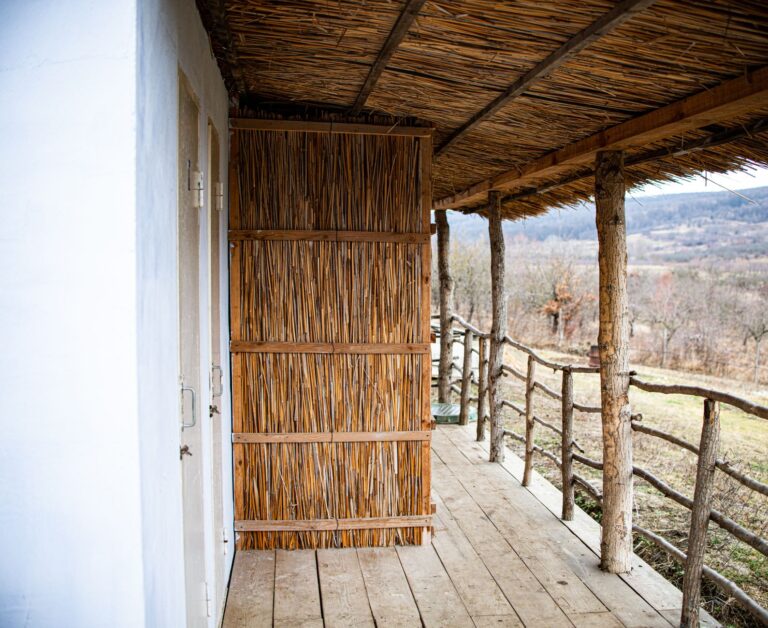
My grandfather, Silas Ferris, bought sixty-one acres off the Alma-Douglas road in 1949 with money he’d saved cutting pulpwood and running a little roadside store that sold boiled peanuts, chewing tobacco, and kerosene. He built the house himself, board by board, with help from two brothers-in-law and a mule named Chester that my father used to talk about like it was a person. It was never a grand house. It’s a white farmhouse with a tin roof that rings like a drum when it rains, a wraparound porch my grandfather added in 1955, and a barn out back that has been re-shingled so many times it looks like a patchwork quilt from the air. But it was ours, every splinter of it, bought and paid for and built by hands that are all gone now except mine.
My grandfather had two sons. My father, Everett, was the older one. Elias was the younger, born four years after my father, and from what everybody tells me, he was the kind of boy who made a room feel less crowded just by being decent in it. I never got to know my uncle the way I knew my father, because Elias died in Korea in November of 1950, at a place called the Chosin Reservoir, when he was twenty years old and I wasn’t born yet. My father used to say that if you wanted to understand our family, you had to understand that we are, all of us, living in a house named after a man none of us but my grandfather and my father ever met.
My father kept a shoebox of Elias’s letters home, and when I was a boy he would read a few of them to me on winter nights, the ink gone the color of weak tea, the paper so thin you had to turn the pages like they were made of moth wings. Elias wrote about the cold mostly, once basic training gave way to Korea, and about a buddy from Valdosta who kept a harmonica in his pack, and about how much he missed my grandmother’s cathead biscuits, which he asked after in nearly every single letter like a man keeping a list of reasons to come home. The last letter is dated three weeks before he died, and in it he tells my father, who was sixteen at the time, to look after the farm and to take care of their mother, “because I intend to be back before the peanuts come in, but a man should say these things anyway.” My father kept that line memorized his whole life. He recited it to me more than once, usually with his eyes fixed on something across the room that wasn’t really there.
My grandmother Opal told me the fence-line walk story more than once too, always the same details, the way people repeat the one memory that has worn smooth from handling. She said my grandfather walked the whole perimeter of the property that day, all sixty-one acres of it, in November cold without so much as a barn coat, stopping every so often to put his hand flat on a fence post like he was taking the land’s pulse. She said when he finally came back inside near dark, his boots were caked in red Georgia clay up past the ankle and his face had the look of a man who had decided something out there in the cold that he was not going to be talked out of. She never asked him what he’d been thinking on that walk. She said some things a wife knows better than to ask, and simply waits to see what her husband does about them instead.
Here’s what happened, as best as it has been told to me my whole life, by my father, and by my grandmother Opal until the day she died at ninety-one with her mind sharper than mine is now.
On a Tuesday morning in late November 1950, a car came slow up the dirt road to the farmhouse, and everybody in Coffee County who was alive back then and lived through that war knew what a car coming slow up your road meant. It meant a telegram, or a man in uniform standing at your door with his hat already off before you opened it. My grandfather saw the car from the barn and by the time he made it to the porch, my grandmother was already standing there with the door open, holding onto the frame the way you hold onto something on a boat in rough water.
Get a new story in your inbox every morning.
Facebook doesn’t show you every story we post. Our free newsletter does. Join 2,500+ readers.
Private First Class Elias Ferris, United States Army, killed in action.
My grandmother told me once, and only once, because it cost her something every time she said it out loud, that my grandfather didn’t say a word for the rest of that day. He walked the fence line. He walked it in the morning cold without a coat, and when he came back in that evening his hands were near frozen and his eyes were red, and he sat down at the kitchen table and he said, “This land is going to have his name on it. If I can’t bring my boy home, I can at least see to it his name is on something that lasts.”
The next morning, he drove into Douglas, the county seat, and he sat in the office of a lawyer named Thurgood Reese, who is long dead now too, and he had that lawyer draw up a new deed for the farm. Not a will. Not a promise. An actual, filed, recorded deed, transferring the sixty-one acres from himself alone into a joint tenancy naming himself, my grandmother, my father Everett, and, in a clause my grandfather insisted on word for word, “in perpetual honor of Private First Class Elias Ferris, U.S. Army, who gave his life for his country and whose name shall remain forever bound to this land.” He filed it that same week at the Coffee County Courthouse, on a day when his younger son’s body was still somewhere on the other side of the world, before they’d even had a service, before the ache had settled into something a man could carry instead of something that flattened him. He built a small stone marker at the edge of the front yard, under the big water oak, with Elias’s name and dates on it, though there is no body under it. It is a marker, not a grave. Elias Ferris is buried in Korea in a cemetery whose exact location the Army was never fully able to give my grandfather, and though the family tried for years afterward to have him brought home, it never happened. That stone under the water oak is the closest thing this family has ever had to a place to stand and grieve him.
My father inherited his interest in the land when my grandfather died in 1974. My grandmother kept her life estate until she passed in 1998, at which point, per the deed my grandfather wrote, her interest passed to my father, and mine, since by then I had my own name added through a later deed my father filed in 1985, the year I came back from Atlanta for good and told him I intended to spend the rest of my life on this ground. My father added me not because he had to, but because he wanted the Ferris name that had been on this land since 1949 to keep being carried by somebody who intended to stay. He died in 2011. My mother had passed three years before that. Since 2011, the deed of record for the farm at 4471 Alma-Douglas Road has read, in the county clerk’s careful cursive-turned-typescript over the decades: Walter E. Ferris, sole owner, successor in interest, subject to the perpetual honorary designation of Private First Class Elias Ferris, U.S. Army.
I have lived here alone since my wife Faye died in 2019. We were married forty-one years, and she is buried in the Ferris family plot at Beulah Baptist Church three miles from the house, next to my parents, close enough to the water oak that I like to think she can still see it if the dead see anything at all. Faye was the one who kept the story of the deed alive in the years my father was too tired to tell it and I was too young to understand why it mattered. She used to walk visiting cousins out to the stone marker herself, unbidden, and tell them the whole thing, the telegram, the fence-line walk, the drive into Douglas the same afternoon, in a voice that made it sound like something that had happened last month instead of decades before either of us was born. After she passed, I let that habit slip. I told the story less. I think that mattered more than I understood at the time.
We never had children, which is a sadness I have made peace with in the slow way you make peace with things you cannot change, tending instead to my brother Everett’s grandson, my great-nephew Trent, like he was closer kin than he technically is. Trent is my late brother’s son’s boy, thirty-one years old, and for most of his life I thought of him fondly, if honestly, the way you think of a nephew who visits twice a year and always seems to be in the middle of some new plan that is going to be the one that finally pays off.
I want to be fair to Trent here, because fairness matters to me more than it apparently mattered to him. Trent has had a run of bad luck that wasn’t entirely his fault. He lost a landscaping business in 2021 when a partner cleaned out the account and disappeared to Florida. He went through a divorce that took most of what he had left. He has two kids he loves and doesn’t see enough, and every time I saw him at a holiday table he looked a little more like a man being chased by something he couldn’t outrun. I gave him money twice. Not loans, gifts, because I didn’t want him carrying debt to me on top of everything else. I never once thought he’d try to take something that wasn’t his to take. I thought, wrongly, that blood and decency traveled together in this family the way they always had.
In April, a land development company out of Atlanta called Palisade Ridge Partners started buying up parcels along the Alma-Douglas corridor. They wanted to put in what their glossy brochure called a “master-planned residential community,” which meant they wanted to bulldoze sixty-one acres of pine, pasture, and one small farmhouse with a tin roof and put up a hundred and forty houses that all look like the same house. Their acquisitions man, a fellow named Chip Sandler who wore a golf shirt to a funeral home once and I have never forgotten it, offered me two million, one hundred thousand dollars for the farm. I said no. I said no politely the first two times and less politely the third time, when he came back with a number that had barely moved and a smile that hadn’t moved at all.
I found out what happened next only because Gordon Pruitt, my family’s lawyer and my father’s before me, called me on a Thursday afternoon in June and asked if I could come into his office in Douglas the next morning, and something in his voice told me not to wait until the next morning to ask why.
Trent had gone to see Gordon three days earlier, alone, without telling me. He told Gordon he wanted to talk about “the family estate situation” and, according to Gordon, spent the first ten minutes talking in circles about how Uncle Walt was getting up there in years and how it might be smart to get things “sorted out proactively” before anything happened to me. Then he got to the actual reason he’d come. He told Gordon that he had been in touch with Palisade Ridge, that they had offered him a finder’s fee to help unlock the parcel, and that he believed the farm should legally be considered part of “the broader Ferris estate,” subject to distribution among all of Everett’s descendants, including him, rather than mine alone. And when Gordon told him, as gently as a lawyer can tell a client’s nephew something like this, that the county deed showed the farm belonged outright to me, Trent said the sentence that Gordon Pruitt repeated to me word for word because he could see what it was going to do to me and he wanted me to hear it exactly as it was said.
“There’s no way that’s right. Uncle Walt’s been living out there off nothing but a handshake his whole life. I’d bet good money he isn’t even really on the deed.”
He said it with a shrug, Gordon told me, like it cost him nothing to say and like the truth of it didn’t matter half as much as the chance it opened up. He was betting, plainly, that an old man’s home was held together by nothing more solid than family sentiment, and that if he pushed hard enough at the right lawyer, the whole thing might come loose in his hands. He was betting that nobody, including me, had ever actually gone down to that courthouse and pulled the real paper. He said, and this is the part that took the longest for me to be able to say out loud without my voice doing something I didn’t want it to do in front of people, that he doubted anybody would even remember to check the county records his own great-great-grandfather had filed on the worst day of his life.
I want you to understand what that sentence did to me, because it wasn’t really about the money, or even about the land, not at first. It was that a boy I had helped raise, a boy I had put through two rounds of financial trouble without asking for a dollar back, was willing to stand in a lawyer’s office and gamble that the record of his own great-uncle Elias’s death, and the grief that built this house into what it is, had simply evaporated into family folklore that nobody would bother to verify. He wasn’t just trying to take my home. He was betting that the honor my grandfather tried to build into permanent, filed, legal record could be waved away as a story old people tell.
I did not sleep much that week. I want to be honest about that too. There were nights I sat on that porch my grandfather built in 1955 with a cup of coffee going cold in my hands, looking at the stone marker under the water oak, thinking about a twenty-year-old boy I never met freezing to death seven thousand miles from this porch so that his father would come home and, in his grief, decide the one thing he could still control was making sure his son’s name outlived him on something solid. And I thought about how easily all of that could be treated as nothing, if the right person just said it loud enough and confident enough in front of the wrong lawyer.
But Gordon Pruitt is not the wrong lawyer. Gordon has represented this family since his own father did, and when Trent left his office that day, Gordon didn’t call Trent back to argue with him. He called me. He said, “Walt, before this goes one inch further, I want us to go get the actual deed from the courthouse ourselves, in person, and I want you to see it with your own eyes before we do anything else.” I think Gordon already knew what we’d find. I think he wanted me to have the moment of finding it, rather than just being told about it over the phone.
We drove into Douglas together on a Friday morning in June, hot enough that the asphalt on the courthouse parking lot had gone soft at the edges. The Coffee County Clerk of Superior Court’s office keeps deed books going back to the county’s founding, some of them scanned now, the older ones still bound in leather ledgers that smell like a library nobody has dusted in a decade. A clerk named Priscilla Boatwright, who has worked in that office for as long as I’ve been an adult, pulled the microfilm and then, when I asked if the original ledger still existed, she went into the back vault herself and came out fifteen minutes later carrying a book that must have weighed twenty pounds, bound in cracked brown leather, with a strip of masking tape on the spine reading “1950-1951” in handwriting faded to the color of weak tea.
She set it on the counter and turned pages slowly until she got to November 1950, and there it was.
Deed recorded November 29th, 1950, Coffee County, Georgia. Grantor: Silas E. Ferris. Grantees: Silas E. Ferris and Opal M. Ferris, joint tenants with right of survivorship, remainder to Everett S. Ferris. And then, in the same clerk’s careful hand from seventy-six years ago, the clause my grandfather had insisted on, word for word, exactly as my father always told me it read: “This conveyance is made and recorded in perpetual honor of Private First Class Elias Ferris, United States Army, who gave his life in service to his country at the Chosin Reservoir, Korea, on or about the 29th day of November, 1950, and it is the intention of the grantor that his name remain forever bound to this land, recorded this day that his family received notice of his death, so that no passage of time nor change of hands shall separate his memory from this ground.”
He filed it the same day. Not the week after. Not once he’d had time to grieve properly and think it through. The very day the Army’s car came up that dirt road, my grandfather drove himself to this courthouse, sat in a lawyer’s office with the ink barely dry on the telegram, and made his son’s name a permanent fact of public record before he had even let himself cry.
I stood at that counter and I put my hand flat on that page, on paper that predates me by nineteen years, and I did not say anything for a while. Priscilla Boatwright, God bless her, just stood there quietly and let me have it. Gordon put his hand on my shoulder. And then Priscilla, without my even asking, pulled the subsequent deed books, 1974, 1985, 1998, 2011, and laid out the whole unbroken chain, generation to generation, every transfer recorded, every signature notarized, ending in a deed filed in 2011 naming Walter E. Ferris as sole owner in fee simple, “subject to the perpetual honorary designation recorded November 29, 1950, in honor of Private First Class Elias Ferris.” Seventy-six years of paper, never broken, never lost, sitting exactly where my grandfather put it the same day his son died, waiting for anyone who cared enough to look.
We had certified copies made that same afternoon. Gordon mailed one to Palisade Ridge Partners with a two-paragraph letter informing them that the property was not part of any disputed estate, that its chain of title was clean and unbroken back to 1950, and that any further contact regarding acquisition should come through his office and would be met, going forward, with the same answer I had already given Chip Sandler three times: no.
Trent, I’m told, called Gordon’s office once more after that letter went out, and Gordon, who has more patience than I do, told him plainly that the deed was exactly what I’d always said it was, that his information had been wrong, and that he’d be wise to let the matter rest. I did not hear from Trent directly for three weeks. When he finally called me, it was not really an apology, not at first. It was him trying to explain that he’d been desperate, that Palisade Ridge had dangled a finder’s fee that would have solved every problem he had, that he never meant it as an attack on me personally, just on what he called “an old family assumption that maybe wasn’t as solid as everybody thought.”
I told him the truth, which is that it was solid. It had always been solid. It was sitting in a leather-bound ledger in a county vault the whole time, filed by a grieving father on the worst day of his life specifically so that no one, ever, could stand in a lawyer’s office generations later and claim it didn’t exist. I told him that what hurt worse than the land grab was the bet underneath it, the bet that nobody would remember, that nobody would check, that a dead soldier’s honor was soft enough to be argued away by a man who never once visited the stone marker under the water oak to learn his name properly.
I am not a man who holds grudges easily, and I want to tell you that this story ends with something better than a grudge. Trent came out to the farm in late July, on a Sunday, without calling ahead, which is either a good sign or a bad one depending on the man, and with Trent it turned out to be a good one. He walked straight past me, out to the water oak, and stood in front of that stone marker for longer than I’d ever seen him stand still in his life. When he came back to the porch, he was crying, and he said the thing I think he’d needed to say since he was old enough to understand what that stone meant. He said he’d never once, growing up, been told the story of the day the deed was filed, the day itself, the same day, before the funeral, before anything. He’d known Elias died in Korea. He hadn’t known what his own great-grandfather had done with his grief that same afternoon.
We sat on the porch a long time that Sunday, past dark, past the point where the mosquitoes usually run me indoors. Trent asked me question after question, the kind of questions I wished he had asked years earlier, whether Elias had a girl back home, whether he’d wanted to farm or had other plans, whether my grandfather ever talked about him after that first silent day. I told him what I knew and admitted, more than once, that some of it had died with my father and my grandmother, because nobody had thought to write it all down while the people who remembered it firsthand were still around to be asked. Trent said, quietly, that he wanted to help fix that. The following week he drove himself to the Coffee County Veterans of Foreign Wars post in Douglas and sat with two old-timers who’d known my father, and came back with a page of notes about Elias’s unit and a promise from the post commander to add Elias’s name properly to the county’s Korean War memorial plaque downtown, where, it turned out, a clerical mix-up decades ago had left him off entirely. Trent is the one who caught that. Not me. I’d walked past that plaque at the courthouse square a hundred times in my life and never once checked it against the family record, and it took a young man trying to make amends to notice that his own great-great-uncle’s name wasn’t even carved into the town’s memory the way it deserved to be. The plaque was corrected in September, and Trent stood next to me at the small rededication the American Legion held for it, in his one good jacket, looking like a man who had finally found a use for all that restless energy that had gotten him into trouble in the first place.
I realized, watching him that day, that some of the blame for what happened in Gordon’s office was mine. I had let the story get thin in the retelling, a name on a stone instead of a full accounting of what that name had cost and what it had built. I have since sat down with Trent three separate times and told him everything, the water oak, the leather ledger, the exact wording Silas insisted on, so that when I am gone, he will be the one who knows to defend it, not the one who tried to unravel it.
We have since had the deed’s honorary clause formally noted with the Georgia Secretary of State’s veterans affairs office, at Gordon’s suggestion, so that the designation carries a second layer of protection beyond the county record alone. Palisade Ridge Partners built their development two miles up the road instead, on land that had no name attached to it that anybody was willing to fight for. I don’t think about them much anymore. I think, instead, about my grandfather driving himself into town that Tuesday morning in 1950 with his son’s death still fresh enough to be called news, choosing, in the middle of the worst grief a parent can carry, to do the one permanent thing still available to him. He couldn’t bring Elias home. He couldn’t undo the telegram. But he could make sure that seventy-six years later, when a young man stood in an office trying to argue that a soldier’s memory was just family folklore, there would be a piece of paper with the county seal on it that said otherwise, filed and recorded and waiting, exactly where he left it, on the day he needed it to be true more than he had ever needed anything.
I still sit on that porch most evenings. The water oak has grown so wide now it shades half the yard. Priscilla Boatwright still works at the courthouse, and I bring her a jar of my fig preserves every August because she is the reason I got to stand in that vault and put my hand on the proof myself instead of hearing about it secondhand. Trent comes out most Sundays now, and last month he brought his youngest daughter, who is seven, and asked me to tell her the story properly, from the beginning, the mule named Chester and all of it. I did. And when I got to the part about the deed, about a grandfather filing his grief into permanent record the same day the car came up the road, I watched a seven-year-old girl look at a stone marker under a water oak like it was the most important thing she had ever been told, which, in this family, it is.
The land is still ours. It was never really in question, not legally, not for one single day in seventy-six years. What was in question was whether we would remember to protect what had already been protected for us, long before any of us were born, by a man who turned the worst morning of his life into the strongest paper this family has ever owned.
This story is a dramatization. Names, characters, and details are invented, and any resemblance to real people or events is coincidental.