
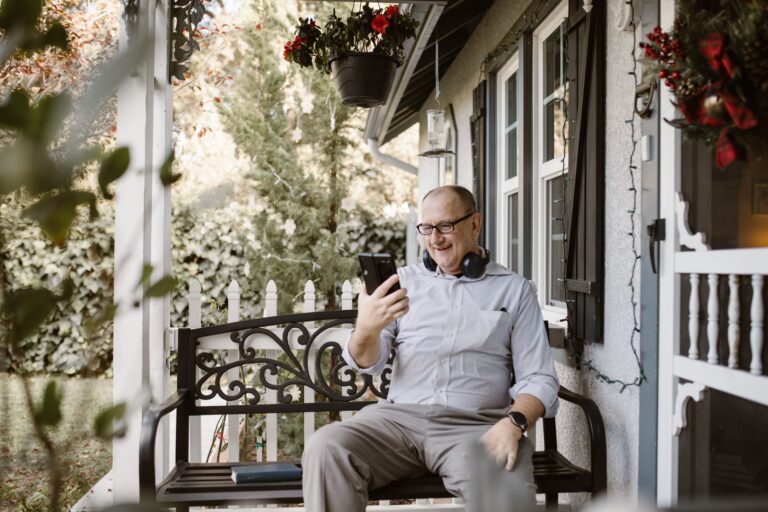
My grandson Gabe was fifteen years old when he stood up at his mother’s dinner table with a fork still in his hand and broke the lie that had cost me two years of my family. I want to tell it the way it happened, because I have spent my whole life fixing machines, and the first rule of fixing anything is that you do not get to skip the part where you figure out what actually broke.
My name is Alejandro Baez. I am seventy-two years old, and I have lived in Alder Creek, Kansas, for fifty of those years, in a white house on Dutch Street with a porch that faces west so you can watch the grain elevator turn orange at sundown. I spent forty-one years as a mechanic at the co-op, keeping augers and dryers and old trucks running through harvests that did not care whether a man was tired. I raised one son in that house. I buried one wife from it. And for two years, I sat on that porch every evening believing my son’s family had simply decided they were done with me.
That was the story I had been given, and I am ashamed to say I accepted it the way you accept weather. Diego stopped answering. His wife Kendra stopped answering. My grandson never called at all. When your calls go to voicemail enough times in a row, you begin to write the ending yourself. I wrote mine like this: I am an old man, my wife is gone, and the young have their own lives. I told myself it was natural. I told myself it was nobody’s fault. I was wrong on both counts, and the person who finally told me so was a boy who had to choose between his mother and the truth at a table full of pot roast.
But let me go back to the beginning, because the beginning is Rosa.
Rosa and I were married for forty-six years. She was the one who talked at parties so I did not have to, the one who knew every kid in the church nursery by name, the one who kept a pie in the freezer at all times because “somebody in this town is always having a bad week.” When she got sick, it went fast. Pancreatic. The doctor in Garden City used the word “months” in October, and by the middle of February I was standing in the narthex of St. Mary’s shaking hands with half the county while a folded program with my wife’s face on it went soft in my jacket pocket.
Diego came home for all of it. He is my only child, born in the spring of 1980, and he grew up under the hood of whatever I was fixing, handing me wrenches and asking questions until he was better with a socket set than most grown men. He lives forty minutes east now, in Halstead Junction, with Kendra and their boy, Gabriel. Gabe. During Rosa’s last weeks Diego drove back and forth so many times I told him he was going to wear a groove in Highway 50. He sat with his mother. He held her hand while she slept. At the funeral he stood next to me at the graveside, and when it was over he gripped the back of my neck the way I used to grip his when he was small, and he said, “Call me every day, Pop. I mean it. Every single day.”
So I did.
That is the part I need you to understand, because it is the part the lie was built on. I called my son every day. Some days it was two minutes about the weather. Some days I told him things I had never told anybody, about how the house sounds at four in the morning when the furnace kicks on and there is no one breathing beside you. Some days I called twice, and I knew it, and I did it anyway, because the phone in my hand was the only thing between me and a silence that had teeth. Grief makes you a caller. Any widower will tell you. The phone becomes a rope you hold onto.
For about six months, Diego held the other end. Then, in the fall after Rosa died, the rope went slack.
It did not happen all at once. First the calls started going to voicemail more often. One ring, sometimes not even that, then Diego’s recorded voice telling me to leave a message. I left messages. Cheerful ones, because I did not want to be a burden. “Just your old man, checking in. The Hendersons cut beans today. Call when you can.” He did not call when he could. Texts stopped getting answered. Then they stopped showing as delivered at all, just a little word under the message like a door quietly closing, and I did not know enough about telephones to know what that word meant. I know now.
I told myself he was busy. Diego manages the parts department at the implement dealer in Halstead Junction, and fall is their hard season, same as it was mine. I told myself Kendra had her hands full with Gabe starting junior high. I told myself a hundred kind things about people who were not calling me back, because that is what you do when the alternative is unbearable.
Thanksgiving came. No invitation. I sat by the phone the Tuesday before like a teenager waiting on a date, and when it did not ring I drove to the grocery and bought a turkey breast the size of my fist and ate it alone with Rosa’s chair pushed in across from me. Christmas, a card arrived, signed “The Baez Family” in Kendra’s handwriting, printed at a drugstore, the kind you send to a dentist. My birthday in March went by without a call. I sat on the porch that night with my phone in my lap and I remember thinking, clear as anything: so this is how it goes. This is how a family ends. Not with a fight. With a dial tone.
I want to be honest about my own pride, because it played its part. I could have driven the forty minutes. I did, once, in the spring of that first year. I put on a clean shirt and drove to Halstead Junction with a coffee can full of Rosa’s tamales from the freezer, the last batch she ever made, and I stood on my son’s front step like a salesman. Kendra answered the door. She did not open the storm door all the way. She stood in the gap of it with her sunglasses pushed up in her hair and she said Diego was at a work thing in Wichita, and Gabe was at practice, and this really was not a great day, and she looked at the coffee can in my hands the way you look at something the cat brought in. I said tell them I came by. She said of course. I found out much later that she never did. I drove home with the tamales on the seat beside me and I did not go back. A man has a certain amount of asking in him, and I had used mine up.
Get a new story in your inbox every morning.
Facebook doesn’t show you every story we post. Our free newsletter does. Join 2,500+ readers.
So I settled into the two years. That is what I call them now, the two years, like a sentence I served.
You would be surprised how a life reorganizes itself around an absence. I got up at six because I have gotten up at six since Eisenhower. I drank my coffee on the porch. I kept the yard decent because Rosa would haunt me otherwise. Tuesdays I played dominoes at the senior center with Otis Whitfield, who farmed north of town for sixty years and cheats at dominoes with the calm of a churchwarden. Sundays I went to Mass and sat in the fourth pew where Rosa and I always sat, and the Alvarado family took to sitting near me, I suspect on purpose, so I would have somebody’s hand to shake at the peace. Small towns are good that way. Alder Creek did not let me disappear. But there is a difference between people being kind to you and your own blood knowing your voice, and I felt that difference every single evening at seven o’clock.
Because here is the thing I have not told you yet. I never stopped calling.
I stopped expecting anything, but I never stopped calling. Every Sunday evening, seven o’clock, I called my son, and every Sunday it went straight to that recorded voice, and every Sunday I left a message anyway. I could not have told you why. It felt like watering a plant you suspect is dead, because the not-watering would make it true. I kept the messages short. I told him the co-op finally replaced the dryer I had kept alive fifteen years past its natural death. I told him Otis got a pacemaker and immediately started calling himself “the bionic man.” I told him when the first snow came. On birthdays I sang, badly, the way I had sung on every birthday since they put Gabe in my arms at the hospital in Newton and Rosa cried so hard she fogged her glasses. On the anniversary of his mother’s death, every February, I called and did not manage to be cheerful, and I said what a man says into a phone at night when he believes no one will ever hear it.
A hundred and four messages. That is not a guess. There is a count, and you will understand later how I came to know it.
There is one more thing from the two years that I need to set down, because it is the part that still catches in my chest. In the second October, my left knee finally quit. Forty-one years of kneeling on concrete shop floors came due all at once, and the surgeon in Garden City said the word “replacement” and put me on the schedule. The hospital paperwork had a line for emergency contact. I sat in that waiting room with the clipboard balanced on my good knee for a long time, and then I wrote down Otis Whitfield. If you want to know what those two years actually cost, it is not the birthdays. It is a seventy-one-year-old man writing his dominoes partner’s name on a surgical form because he does not believe his own son would pick up the phone. Otis drove me home from the hospital in my own truck, set me up in the recliner, and stocked my freezer with venison chili, and he never once asked why he was the one doing it. My son learned about that surgery twenty months after the fact, and I watched it break something in him, and we will get there.
Now. The dinner.
It came out of nowhere, the way the invitations always did by then. Two or three times a year, Diego would call me from what I now know was his work phone, a number I had no history with, and there would be a stiff little visit on a holiday, an hour and a half of Kendra’s good tablecloth and conversation with all the nourishment of a rice cake. I lived for those visits and I left every one of them hungrier than I came. This one was the first Sunday in June, for Gabe’s confirmation. My grandson, confirmed at St. Boniface, and I was invited to the dinner after, and I want you to know I said thank you for the invitation. I said it to the woman who, I would shortly learn, had spent two years telling my family I had thrown them away.
I made a pie. Rosa’s crust recipe, the one with the vinegar in it that she guarded like a state secret and finally taught me in her last winter, standing over my shoulder saying, “Colder hands, Alejandro, you have the hands of a radiator.” It came out decent. I drove the forty minutes with it belted into the passenger seat like a child.
The table was Kendra’s usual production. The good dishes, a centerpiece from the craft store, pot roast, that salad with the mandarin oranges in it. Diego hugged me at the door a half second longer than usual, which I noted and filed away, because a mechanic notices when a machine runs different. Gabe was quiet. Fifteen now, all wrists and shoulders, a boy shaped like the man he is going to be. He sat across from me and he kept looking at me and then at his plate, and I thought, he barely knows me anymore, and the thought went down my throat like a stone. His whole childhood I had been the grandpa with the shop, the one who taught him to change oil at nine and drive a tractor at eleven, and now he could not hold my eye across a pot roast.
I should have known it was not shame of me. It was a boy with a live wire in his hands, deciding.
The talk was small. The weather, the co-op, Gabe’s confirmation saint (Michael, “because of the sword,” which is exactly the reasoning I would have used at fifteen). And then, somewhere between the dinner and my pie, Kendra was telling a story about the parish festival committee, about how hard it is to get people to show up for anything anymore, how everybody just drifts off into their own little worlds, and I said, quietly, not even meaning to fight, God knows I had given up fighting, I said:
“Well. I wish I heard from this world a little more than I do.”
The table went still for a moment. Diego looked at his plate. And Kendra tilted her head at me with a little smile I can still see when I close my eyes, patient, sugared, the smile you give a slow child, and she said:
“Phones work both ways, Alejandro.”
Four words. She said them lightly, like setting down a napkin. Phones work both ways. Two years of Sunday messages into a dead line, a knee surgery with a dominoes partner for next of kin, a hundred and four unanswered calls, and this woman looked at me over her centerpiece and told the whole table that the silence was mine.
And my grandson slammed his fork down so hard the water glasses rang.
“Stop it,” Gabe said. He was not loud at first. His voice cracked in the middle of it the way boys’ voices do, and he hated that, you could see him hate it, and he pushed on anyway. “Mom, stop. Stop lying.”
Kendra said his name in that warning tone mothers keep loaded. It did not work. He was already standing, and once he was standing there was no place for the thing to go but out.
“He never stopped calling,” Gabe said. He was looking at his father now, not at her, and he was pointing at me with his whole hand. “Dad, Grandpa never stopped calling. She blocked him. She blocked his number on your phone. I saw it. There’s a folder, Dad. Voicemails from blocked numbers go into a folder, they don’t just disappear, and Grandpa’s are all in there. There’s more than a hundred of them. I listened to some.” His eyes had gone glassy but he did not stop. “He sang on your birthday, Dad. Two years in a row. It’s in the folder. Go look at your own phone and then tell me phones work both ways.”
Nobody moved. I remember the refrigerator hummed on in the kitchen, this ordinary sound in the middle of the end of something. I sat there with my hands in my lap, and I am not ashamed to tell you they were shaking, because what a body does with two years of grief when it turns out to be two years of theft, I did not know then and I do not fully know now. He never stopped calling. My grandson said it before I understood he was saying it about me. And then it landed, all of it at once: the one ring, the undelivered texts, the storm door open six inches, the drugstore Christmas card. It was never natural. It was never nobody’s fault. It was built, and maintained, by the woman at the end of the table, who had gone the color of her own tablecloth.
Diego did not yell. That was somehow worse. He looked at Kendra for a long, long moment, and then he took his phone out of his pocket and set it on the table like evidence, and said, very quietly, “Show me.”
Gabe came around the table. Fifteen years old, hands steadier than mine, and he opened the voicemail screen and scrolled to the bottom, and there it was, a thing I had not known existed and my son had not known existed: Blocked Messages. He turned the phone so Diego could see, and I watched my son read his own screen and age in front of me.
A hundred and four. The phone showed the count.
Kendra started talking then. I will not reproduce all of it, because a woman spinning out a two-year lie in real time is not something I take pleasure in recounting, but the shape of it was this: she had been protecting the family. Protecting Diego. I had been calling every day, sometimes twice a day, and Diego would get off those calls sad, and the grief was taking over the house, and she just needed a break, everyone needed a little break, and then, and then, and then. Somewhere in the middle of it she said “I did it for you” to Diego, and Diego stood up from the table, walked out the front door with his phone in his hand, and got into his truck.
He did not drive anywhere. He just sat in the cab in the driveway with the windows up. From the dining room window I could see his head bent, and I knew what he was doing. He was listening.
He was out there for over an hour. Gabe sat next to me on the couch, close, the way he used to when he was small enough to fall asleep at Christmas, and he told me the rest of how it happened. Three weeks earlier, at his cousin’s graduation party, he had borrowed his dad’s phone to check a score because his own was dead. There was a voicemail badge. He opened it out of pure teenage reflex, saw the Blocked Messages folder, saw my name, saw the dates going back two years, and, in a bathroom with the fan running, listened to me sing happy birthday to his father through six inches of phone speaker. That night he checked his mother’s phone while she slept, because she uses his birthday as her passcode. Blocked there too. Blocked, he found, even on the old tablet his own account had been set up through, which is why the boy had never seen so much as a text from me. Kendra had been thorough. She managed the family’s phones the way she managed the family’s everything, and she had walled me out of every device in that house, and then stood in her kitchen for two years telling anyone who asked, church friends, cousins, my own son, “It’s so sad. Alejandro just stopped calling after Rosa passed. Grief does strange things to the elderly.”
Gabe had carried the knowing for three weeks, deciding what to do with it. “I kept hoping I was wrong about it somehow,” he told me on that couch. “And then she said the thing about phones. To your face, Grandpa. And I just couldn’t.” His voice did the crack again. I put my arm around that boy and we sat there, two people who had each been alone in it, not being alone in it.
When Diego came back inside, his eyes were red and his voice was flat and careful, the voice of a man carrying something at maximum capacity. He said, “Pop, I’ll follow you home.” Kendra said his name. He looked at her, and what he said in front of their son, and God help me a part of me needed to hear it, was: “A hundred and four, Kendra. He called this house a hundred and four times, and I found out at dinner. From my kid. Do not talk to me tonight.”
He followed my taillights the whole forty minutes back to Alder Creek, and we sat on my porch until nearly two in the morning, and that porch is where my son and I actually did it, the listening. Not all hundred and four. You could not survive all of them in one sitting. But he played the birthdays. He played the one about Otis’s pacemaker and laughed and cried at the same time, this awful, beautiful sound. He played the February ones last, the anniversary ones, and there is one from that second February, after the knee, after the loneliest year of my life, where my recorded voice says, “I don’t know what I did, mijo. Whatever it was, I’m sorry for it. I’d fix it if somebody would just tell me where it’s broke.” My son sat on my porch steps and shook like a man in the cold, and he kept saying I’m sorry, Pop, I’m so sorry, I should have driven over, I should have known, and I held the back of his neck the way I did at his mother’s graveside and told him the truth, which is that the lie was engineered by somebody he had every reason to trust, and a man cannot be blamed for not seeing through a wall that was built to be invisible.
Though he did ask me the question I had been dreading, there at the end of the night. “Why didn’t you just show up, Pop? Bang on the door?” And I told him about the tamales and the storm door, which he had never heard about, because Kendra never told him I came. I watched him take that one like a body blow. That one, for some reason, made him angrier than the voicemails. “You stood on my step,” he kept saying. “You stood on my step with Mom’s tamales and she sent you away, and I was in Wichita.”
Now I have to tell you about the weeks after, because a story like this does not end on the porch. Anger is a fast thing and repair is a slow one, and I am old enough to be more interested in the slow one.
Diego did not leave, but it was close. He slept in the shop room of his own house for a good while. There was a stretch in June when my son, who had just gotten me back, was calling me every night with the divorce word in his mouth, and I want to tell you what I told him, because it is maybe the only wisdom I earned out of all this. I said: “I lost two years. Don’t make Gabe lose his whole house over what was stolen from me. Whatever you decide, decide it as his father, not as my avenger. I did not get my family back so I could watch it burn down anyway.”
And Kendra came to my porch. Three weeks and two days after the dinner, on a Tuesday evening, no phone call ahead, which I suppose is fitting, since a phone call between us was never really possible. She stood at the bottom of my steps in the long June light with her keys in both hands like a woman holding a railing, and she asked if she could sit, and I said the porch has two chairs and always did.
I will give her this: she did not bring excuses in her purse. Or if she did, she left them in the car. What she brought was the actual accounting, and I made her go through all of it, gently but all of it, because I fix machines, and you do not get to skip the part where you figure out what broke.
It had started years before Rosa died, is the truth of it. When they bought the house in Halstead Junction, I had told Diego, privately I thought, that I worried they were stretching too far on the payments. Kendra heard it through a doorway. She never said a word, and she never forgot it, and for a decade every opinion I ever had, about the house, about Gabe’s schooling, about anything at all, went through that filter: he thinks I am not good enough at this. Then Rosa died, and my grief calls started, every day, sometimes twice, and Diego would get off the phone with me hollowed out, and to her it felt like my sadness was moving into her marriage and taking off its shoes. So she blocked my number. “For one month,” she said on my porch, holding her keys. “I told myself one month. A break. I told myself it was for him.”
She said the awful genius of it was how easy the phone made it. One tap. No fight, no scene, no letter you have to sign. And when the month was up, unblocking me meant explaining a month of silence, and she could not face it, so the month became a season. Then a woman at church asked why I never came around anymore, and instead of the truth Kendra said, “He stopped calling,” and once the lie was spoken out loud in public it became a thing that had to be maintained, fed, protected. She blocked me on Diego’s phone during a software update he asked her to run. She blocked me on Gabe’s tablet. She turned me away at the storm door and never mentioned I came, and every Sunday at seven, while I sat on this porch talking to a folder she had forgotten even existed, she sat in her kitchen forty minutes away, keeping the wall fed. She never listened to a single message in those two years. I believe her, because I watched what happened when she finally did.
That was the condition I set, by the way. She asked me on that porch what she could do, what she could possibly do, and I did not ask for an apology tour or a scene at Thanksgiving. I asked for two things. The first: “You will listen to them. All of them. Not as punishment. So that you know the size of the thing you are asking forgiveness for. A person should know the size.” And the second: “The people you told the lie to. You will tell them the truth. Yourself. Not Diego cleaning it up for you. You.”
She did both. It took her most of the summer. She sat at her kitchen table with Diego’s phone over four nights and listened to a hundred and four voicemails from the man she had walled out, and Diego told me there were nights he found her still at that table past midnight, wrecked, and I confess before God that I felt no triumph hearing it. Just the sadness of the whole waste of it. And she made her calls and paid her visits, to her sister, to the parish festival ladies, to the cousins in Dodge City, to Father Nolan at St. Boniface, and she said the same sentence to each of them, a sentence we agreed on together sitting on my porch, and it was not a soft sentence: “Alejandro never stopped calling. I blocked his number and I lied about it, and I am telling you because he deserves to have it told.” I know she said it, because in a county the size of ours I heard back every echo. Norma Alvarado squeezed my hand at the peace a little longer that next Sunday and did not say anything, and did not have to.
Forgiveness, then. People throw the word around like it is one motion, like flipping a breaker. It is not. It is more like the knee: they replace the joint in an afternoon, but you learn to walk on it for a year, and some mornings it aches when the weather turns. It aches on the birthdays that got sung into a folder. It aches when I fill out a form now and write my son’s name where it belongs and remember the day I could not. I forgave Kendra on my porch that Tuesday, out loud, in words, because I am seventy-two and I have buried enough people to know that a grudge is just grief with the interest compounding. But forgiving her did not hand back the two years. Gabe’s whole eighth-grade football season happened without me in the bleachers. My knee got replaced with Otis Whitfield holding my paperwork. There is a version of me that got to be a comfort to my son in the worst of his grieving for his mother, and that version was blocked, one tap, and no apology reaches back there. Bittersweet is the only honest word for how this ends. I took the sweet. I am not going to lie to you about the bitter.
Here is what the sweet looks like, so you know how it comes out.
Wednesday nights, they eat at my house. That was Diego’s idea, and it is not negotiable, weather or otherwise; they have eaten pot roast in my kitchen during an ice storm. Kendra usually brings the salad with the mandarin oranges, and the first time she set it down on Rosa’s table she cried, and my Rosa, if she was watching, I hope she saw that I pulled the chair out for her anyway, because Rosa would have, and faster than me.
Saturday mornings, Gabe drives over. He has his learner’s permit now, so Diego rides along white-knuckled and pretending not to be, and Gabe and I are pulling the engine on my 1978 Ford that has sat in the shed since before he was born, because a boy should rebuild one engine with his grandfather. That is my belief. We lost two years and we are not losing more. He is not much of a talker, that boy, except under a hood, and under a hood he will tell you everything, which is a trait he got from his father, who got it from me. One Saturday he asked me, wrench in hand, not looking at me, if I was ever going to stop being mad at his mom, and I said I already had, mostly, and that the last part was like the new knee, you walk on it until it holds weight. He thought about that and said, “That’s kind of what Father Nolan told me, but with more orthopedics,” and I laughed harder than I had laughed in three years.
And the phone. My phone rings now. That is such a small sentence, and I cannot tell you what it holds. Diego calls most evenings around seven, the same hour I used to call into the dead line, and half the time there is nothing to report, the Hendersons cut beans, Otis is cheating at dominoes again, and that is exactly the point. On my birthday in March the phone rang at seven in the morning and it was both of them, Diego and Gabe on speaker, singing, badly, and Gabe sang loudest, this fifteen-year-old boy bellowing like a man paying down a debt, and I stood in my kitchen in my bathrobe and let them finish every terrible note.
The voicemails are still on Diego’s phone. He will not delete them. I told him once that he could, that we did not need the evidence anymore, and he shook his head and said, “It’s two years of your voice, Pop. Someday that folder is going to be all the birthdays I’ve got left.” I did not have anything to say to that. There is not anything to say to that.
Last Sunday evening I was on the porch at sundown, the elevator going orange, when Gabe’s name came up on my screen, his own phone, his own number, saved in my contacts under “Gabito,” which he pretends to hate. I answered and he said, “Hey, Grandpa. No reason. Just calling.” Just calling. The two most ordinary words in the world, and I had to sit there a minute before I could trust my voice, because for two years I believed nobody in my family would ever say them to me again, and the truth was they never stopped wanting to. Somebody just stood in the doorway of it. And a boy with a cracking voice and a fork in his hand decided the truth mattered more than a quiet table.
People ask me, the few who know the whole of it, how I can sit across from Kendra every Wednesday. Here is my answer. Every family gets a moment when the truth costs something and somebody has to decide whether to pay. Kendra decided one way, one tap, and it cost us two years. Gabe decided the other way, out loud, at fifteen, in front of everyone he loves, and it bought back the rest of our lives. I sit across from her because the same table that held the lie held the boy who broke it, and I would rather spend whatever years I have left at that table than win an argument at an empty one.
The ledger does not balance. I want to be truthful about that, because I promised you the whole repair, and a repair is not a resurrection. The two years are gone and they stay gone. But I am seventy-two years old, and on Wednesday there will be pot roast, and on Saturday there is an engine waiting, and at seven most evenings the phone on this porch rings. And when it rings, I answer it, and it is my family, every time, and there is no one on this earth who can block that number now.