
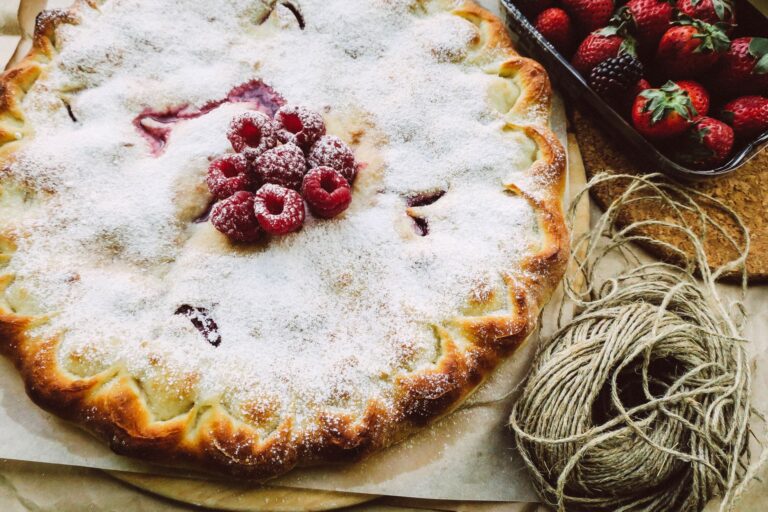
“Don’t bring your dry old pies this year, Lorene. I ordered real desserts from a real bakery.” My daughter in law Meredith said that to me in my own kitchen, two weeks before the Fourth of July, while I was standing at my own counter with my mother in law’s rolling pin in my hand.
She said it the way you’d tell somebody the church changed the potluck time. Light. Breezy. Already halfway out the door with her car keys looped over one finger, like she hadn’t just reached into my chest and turned something off.
I’m sixty six years old. I have brought pies to the Baxley family Fourth of July cookout every single summer for forty years. Strawberry rhubarb from the patch by my back fence. Sour cherry from the tree my husband Gene planted the year our son was learning to walk. Buttermilk chess from a recipe card written in his mother Opal’s slanted hand, so old the ink has gone the color of weak tea. Forty years. Through two miscarriages, one tornado season that took half our roof, my hip surgery, and the first summer after we buried Gene, when I rolled out dough at five in the morning because it was the only hour of the day I could stand to be inside my own skin.
And Meredith stood in my kitchen with her sunglasses pushed up in her hair and called them dry.
I want to tell you I said something sharp back. I didn’t. I said, “Oh.” That was all. Just “oh,” like she’d told me it might rain. Then she squeezed my arm, said “You’ve earned a year off! Just bring yourself!” in that bright voice she uses when she’s decided something for everybody, and her SUV was backing down my driveway before I’d even set the rolling pin down.
I stood there a long time. The flour was already out. I’d been planning to test a peach pie that afternoon, because the peaches at the farm stand out on Route 4 had come in early and sweet, and I thought, wouldn’t that be something new for the Fourth, after all these years. A forty first summer, a brand new pie.
I put the flour back in the canister. I sat down at my kitchen table, in the chair that still, after two years, I think of as not-Gene’s-chair, and I looked at my hands for a while.
Let me back up and tell you how forty years happens.
—
Gene and I bought this house in Corinth in 1983, a year after we married. It’s a small town, the kind where the bank, the feed store, and the Methodist church all know your name and most of your business, and the Fourth of July is the biggest day of the year after Christmas. Parade at ten, with the fire truck and the 4-H kids and somebody’s restored tractor. Fireworks at the fairgrounds after dark. And in between, all over town, backyard cookouts.
Ours started in the summer of 1986. Gene had just built the big picnic table out of lumber his brother hauled over from the mill, and he stood in the yard with his hands on his hips looking at it and said, “Well, now we need people.” So we invited both sides of the family, and the neighbors, and half of Gene’s shift from the plant, and I baked three pies because I didn’t know yet how many people showed up when you fed them well.
The pies were gone before the burgers were.
The next year I baked five. The year after that, seven, and my sister Donna started coming a day early to help me pit cherries at the kitchen table, and that turned into its own tradition, the two of us with stained fingers and the radio on, catching up on a whole year of sisterhood in one afternoon.
You have to understand what those pies were. They were never just dessert. They were the calendar of my whole life, laid out in fruit and lard and crimped edges.
The crust recipe is Opal’s, Gene’s mother. She taught me the summer I was engaged, in her farmhouse kitchen with no air conditioning, both of us sweating, her standing behind me saying, “Cold hands, warm heart, cold lard, good crust.” Lard from the meat locker in town, a spoonful of vinegar, ice water, and butter for flavor. No food processor, ever. “The machine doesn’t know when to stop,” Opal said. “Your hands do.” When she passed in 1994, I stood up at her funeral and the only thing I could think to say was that every pie I ever made was half hers, and it always would be.
The cherry tree came in 1987. Gene planted it the spring our son Russell was learning to walk, and we have a photograph somewhere of Russ in nothing but a diaper, holding onto that skinny little sapling like it was holding him up. By 1992 it gave us enough sour cherries for two pies. Gene netted it against the birds every June like he was rigging a ship. He’d stand under it eating the ones the net missed, and every single year, every year, he’d say, “Tart,” and make a face, and eat another one.
The strawberry rhubarb was our daughter Joanie’s, in the sense that she claimed it. From the time she was six she’d stand at my elbow and lay the lattice strips over the filling, tongue between her teeth, weaving them under and over. She lives in Tulsa now with her two kids, and to this day when she calls in June the first thing she asks is whether the rhubarb has come in.
At the county fair in 1998 my sour cherry took the blue ribbon, and Gene carried that little rosette around in his shirt pocket for a week, showing it to people at the hardware store like our kid had made the honor roll.
And the Fourth grew right along with the pies. Kids, then kids’ friends, then kids’ spouses, then grandkids. At its biggest we had forty some people in that backyard, lawn chairs in a great ragged circle, somebody’s transistor radio playing the Cardinals game, kids running through the sprinkler, Gene at the grill in the apron Joanie gave him that said THE GRILL FATHER, flipping burgers and holding court.
Dessert was always the same ceremony, and it was Gene who made it one. Around six o’clock he’d bang a spatula on the porch rail like a dinner bell and holler, “Pie’s open!” And there’d be this migration, this whole herd of people I loved moving toward the folding table under the oak tree where the pies sat lined up like contestants. He always cut the first slice, and he always gave it to the oldest person in the yard, and he always said the same thing: “First slice to the one who’s seen the most Fourths.”
Forty years. That’s not a food tradition. That’s a family, held together at the crimped edges.
—
Gene died two Octobers ago. His heart, in the garden, on a Tuesday. He’d gone out to pull the last of the tomato vines and when he didn’t come in for lunch I went out and found him lying in the row like he’d decided to rest there, which is what I tell myself, most days, that he’d decided to rest.
Get a new story in your inbox every morning.
Facebook doesn’t show you every story we post. Our free newsletter does. Join 2,500+ readers.
We’d been married forty two years.
I’m not going to take you through all of that grief, because if you’ve carried it you already know the weight, and if you haven’t, no words of mine will hand it to you. I’ll just tell you the part that matters to this story: the first Fourth of July without him, two summers ago, I did not think I could do it. Host the cookout, hear the yard fill up, and not hear the spatula on the porch rail.
Russell and Meredith stepped in. “Mom, let us take it this year,” Russ said, and I was grateful. I truly was. They have the newer house out by the golf course, the one with the granite island and the big flat yard, and Meredith organized the whole thing with the skill she brings to everything, and I baked my pies in my quiet kitchen and brought them over, and when it came time for dessert, Russ banged a spatula on the deck rail and hollered “Pie’s open!” in his father’s voice, and I went and cried in their bathroom for ten minutes and then came out and cut the first slice for Gene’s aunt Vernie, who has seen ninety one Fourths.
That was the day I understood I could survive it. Not because the hurt got smaller. Because the pies gave my hands somewhere to be, and the table gave my grief somewhere to sit that wasn’t the center of my chest.
So the cookout moved to Russell and Meredith’s, and honestly, that was right. It should pass down. I never wanted to be one of those women who grips a tradition so hard she strangles it. I told Donna that fall, “As long as I’ve got a pie on that table, I don’t care whose yard it’s in.”
I should have knocked wood.
—
I want to be fair to Meredith, and in the first draft of this story, the one I told Donna on the phone that night, I was not fair. So let me try.
Meredith married Russell twelve years ago. She’s organized, ambitious, keeps a beautiful home, and loves my son and my grandkids with a fierceness I have never once doubted. She grew up two towns over in a house I gather was not warm. Her mother, from the little Meredith has ever said, was not a woman who baked. Not a woman who did much of anything that left a smell in a kitchen or a memory in a child. Holidays at her house came from a store, when they came at all.
I knew all that. I knew it and I still spent twelve years quietly keeping score of things she didn’t do the way I did them, and if I’m honest with the whole congregation here, she probably felt every mark I made in that little book, no matter how sweetly I smiled. Mothers in law are not innocent just because we’re the ones who cry at the end of the story.
But knowing all that, I still was not ready for the squeeze that started after Gene died. It was small things first. The Fourth moved to her yard, which was fine. Then my deviled eggs were “covered, we’re doing a caterer for sides this year.” Fine. Then the year after, a text in June: a graphic, an actual designed graphic like for a wedding, with a menu on it. Smoked brisket. Street corn. “Artisan desserts.” And down at the bottom: “Just bring yourselves!”
I called Russ. “Should I do the usual pies?” And there was a pause, a pause I have thought about many times since, and he said, “Course, Mom. It’s not the Fourth without your pies.” And I brought them, and they went on a side table, not the main spread, and they got eaten anyway, every crumb, because forty years of practice is forty years of practice.
I told myself it was nothing. Young women host differently. It’s her kitchen, her party.
Then came this June, and Meredith standing in my kitchen. She’d stopped by to pick up the folding chairs Gene bought years ago, because even a woman with a caterer needs forty chairs, and on her way out, easy as reading a grocery list, she said it.
“Oh, and Lorene, don’t bring your dry old pies this year. I ordered real desserts from a real bakery. Sweet Layers, in Springfield? They did the Hendersons’ anniversary. It’s all arranged. You’ve earned a year off! Just bring yourself!”
Dry old pies.
Real desserts.
You can be sixty six years old, a mother, a grandmother, a widow who has stood at a graveside and gone on breathing, and four words from a thirty nine year old in athletic sandals can still cut you down to nothing in your own kitchen. I keep the recipe box on the counter, Opal’s box, tin, painted with little red windmills, dented at one corner where it fell off a moving truck in 1983. After Meredith’s car pulled out, I picked up that box and held it like you’d hold a sick baby, and I thought: forty years, and this is how it ends. Not with a decision anybody talks over with me. With a caterer’s phone number and the word “dry.”
—
I did my crying that first night. I’m not ashamed of it. I sat at the kitchen table with Gene’s chair empty across from me and I cried like a much younger woman, and then I called Donna, because that is what sisters are for.
Donna wanted blood, of course. Donna is two years older than me and has never in her life let an insult go by without at least writing down its license plate. “You bake anyway,” she said. “You walk in with six pies like the queen of Corinth and you set them down right in front of whatever fondant nonsense she’s paying for.”
“I’m not doing that,” I said.
“Then you don’t go at all. See how her Fourth of July feels with Grandma’s chair empty.”
“I’m not doing that either.”
Because here’s the thing I knew, even that first awful night, even with my eyes swollen shut: both of those roads lead to the same ditch. I’ve watched women my age fight these wars with their daughters in law. I’ve watched them win, even. And what they win is a son who flinches when the phone rings, grandkids whose visits get shorter every year, and holidays that feel like a ceasefire. You can be right and lose everything anyway. Being right is the cheapest thing there is.
And there was Wyatt to think about. And Sadie.
My grandbabies. Sadie is fifteen now, all long legs and eyeliner and a heart she thinks she’s hiding. Wyatt is nine, and Wyatt is, and I say this with full grandmotherly bias and also complete accuracy, the best boy in the state of Missouri. Wyatt is the one who, since he was four, has dragged his little step stool to my counter every time he stays over. Flour to the elbows. Flour in his hair. Flour, one memorable time, inside his sneakers, and neither of us ever figured out how. Last summer I taught him to crimp an edge with his thumb and two knuckles, and he practiced on a rope of Play-Doh in front of the television for a solid week.
Whatever I did about Meredith, those two children were going to watch me do it. That thought sat me up straighter than any anger could.
So I decided. I would go to the cookout. I would bring nothing but myself and the folding chairs, exactly as instructed. I would compliment the bakery boxes. I would be so pleasant that pleasant would ring in that backyard like a struck bell, and if my heart broke doing it, well, my heart had broken before and I knew where the pieces went.
I called Donna back and told her. She was quiet a second and then she said, “Lorene, you’re a better Christian than me.”
“That has never been in question,” I said, and she laughed, and I almost meant all of it.
But I’ll tell the whole truth here, because this story doesn’t work unless I do: the week of the Fourth, I did not touch that recipe box. Fresh peaches went soft in the bowl on my counter because I couldn’t stand to look at them. Forty years of muscle memory kept reaching for the flour canister, and I kept walking past it. The night of July second, which is the night Donna and I always pitted cherries together, I sat alone in front of the television and watched a program I could not tell you one thing about, and that hollow feeling in the house was the worst it had been since the first winter after Gene.
They weren’t just banned from a party, you see. Those pies were the last job I had. When you’ve been needed your whole life, the cruelest thing anybody can hand you is a year off.
—
Now. There were clues, and I missed every one of them, and I’ve decided that’s a mercy, because it means what happened at that dessert table hit me the way it hit me.
Clue one: back in April, Sadie came over after school, which at fifteen she doesn’t do so much anymore, and asked if she could take pictures of the recipe cards in Opal’s box. “For a family history thing,” she said. She photographed every card, front and back, even the stained ones, even the one that’s just Opal’s crust in her fading ink. I stood there half in tears, so pleased I could have burst, and made her take home half a pan of cinnamon rolls. I thought: what a nice school project.
Clue two: in June, after the ban, Russell came by to “borrow the rolling pin, ours is warped.” I remember thinking, dimly, that I’d never once known Russell to roll anything, but grief and hurt make you stupid, and I handed my son my rolling pin out of the same hands his father’s mother once held over it, and I didn’t ask a single question.
Clue three: the Sunday before the Fourth, Wyatt hugged me goodbye after church, and the boy smelled like butter. Like browned butter and cinnamon. I remember I laughed and said, “Wyatt Baxley, have you been eating cookies before lunch?” and this child looked up at me with a poker face that would empty a casino in Kansas City and said, “No, Grandma.” Which was, in the strictest sense, the truth.
—
The Fourth came up hot and blue, the way it ought to. I loaded Gene’s folding chairs into the trunk, wore the red gingham blouse Joanie sent me two birthdays ago, and drove out to the golf course side of town with my hands at ten and two and my chin up.
The yard looked like a magazine, I’ll give Meredith that, because it’s true and because I promised myself I’d be fair. White paper lanterns strung across the deck. Flags in mason jars on every table. The caterer’s smoker sending up a cloud of hickory that you could smell from the road, and a long table on the deck with a linen cloth where the desserts would go. The bakery boxes were already stacked there, four big white ones, gold sticker on every lid. Sweet Layers. Springfield.
Joanie flew in with her kids, which I’d known. Donna came with her husband. Vernie, ninety three now, held court from the best shade chair like a queen. Neighbors, cousins, the whole beloved noisy mess of it, kids shrieking through a sprinkler that cost more than my first car. And I did what I said I’d do. I was pleasant. I was so pleasant. I held babies and refereed a horseshoe dispute and told Meredith the lanterns were beautiful, and she smiled at me a little too quickly and got very busy with a tray, and I noticed, with the particular radar of a woman who has been a daughter in law herself, that she did not quite look at me the whole first half of that party.
I figured she felt some kind of way about what she’d said in my kitchen. I figured she knew and had decided to power through it, the way she powers through everything.
I had it exactly backwards. She’d been told what was coming, that morning. She was the only adult Baxley in that yard still off balance, and I mistook her wobble for guilt. Hold that thought.
Around six o’clock, when the brisket was long gone and the corn was a field of stripped cobs, my son Russell climbed the two steps of the deck, picked up a spatula, and banged it three times on the rail.
The sound went through me like a nail.
“Pie’s open!” he hollered.
And I thought, oh, my sweet boy, no. There’s no pie this year, honey. It’s boxes. And I actually started composing, in my head, the pleasant thing I’d say about the bakery cake when they cut it. That’s where my head was when the whole yard turned, and I realized nobody was looking at the dessert table.
They were looking at me.
Then the back gate opened, and here came Wyatt.
He was pulling the green Coleman cooler, the huge one, the one Gene used to fill for fishing trips, dragging it across that flat perfect lawn with both hands and his whole body, the way a nine year old hauls something precious, and Sadie was walking beside him with her arms out like a spotter, hissing, “Careful. CAREFUL.” And behind them came Joanie from the kitchen door with her arms full, and Donna from the garage with her arms full, and I stood up without knowing I’d stood.
They set that cooler down in front of the dessert table and Wyatt flipped the lid.
Pies.
Pies packed in dish towels like eggs. Wyatt lifted the first one out with two hands and set it on the linen, and Sadie set another beside it, then Joanie, then Donna, then Joanie’s oldest, then my nephew, then Russell himself, coming out of the kitchen holding one flat on his palm like a waiter with his tongue between his teeth, exactly, exactly, the way his sister used to lay lattice when she was six.
Nine pies. Nine.
They were, God love every one of them, a sight. One cherry had boiled over at the seam and gone lopsided. Somebody’s lattice looked less woven than wrestled. There was a chess pie with a crust crimped so violently around one third of the rim and so smoothly around the rest that I knew, I knew before anybody said one word, exactly which nine year old had done the hard part and which fifteen year old had rescued the rest.
Every one of them was made from Opal’s crust. I could see it. You can tell a lard crust across a yard, the way it blisters, and I stood there in my red gingham with my hand over my mouth doing arithmetic I couldn’t finish: the recipe cards photographed in April, my rolling pin in June, the smell of browned butter on my grandson’s collar, this whole family, my whole family, in their kitchens for weeks, in secret, fighting my crust to a draw.
Russell banged the spatula once more and cleared his throat, and my son, who is not a speech maker, who at his own wedding raised his glass and got out nine words, said this:
“Grandma’s pies got called off this year. So we all tried to make ’em ourselves, every family, one pie, her recipes. And what we figured out real fast,” and here his voice did something that made every woman my age in that yard reach for a napkin, “is that we can follow the cards all day long. The cards ain’t the recipe. She’s the recipe.”
And then Wyatt, my Wyatt, still standing by that cooler with flour, I promise you, with flour already somehow on the side of his neck at a party, looked up at the whole silent yard like he’d been waiting his entire nine years for this exact opening, and said, loud, the way you’d announce a ballgame:
“Grandma, we need you to judge which one’s worst. And then you have to teach us right. Because Dad says your hands know something the bakery doesn’t.”
That’s what broke me. Not gently, either. I stood in the middle of Meredith’s flat perfect lawn and sobbed like a child, and Wyatt, alarmed at his own success, ran over and grabbed me around the waist, and then Sadie came, eyeliner already ruined, and then it was a pile, it was a whole family pileup by the dessert table, and somewhere in the middle of it I could hear Vernie, ninety three years old, hollering from her shade chair, “First slice to the one who’s seen the most Fourths! That’s still the rule! That’s still the rule!”
—
I judged the pies. Of course I judged the pies. I washed my face, and they sat me in a lawn chair like a fair official, and Sadie made scorecards on index cards, and I tasted all nine and gave every single one a different award so nobody lost. Most Improved Lattice. Best Boil-Over. Bravest Crimping, that one to Wyatt, who took a bow. Donna’s cherry was truthfully excellent and I told her so, and she leaned in and whispered, “I’ve been watching you do it for forty years, you old fool, of course it’s excellent,” and we laughed until we had to hold onto each other’s arms.
Russell’s chess pie was the worst of the nine. He knows it. It’s now a point of enormous pride with him. “Dead last,” he tells people, happy as a pig in sunshine. “Out of nine. That’s how good my mother is.”
And the bakery boxes? We opened them around eight, once the homemade was decimated, and everybody had a polite slice of a truly beautiful lemon layer cake, and it was fine. It was fine the way hotel coffee is fine. Sweet Layers of Springfield does lovely work and their cake never once made a grown man carry a blue ribbon around in his shirt pocket, and I’ll leave it there.
But I haven’t told you about Meredith, and Meredith is the part of this story I’d drive to your house and tell you on your own porch if I could.
Because here’s what I learned in pieces that evening, some from Joanie, some from Donna, and the important part from Meredith herself. The pie conspiracy was not Meredith’s idea. I want to be honest about that; this isn’t one of those stories where the villain was secretly planning the surprise party all along. It was Sadie’s idea, hatched back in April, and this is the part that stops my heart, before the ban ever happened. A granddaughter photographing recipe cards for no school project at all, just because she’d figured out, at fifteen, that everything in that tin box lived in one sixty six year old body, and bodies don’t keep.
Then June came, and Meredith said what she said in my kitchen, and Russell heard about it, and my son called his sister, and what had been a sweet someday idea turned into a full mobilization with a deadline. Nine kitchens. A group text I was not on. My own rolling pin, smuggled.
And Russell told Meredith all of it, that morning, on the Fourth, before anyone arrived. Told her what the family had spent three weeks doing, and why, and let her stand in her beautiful kitchen with her gold-stickered boxes and take in what her one breezy sentence had set in motion.
She found me at dusk. The kids were down at the fence line waiting on the fairground fireworks, and I was on the deck steps with a paper plate of pie crumbs, and Meredith sat down next to me, and for a while she didn’t say anything, and neither did I.
Then she said, “My mother never made me anything. In my whole childhood. Not a birthday cake. Not a sandwich, half the time.” She was looking straight out at the yard. “Store-bought was what fancy looked like, where I grew up. If it came in a white box with a sticker, somebody had spent money on you, and that was the best you could hope for.” She turned the wedding ring on her finger around and around. “I’ve been in this family twelve years, Lorene, and every Fourth of July I watch forty people form a line for something you made with your hands, and I have never once known how to compete with that. So this year I finally figured out how to win.” Her voice cracked in half. “I banned you. I banned a widow’s pies. Who does that?”
“A girl whose mama never baked for her,” I said.
She put her face in her hands.
And sitting there on my son’s deck steps, I thought about every mark in the little book I’d kept on this woman for twelve years, and I reached over and I took her wrist, the same way Opal took mine in a hot farmhouse kitchen in 1982, a scared twenty two year old marrying into a family whose traditions I hadn’t made either. Somebody had handed me the rolling pin instead of the scorecard. That was the whole difference between Meredith and me. One woman, one summer, one open kitchen door.
“Sweet Layers can have Easter,” I said. “I don’t do much for Easter anyway.”
She laughed, that wet hiccuping laugh you laugh when you’ve been crying, and I said the thing I’d figured out about ten minutes into judging those nine pies:
“Meredith. There were nine pies on that table and none of them were yours. That’s the last Fourth that gets to be true. You come to my kitchen in October when the apples come in, and bring Wyatt, because he needs work on his edges, and I’ll teach you the crust. It’s not mine anyway. It came to me from a woman who scared me half to death, and it goes where I say it goes.”
Meredith looked at me for a long moment. Then she said, quiet, like it cost her, “I’d like that more than anything,” and the first firework went up over the fairgrounds, and down at the fence my grandson started hollering for us, and that was the Fourth of July that I thought had ended in my kitchen in June.
—
It’s October now. I’ll tell you how it actually ends.
The apples came in three weeks ago, Jonathans, from the orchard out past the fairgrounds, and on a Saturday morning my kitchen held more people than it has since Gene died. Meredith at the counter with her sleeves pushed up and flour on her good leggings. Wyatt on the step stool he has honestly outgrown, guarding the vinegar spoon like a deputy. Sadie filming the whole thing on her phone, “for the archive, Grandma,” and I’ve stopped pretending I don’t know what she’s really doing, and I’ve started saying things clearly into the camera. Cold hands, warm heart. Cold lard, good crust. The machine doesn’t know when to stop. Your hands do.
Meredith’s first crust was a disaster. Her second one blistered up golden, and when she pulled it out of my oven she looked at it the way I looked at Wyatt the day he was born.
“There she is,” I said, and my daughter in law, that word finally meaning what it was always supposed to mean, stood in my kitchen and cried over a pie shell, and Wyatt patted her arm and told her, with enormous nine year old authority, “That happens to everybody, Mom.”
Opal’s recipe box has a new card in it now. Sadie typed up the crust recipe and printed it fresh, because the old card is nearly gone, and at the bottom, under Opal’s instructions, she added a new line and left room beneath it for more:
“Taught to Lorene, 1982. Taught to Wyatt, 2025. Taught to Meredith, 2026.”
Next summer’s cookout is at Russell and Meredith’s again, and the invitation graphic, I’m told, has already been designed. There’s a new line item on the menu, permanent, in print, right between the brisket and the street corn:
“Dessert: Grandma Lorene and company.”
Forty one years. I thought a white box with a gold sticker had ended something in my kitchen back in June. It turns out you can’t end a thing like this with a sentence, because it was never mine to lose alone. It’s in nine kitchens now. It’s in a fifteen year old’s phone and a nine year old’s stubborn crimping thumb and a thirty nine year old woman’s hands that finally, finally got to learn what her own mother never showed her.
Gene used to say the first slice goes to the one who’s seen the most Fourths. This year, when Russ banged the spatula and the whole yard lined up, Vernie waved her paper plate away and pointed her cane across the lawn at me.
“Give it to Lorene,” she said. “She’s seen the most of what these are actually made of.”
I don’t know a better place to end it than that. Pie’s open.
This story is a dramatization. Names, characters, and details are invented, and any resemblance to real people or events is coincidental.