
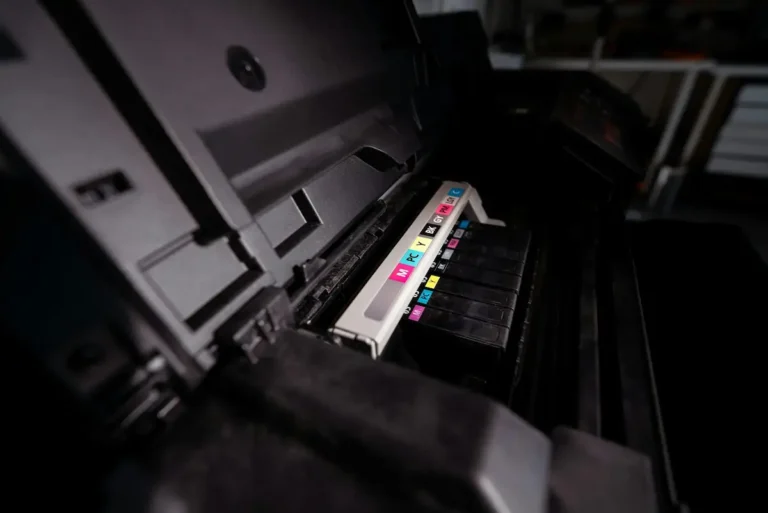
The story of Hewlett-Packard begins in a garage. It starts with two men and a coin toss. It ends with a global empire built on the most expensive liquid on earth. Bill Hewlett and David Packard were engineers from Stanford mentored by Frederick Terman. In 1939, they decided to start a company with 538 dollars in capital. They flipped a coin to decide the order of their names; Bill won.
The company became Hewlett-Packard, and the garage at 367 Addison Avenue is now recognized as the birthplace of Silicon Valley. Their first product was an audio oscillator, eight of which were bought by Walt Disney for the film Fantasia. This was the foundation of the “HP Way,” a culture based on trust and respect that remains a legend today.
Bill and Dave did not believe in hierarchies. They practiced “management by walking around” and gave employees freedom. For decades, HP was the gold standard of corporate America, surviving the Great Depression and moving from instruments to minicomputers. By 1978, they were the second largest minicomputer maker in the world. But their biggest transformation did not come from a computer; it came from an accident in a lab.
The Invention of Thermal Inkjet
In the late 1970s, printing was a noisy, slow business dominated by dot-matrix printers. The breakthrough came from an engineer testing the response of silicon-based film to electricity. He noticed that the electricity superheated the medium, expelling droplets of fluid. This accidental discovery was the birth of thermal inkjet technology.
At the same time, engineer John Vaught realized heat could be the engine for a printer head after watching how a coffee pot moved liquid through a percolator. HP called this technology ThinkJet, which stood for Thermal Ink Jet. Introduced in 1984, it was small, rugged, and quiet. It spelled the end for the dot-matrix printer.
Get a new story in your inbox every morning.
Facebook doesn’t show you every story we post. Our free newsletter does. Join 2,500+ readers.
HP Early Printer Evolution
| Year | Primary Innovation | Initial Pricing Context |
| ThinkJet (1984) | First mass-market thermal inkjet | Low-price personal printer |
| QuietJet (1986) | Faster speed and better quality | High-quality office printing |
| PaintJet (1987) | First full-color inkjet printer | Professional color graphics |
| DeskJet (1988) | Continuous plain-paper printing | 1,000 dollar list price at launch |
| DeskJet 500 (1990) | Faster speeds (3 ppm) | Mass-market affordability |
The DeskJet was the true turning point, offering 300 dots per inch and laser-like quality for a much lower price. HP achieved massive economies of scale, but the hardware was just the hook. The real money was in the ink.
The Secret Economics of the Ink Business
HP adopted the “razor and blades” model, selling printers at low margins or losses to build an installed base. Once a customer bought a DeskJet, they were locked in. HP designed disposable print heads into the cartridges to guarantee a monopoly on supplies.
The margins on ink were massive, functioning as a financial annuity. By the mid-1990s, HP owned over 50 percent of the market.
Commodity Comparison (Estimated)
| Commodity | Cost Basis | Market Pricing |
| HP Inkjet Cartridge | 2.00 to 3.00 dollars | 25.00 to 75.00 dollars |
| Premium Perfume | High | Comparable to ink per pound |
| High-Quality Scotch | Medium | 1/3 the cost of ink per pound |
| Fine Steak | Low | 1/10 the cost of ink per pound |
Retail prices for cartridges often reached 30 dollars or more, while factory costs remained as low as 3 to 4 dollars. This secret profit engine subsidized the entire conglomerate until 1997.
The Disclosure: SFAS 131
In 1997, the Financial Accounting Standards Board issued SFAS No. 131, requiring companies to report data about business segments. This forced HP to break out margins for Imaging and Printing. The world was shocked: HP was an ink company that sold computers on the side.
In 1999, the Imaging and Printing segment generated 18.55 billion dollars in revenue and 2.36 billion dollars in net earnings, accounting for the majority of company profit. This disclosure invited competition and changed how investors valued the stock. The secret was out, marking the beginning of the fall.
The Fall: The Fiorina Era and the Compaq Merger
In 1999, HP hired Carly Fiorina, the first outsider CEO. She believed the “HP Way” made the company slow. In 2001, she announced the purchase of Compaq for 25 billion dollars. The market hated the deal, and the stock fell 30 percent. Walter Hewlett launched a proxy fight, arguing the merger would dilute high-margin printing with low-margin PCs. He was right. Fiorina won the fight, but HP laid off 30,000 people and the culture was broken. The stock price fell from 52 dollars to 21 dollars by 2005.
Leadership Performance Metric
| Metric | Carly Fiorina (1999-2005) | Mark Hurd (2005-2010) |
| Stock Price Trend | Declined from 52 to 21 dollars | Significant recovery and growth |
| Major Action | Compaq Merger | Operational cost cutting |
| Primary Criticism | Lack of operational skill | Personal controversy |
| Market Position | World’s largest PC maker | Overtook Dell in market share |
The Great Divorce: The 2015 Split
In 2015, the company split into Hewlett Packard Enterprise (HPE) and HP Inc. (HPQ). HP Inc. took the PCs and the printers. While seen as the “runt of the litter,” it was lean and focused. Under CEOs Dion Weisler and Enrique Lores, HP Inc. focused on high-end PCs and gaming, returning billions to shareholders.
Fiscal Year 2015 Performance
| Metric | HP Inc. (HPQ) | Hewlett Packard Enterprise (HPE) |
| Annual Revenue | 103.4 Billion (Combined) | N/A |
| Margin (Printing) | 17.4% | N/A |
| Margin (Enterprise) | N/A | 14.0% |
| Cash Flow | 6.5 Billion (Combined) | N/A |
The Rise Again: Subscriptions and the New Annuity
Today, HP has a new secret: Instant Ink. It is a subscription service where you buy pages rather than cartridges. By 2023, HP had 11 million subscribers with a 90 percent retention rate. When a customer moves to a subscription, their value to HP increases by 20 percent.
Subscription Financials (2025)
| Metric | Data Point |
| Subscribers | 11 Million |
| Service Growth | 40% |
| Retention Rate | 90% |
| Structural Savings | 1.9 Billion dollars |
Mathematical Appendix: The Annuity Valuation
To understand why the finance community values the new direction of HP, one must look at the Net Present Value (NPV) of a subscription customer versus a traditional transactional customer. In the old model, a customer provided a one-time hit of revenue when they bought a printer or an occasional cartridge. In the new model, that customer becomes a predictable stream of income.
Let Ct be the cash flow from a transactional customer who buys a printer and occasional ink. Let Cs be the cash flow from a subscription customer. Internal data from HP suggests that moving a customer to a subscription model creates a 20 percent uplift in their total value to the company.
In this formula, r represents the discount rate and n represents the customer lifetime. Because HP maintains a 90 percent retention rate, the value of n is exceptionally high. This predictability reduces the risk associated with the stock, allowing for a higher valuation. HP is essentially converting a volatile hardware cycle into a steady, high-margin stream similar to a software company. This is why the Printing segment remains the crown jewel of the profitability of the company.
The Trap of the Next Card: Why You Can’t Win a Game Designed to Eat You.
Financial Forecast (Fiscal 2026)
| Metric | Low Range | High Range |
| GAAP Diluted EPS | 2.47 dollars | 2.77 dollars |
| Non-GAAP Diluted EPS | 2.90 dollars | 3.20 dollars |
| Free Cash Flow | 2.8 Billion dollars | 3.0 Billion dollars |
The ink secret may have been lost in 1997, but HP found a better one: the power of the recurring relationship.
Works cited
- Hewlett-Packard – Wikipedia, accessed March 28, 2026, https://en.wikipedia.org/wiki/Hewlett-Packard
- The HP Garage—the Birthplace of Silicon Valley, accessed March 28, 2026, https://www.hp.com/hpinfo/abouthp/histnfacts/publications/garage/innovation.pdf
- It all started in a Garage. The HP Story… – Futureprint, accessed March 28, 2026, https://www.futureprint.tech/the-futureprint-blog/it-all-started-in-a-garage-the-hp-story
- The “HP Way” and the founding of Silicon Valley. | by Bret Waters – Medium, accessed March 28, 2026, https://bretwaters.medium.com/the-hp-way-and-the-founding-of-silicon-valley-33837a30af3d
- The HP Way – CHM Revolution – Computer History Museum, accessed March 28, 2026, https://www.computerhistory.org/revolution/minicomputers/11/337
- HP Virtual Museum: Hewlett-Packard ThinkJet, 1984, accessed March 28, 2026, https://www.hp.com/hpinfo/abouthp/histnfacts/museum/imagingprinting/0011/index.html
- Inkjet Printer for Kids Ages 10-12 | Storypie, accessed March 28, 2026, https://mystorypie.com/learn/en/invention/inkjet-printer/10-12/
- Inkjet Printer for Kids Ages 8-10 | Storypie, accessed March 28, 2026, https://mystorypie.com/learn/en/invention/inkjet-printer/8-10/
- HP DeskJet – Wikipedia, accessed March 28, 2026, https://en.wikipedia.org/wiki/HP_DeskJet
- HP Virtual Museum: Hewlett-Packard DeskJet printer, 1988, accessed March 28, 2026, https://www.hp.com/hpinfo/abouthp/histnfacts/museum/imagingprinting/0019/index.html
- Razor and blades model – Wikipedia, accessed March 28, 2026, https://en.wikipedia.org/wiki/Razor_and_blades_model
- Explaining the cost of replacement ink and toner cartridges, accessed March 28, 2026, https://www.onlinepsw.com/ink-toner-cartridge-cost
- HP Inc. (HPQ): history, ownership, mission, how it works & makes …, accessed March 28, 2026, https://www.dcfmodeling.com/blogs/history/hpq-history-mission-ownership
- How Hewlett-Packard Runs Its Printer Division – Strategy+business, accessed March 28, 2026, https://www.strategy-business.com/article/12217
- Ink cartridge – Wikipedia, accessed March 28, 2026, https://en.wikipedia.org/wiki/Ink_cartridge
- HP Printer Ink Is Even More Expensive than You Might Think – Techlicious, accessed March 28, 2026, https://www.techlicious.com/blog/hp-ink-is-even-more-expensive-than-you-think/
- Segment Disclosures under SFAS No. 131: Has Business Segment Reporting Improved? – eCommons, accessed March 28, 2026, https://ecommons.udayton.edu/acc_fac_pub/25/
- FAF Review Team Concludes FASB Statement 131 on Segment Reporting Generally Achieves its Purpose, accessed March 28, 2026, https://www.accountingfoundation.org/news-and-meetings/in-the-news/faf-review-team-concludes-fasb-statement-131-on-segment-reporting-generally-achieves-its-purpose-410112
- Hidden Figures: The Impact of Omission of SFAS 131-Mandated Segment Line Items on Stock Price Update – Columbia Business School, accessed March 28, 2026, https://business.columbia.edu/sites/default/files-efs/imce-uploads/ADP/Spring%202025/Cheng%20Wang%202025.pdf
- hewlett-packard annual report 2001 – HP, accessed March 28, 2026, http://www.hp.com/hpinfo/investor/financials/annual/2001/text_only_10k.pdf
- Full text of “Computerworld” – Internet Archive, accessed March 28, 2026, https://archive.org/stream/computerworld1538unse/computerworld1538unse_djvu.txt
- The Rise and Fall of Carly Fiorina An Ethical Case Study – SciSpace, accessed March 28, 2026, https://scispace.com/pdf/the-rise-and-fall-of-carly-fiorina-an-ethical-case-study-pdbhhhjlt0.pdf
- Carly Fiorina – Wikipedia, accessed March 28, 2026, https://en.wikipedia.org/wiki/Carly_Fiorina
- Just how rocky was Fiorina’s tenure as HP’s CEO? | PBS News, accessed March 28, 2026, https://www.pbs.org/newshour/economy/fiorinas-career-tech-ceo-still-matter-debate
- Carly Fiorina and the HP Compaq merger – Jonathan Gifford, accessed March 28, 2026, https://jonathangifford.com/carly-fiorina-and-the-hp-compaq-merger/
- The HP Ways: Lessons on Strategy and Culture – CHM – Computer History Museum, accessed March 28, 2026, https://computerhistory.org/blog/the-hp-ways-lessons-on-strategy-and-culture/
- HP Inc. Reports Hewlett-Packard Company Fiscal 2015 Full-Year and Fourth Quarter Results, accessed March 28, 2026, https://investor.hp.com/news-events/news/news-details/2015/HP-Inc-Reports-Hewlett-Packard-Company-Fiscal-2015-Full-Year-and-Fourth-Quarter-Results/default.aspx
- HP Board of Directors Approves Separation – HP – Investor Relations, accessed March 28, 2026, https://investor.hp.com/news-events/news/news-details/2015/HP-Board-of-Directors-Approves-Separation/default.aspx
- HP Inc vs HPE: The underdog comes out on top against the enterprise heavyweight, accessed March 28, 2026, https://www.techmonitor.ai/hardware/hp-inc-vs-hpe-underdog-comes-top-enterprise-heavyweight/
- HP Inc. – Wikipedia, accessed March 28, 2026, https://en.wikipedia.org/wiki/HP_Inc.
- HP Inc. Reports Fiscal 2024 Full Year and Fourth Quarter Results, accessed March 28, 2026, https://investor.hp.com/news-events/news/news-details/2024/HP-Inc.-Reports-Fiscal-2024-Full-Year-and-Fourth-Quarter-Results/default.aspx
- What is the HP All-In Plan? | TechFinitive, accessed March 28, 2026, https://www.techfinitive.com/explainers/what-is-the-hp-all-in-plan/
- HP Instant Ink: (Self) Disrupting the Consumer Printing Market – Case – Faculty & Research, accessed March 28, 2026, https://www.hbs.edu/faculty/Pages/item.aspx?num=59132
- HP’s All-In Plan – Capturing More of the Print Value Chain – The Imaging Channel, accessed March 28, 2026, https://theimagingchannel.com/hps-all-in-plan-capturing-more-of-the-print-value-chain/
- Three ways that HP is reinventing print for the future workplace – Quocirca, accessed March 28, 2026, https://quocirca.com/content/three-ways-that-hp-is-reinventing-print/
- HP Inc. Reports Fiscal 2025 Full Year and Fourth Quarter Results, accessed March 28, 2026, https://investor.hp.com/news-events/news/news-details/2025/HP-Inc–Reports-Fiscal-2025-Full-Year-and-Fourth-Quarter-Results/default.aspx
- HP Inc. Reports Fiscal 2025 Full Year and Fourth Quarter Results, accessed March 28, 2026, https://www.hp.com/content/dam/sites/garage-press/press/press-releases/2025/q4-fy25-earnings/HP_Q4_2025_Earnings_Press_Release.pdf