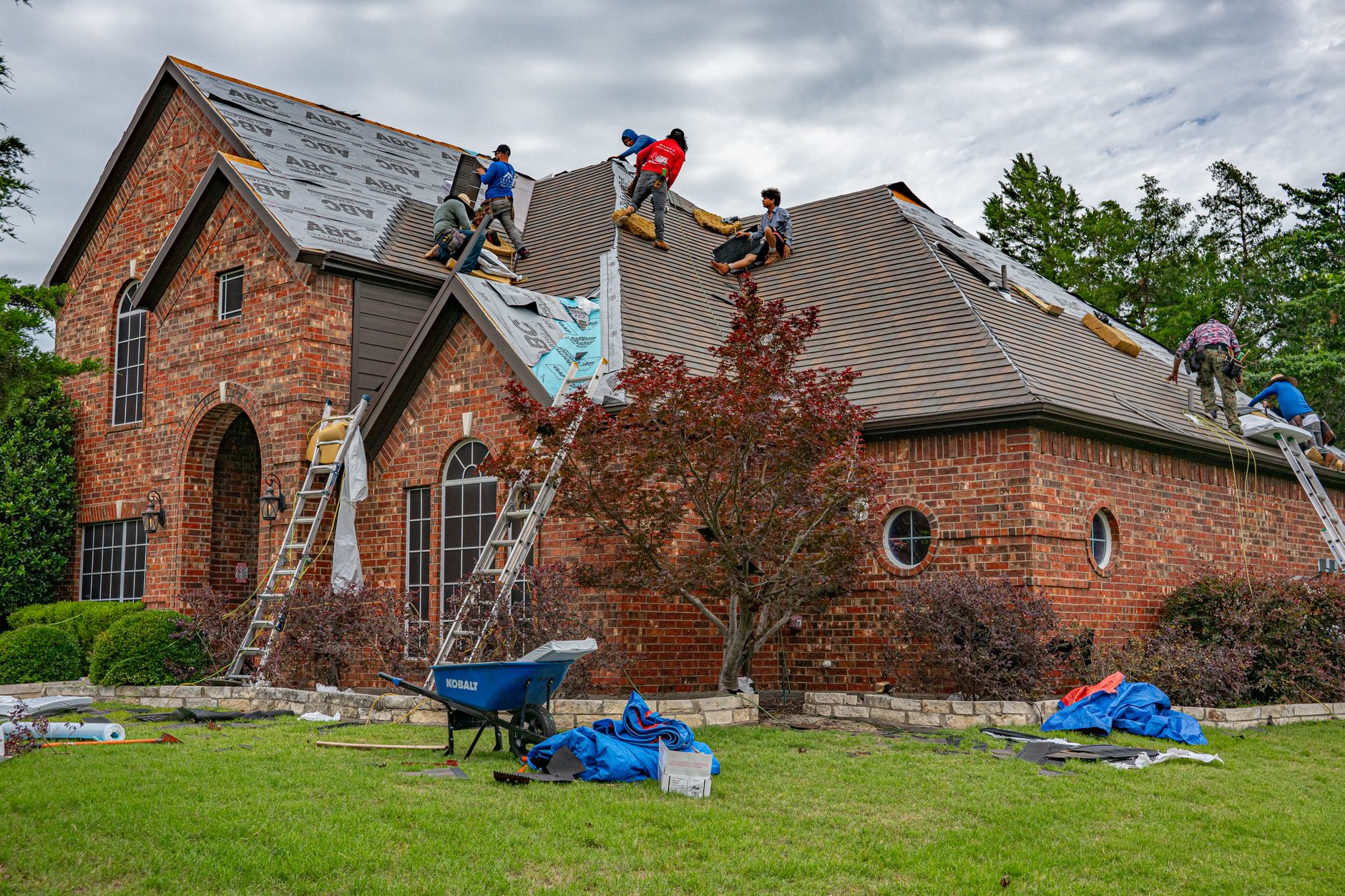
The Roof Done by Dark
Gordon Ruhl asked me for the money at my own kitchen table, eight days after we buried his daughter, with the casserole dishes from her funeral still stacked by my sink waiting to go back to their owners.
He did not lead up to it. He set his seed cap on the table, folded his big hands on top of it, and looked at the cap instead of at me.
“Ryan, we need sixty thousand dollars,” he said. “The hail took the roof, the back windows, and half the ceiling in the den. We’d pay it back. I want you to know that before you say anything.”
Marlene sat beside him with her purse in her lap, both hands on the clasp, the way she sat in a doctor’s waiting room. She had not taken her jacket off. She did not look at me either.
I was thirty-seven years old. I had been a widower for twelve days.
I had two little girls asleep down the hall, and a life insurance check for two hundred and fifty thousand dollars sitting in an envelope in my truck, because I had not been able to make myself carry it into the bank.
“Your homeowner’s policy,” I said. “What did the adjuster say?”
Gordon turned the cap a quarter turn on the table. “There’s no adjuster. The policy’s gone. It lapsed back in the winter. We were going to catch it up, and then everything with Amanda, and then the storm.”
You have to understand what those twelve days had been, or none of the rest of this makes sense. Amanda was thirty-five.
She found the lump two summers before, while she was putting sunscreen on Josie at the Cordell city pool.
We did everything they told us to do. Surgery in Oklahoma City, chemo in Clinton, radiation, the good scans, the bad scan, the trip to Houston, the second round.
By the end of March they sent her home with hospice and a hospital bed in our front room.
She died on a Saturday morning in early May, a little after six, with the window open because she wanted to hear the meadowlarks in the wheat behind our house. I was holding one hand. Her mother was holding the other.
We buried her on a Wednesday at the cemetery north of town. Half of Washita County came.
My crew wore clean jeans and pressed shirts and stood in a line at the back like they were afraid of breaking something.
The hail came that Friday night, two days after the funeral. I was up with Josie, who had been waking every night since the funeral, and I heard it start on our roof like somebody pouring gravel out of a bucket.
By morning the wheat south of town looked like it had been mowed, the elms on Main had no leaves left on their north sides, and every roofer in western Oklahoma had a phone that would not stop ringing. Mine included.
Gordon and Marlene’s place took it worse than most. Their brick ranch house sits on the west edge of town, out in the open, and the storm came across the pasture behind it with nothing to slow it down.
I drove over the next morning with a roll of tarp and two of my guys. The shingles were shredded down to the mat.
Three of the back windows were gone. Water had come through the den ceiling and dropped a sheet of drywall onto Gordon’s recliner.