The Roof Done by Dark
I looked at that check, and I thought about Gordon cashing in thirty-one years of grain dust and elevator ladders so my wife could have one more summer.
I thought about Amanda typing up a fake letter at the Cordell library so I would not have to carry one more thing.
“No sir,” I said. “Not a dime. Not for this roof.”
“Ryan.”
“Gordon, you paid for Houston. Houston gave me another summer with my wife. It gave the girls another birthday with their mother. I can’t pay that back with a roof. But I’m not taking a dime for it, either.”
He stood there holding that check out between us. Then Ava came down the porch steps, walked right up to her grandfather, and took it out of his hand.
She folded it in half, very carefully, and put it in the coffee can with the bent nails.
“That one’s bent,” she said.
Nobody on that whole street said a word for a second. Then Dusty laughed up on the roof, a big sudden bark of a laugh, and then Mr.
Hendricks laughed in his lawn chair, and then Gordon Ruhl laughed, with tears running down his face into the gray stubble on his jaw. He picked Ava up off the ground and held her so tight she squeaked.
I want to be clear about something, because people ask me about it now. I did not give Gordon and Marlene a dime of that insurance.
Not then, not later. That money is Ava’s and Josie’s, every dollar of it, and it is sitting right where I put it.
People have told me I was hard to do that. Maybe. But it was the one promise I made Amanda that I could still keep, and her parents, of all people, understood that better than anybody.
What I did not understand, standing at my kitchen table eight days after the funeral, was that her parents had already given everything they had.
They were not asking for her money because they wanted it. They were asking because there was nothing left in the drawer.
And they had not told me why, for the same reason I had not told them about the bank. All three of us were keeping promises to the same woman.
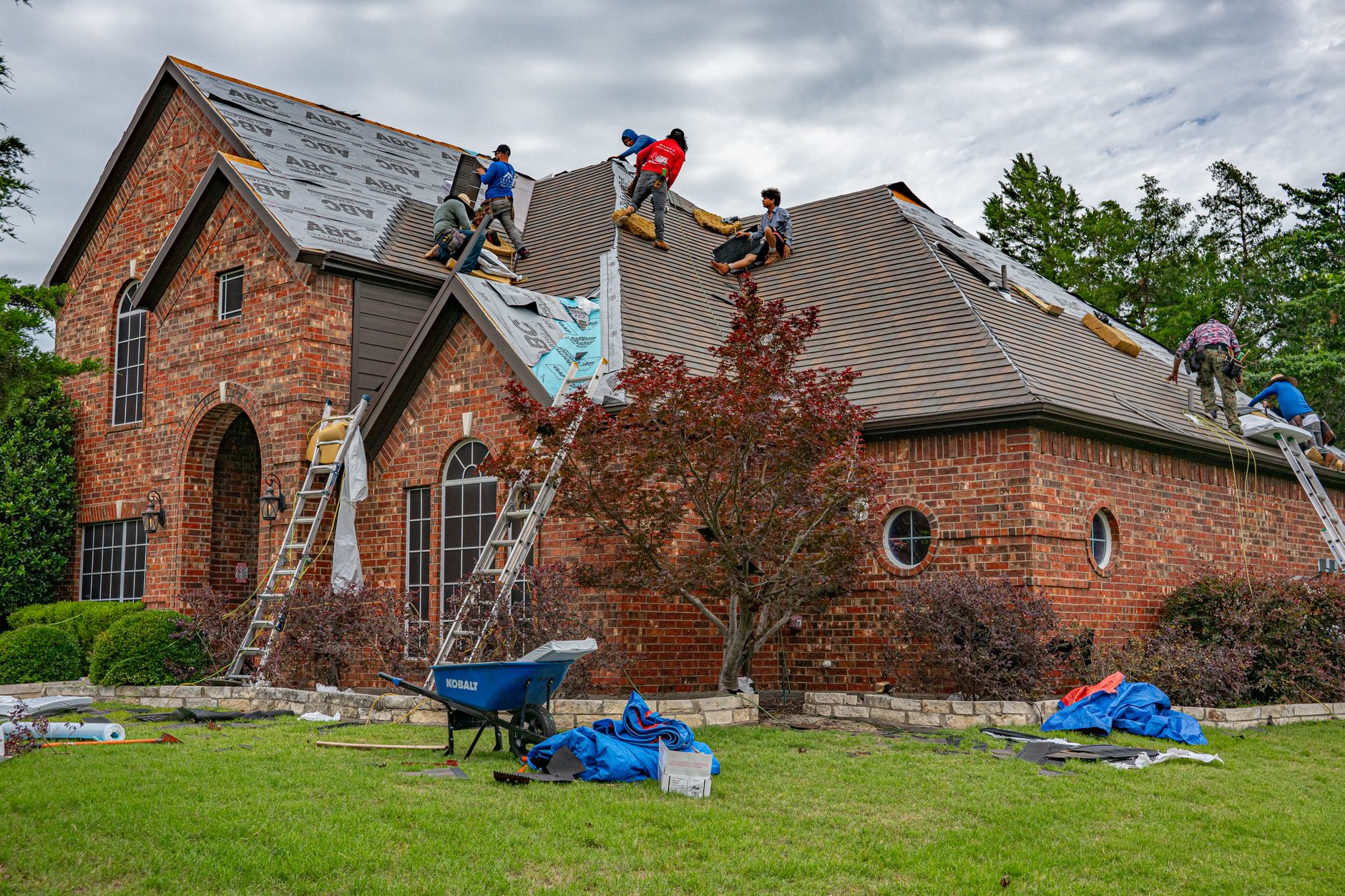
The crew finished the ridge cap and cleaned up by dark. They ran the magnet over the whole yard one more time, rolled the tarps, and hauled the dump trailer out.
When they left, every one of them stopped and shook Gordon’s hand, and he held onto each one a little longer than a man usually does.
Dusty was last. He would not take his day’s pay. I had his envelope in my pocket and he pushed it back at me in the driveway.
“Buy the girls something,” he said. “Or give it to him for the windows. I’m not taking money for this one, Ryan. I’d have had to come anyway.”
I did not argue with him. You do not argue with Dusty.
Gordon and Marlene and the girls and I stood in the driveway and looked at the house.
In the last of the light the new shingles looked almost black, straight lines running all the way up to the ridge, and the window to Amanda’s old room sat right under the low back slope where she used to climb out and watch the storms.
“She’d have been up there tonight,” Gordon said. “Sitting right there. Watching the lightning.”
“She’d have made me climb up with her,” I said.