The Roof Done by Dark
Ava is eight and she is her mother all over again: same fair hair, same way of asking a question like she has been elected to ask it. She climbed into the chair Gordon had been sitting in.
“Was Papa sad?” she asked. “I heard him. He sounded sad.”
“Papa’s house got hurt in the storm,” I said. “The roof’s all torn up and the windows are broken. He’s worried about it.”
She thought about that. “Mommy’s room is in Papa’s house,” she said.
“The one with the window that goes onto the roof. She told me she used to climb out and watch the lightning. She said don’t ever do it.”
I had forgotten that. When Amanda and I were dating, she used to climb out her bedroom window onto the low back slope of that roof on summer nights and watch the thunderheads build over the wheat.
Gordon knew, and pretended he did not, and left the porch light on so she could find her way back in.
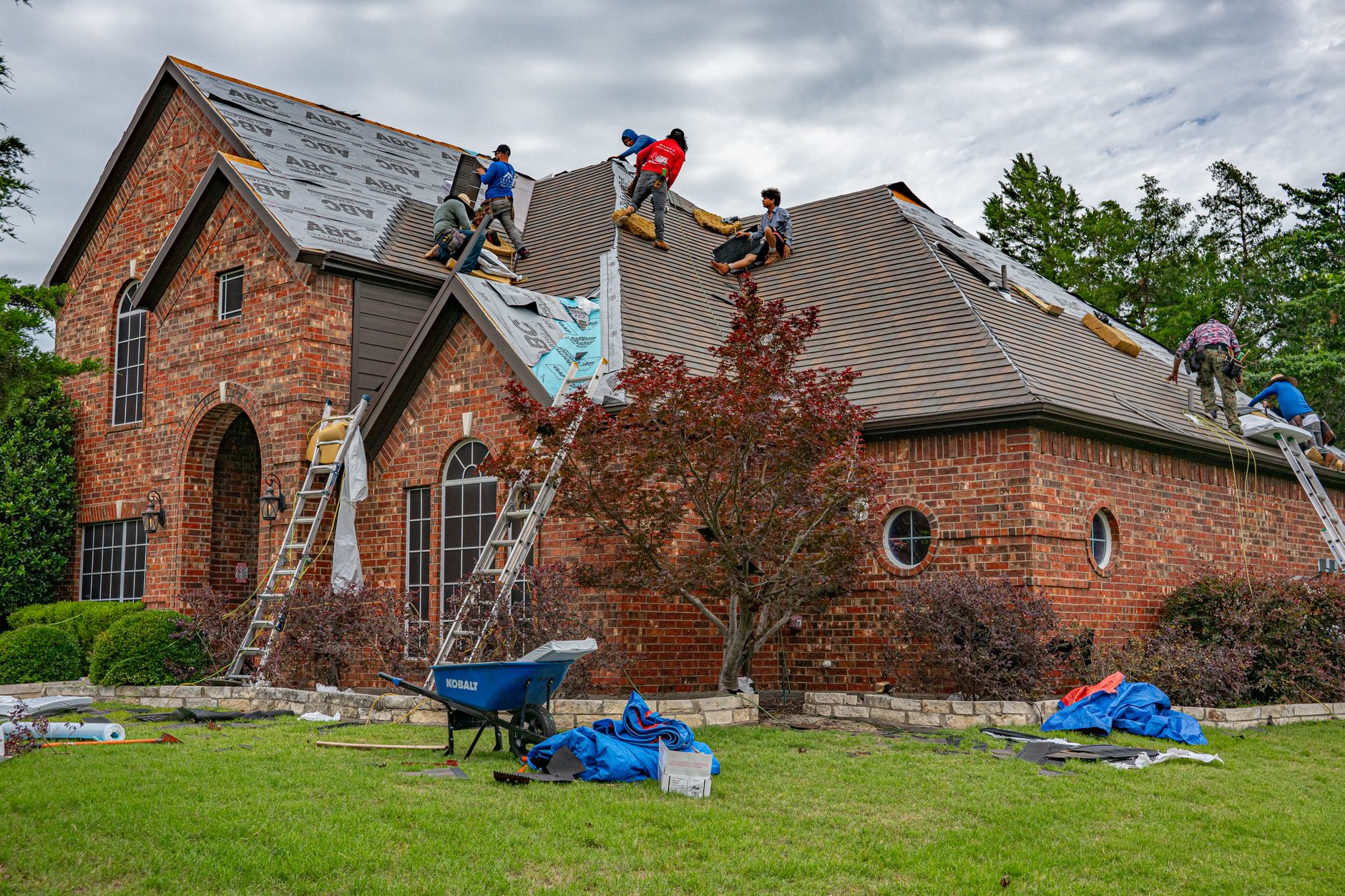
The roof Amanda grew up under was sitting out on the west edge of town with a tarp on it, flapping every time the wind came up, which in western Oklahoma is always.
I carried Ava back to bed. Then I looked at the numbers on my legal pad again.
The Ruhls’ house was a plain three-bedroom brick ranch, built in the seventies, a simple hip roof with one valley over the garage. I had walked it the morning after the storm. Call it twenty-eight squares with waste.
Architectural shingles, synthetic underlayment, drip edge, ridge cap, pipe boots, starter, nails, a dozen sheets of decking for the spots where the old plank had gone soft, and a dump trailer for the tear-off.
With my contractor pricing at the supply house, a little under eleven thousand dollars in materials.
Then the crew. Eight men, one Saturday, a long day. If I paid them for it out of my own pocket, which I would, call it another two thousand and change.
Thirteen thousand dollars was a lot of money to my little outfit. It was most of what I kept in the business account to get us through a slow winter.
But it was not the girls’ money, and that was the line I could live on.
The windows and the ceiling would still need doing. I did not have an answer for those yet. But a roof I could do. A roof was the one thing on earth I knew how to give.
I called Dusty Klein at five thirty Friday morning, because Dusty has been up since four every day of his life.
He has been my foreman for six years. Before that he ran crews for a big outfit out of Amarillo and got tired of the way they treated people.
“I need everybody Saturday,” I said. “Not a customer job. I’m paying full day wages out of my pocket, but it’s going to be a long one.”
“Whose house?” he asked.
“Amanda’s folks. Out on the west edge of town.”
He did not say anything for a few seconds. I could hear his coffee maker gurgling.
Dusty is forty-four, divorced, and not much of a talker, and he had stood at the back of that funeral in a shirt I am pretty sure he bought for it.
“What time you want us there,” he said. It was not a question.
“Six. I’ll have the materials dropped tonight.”
“We’ll be there at five thirty,” he said, and hung up.