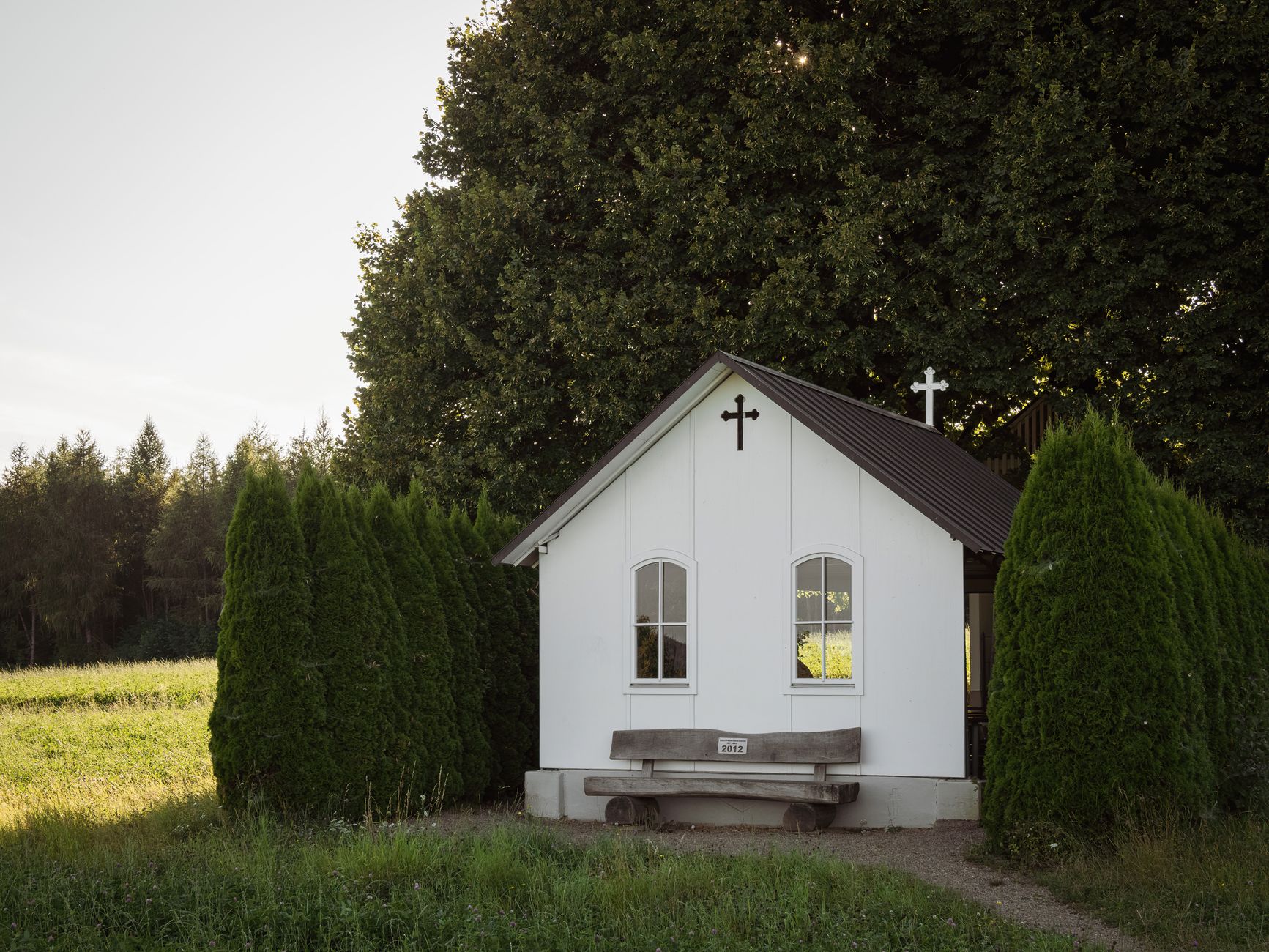
The Eleven in the Pews at Bethel
“Four years, Kris. Four years she drove out there in the dark and played that piano for nobody, and I’m not paying to heat an empty building for nobody.”
My sister Lisa said it in the basement of the Methodist church in town, the afternoon we buried our mother, with a paper plate of ham and scalloped potatoes going cold in her hand.
She did not say it loud. Lisa never says anything loud. She says it flat and tired, the way she said it to Mom’s face at Thanksgiving three years running, and it lands harder that way.
“Dale Weber called me again this morning,” she went on. “Thirty-five thousand, as is. He wants it for a machine shed. He’ll leave the cemetery fenced off and mow it twice a summer. That’s a fair offer for a building nobody uses.”
“Today, Lisa?” I said.
“The funeral home wants nine thousand by the end of the month. The estate has about four in the checking. You do the math.” She set the plate down on the long folding table. “Greg’s unemployment runs out in November. I’m sorry. I don’t have the luxury of being sentimental about a piano.”
I want to tell you I stood up for Mom right then. I didn’t. I had thought the same thing for four years, only I had been nicer about saying it, which meant I had never really said it at all.
The church on Grandpa’s ground
Bethel Community Church sits on a gravel road in north-central Missouri, three miles off the blacktop, between a bean field and a stand of hedge trees.
It is a plain white frame building with clear glass windows, twelve pews, and a bell nobody has rung since I was in high school.
My grandpa, Walter Dunn, gave the acre it sits on in 1948.
He had come home from the war, married Grandma, and decided the township needed a church closer than the one in town, so he and four neighbors put it up in one summer.
Bethel never belonged to a denomination. It was a community church, the kind that borrowed a preacher from wherever it could get one and paid him in cash and pies.
Grandpa’s deed had a line in it that said if the church ever closed, the ground came back to the family.
The congregation dwindled the way they all do out here. By 2022 there were six people coming on Sunday mornings, and four of them were over eighty.
The last preacher retired, the board voted to close, and that summer the building and the acre came back to Mom.
Mom was Marjorie Dunn. She taught piano lessons out of her front room for forty-one years, two dollars a lesson when she started and twenty when she quit. Half the kids in our county learned “Jesus Loves Me” on her bench with her pencil tapping time on the music stand.
When Bethel closed, she did not sell it and she did not let it fall in.
She kept the electric on with the co-op, she kept the gutters cleaned, and every Wednesday night she drove out at dusk, unlocked the side door, and played the piano for an hour.
That was all any of us knew about it. She went on Wednesdays, she played, she came home. If you asked her who she was playing for, she would smile and say, “Whoever needs it,” and change the subject to your kids.
Lisa thought it was grief. Dad is buried in the little cemetery behind Bethel, and he had been gone three years by then.
Lisa thought Mom was sitting out there in the dark playing hymns to a grave, and it scared her, and when Lisa is scared she gets hard.
“She’s playing for nobody,” Lisa told me in 2023, on the phone. “It’s not healthy, Kris. She’s almost seventy, alone on a gravel road at night. What if she falls on those steps?”
I agreed with her. I told myself Mom needed something to do.
I sent her two hundred dollars a month for groceries, because her Social Security was small and the lessons had stopped, and I let the Wednesday business go. I did not drive out to see it once.