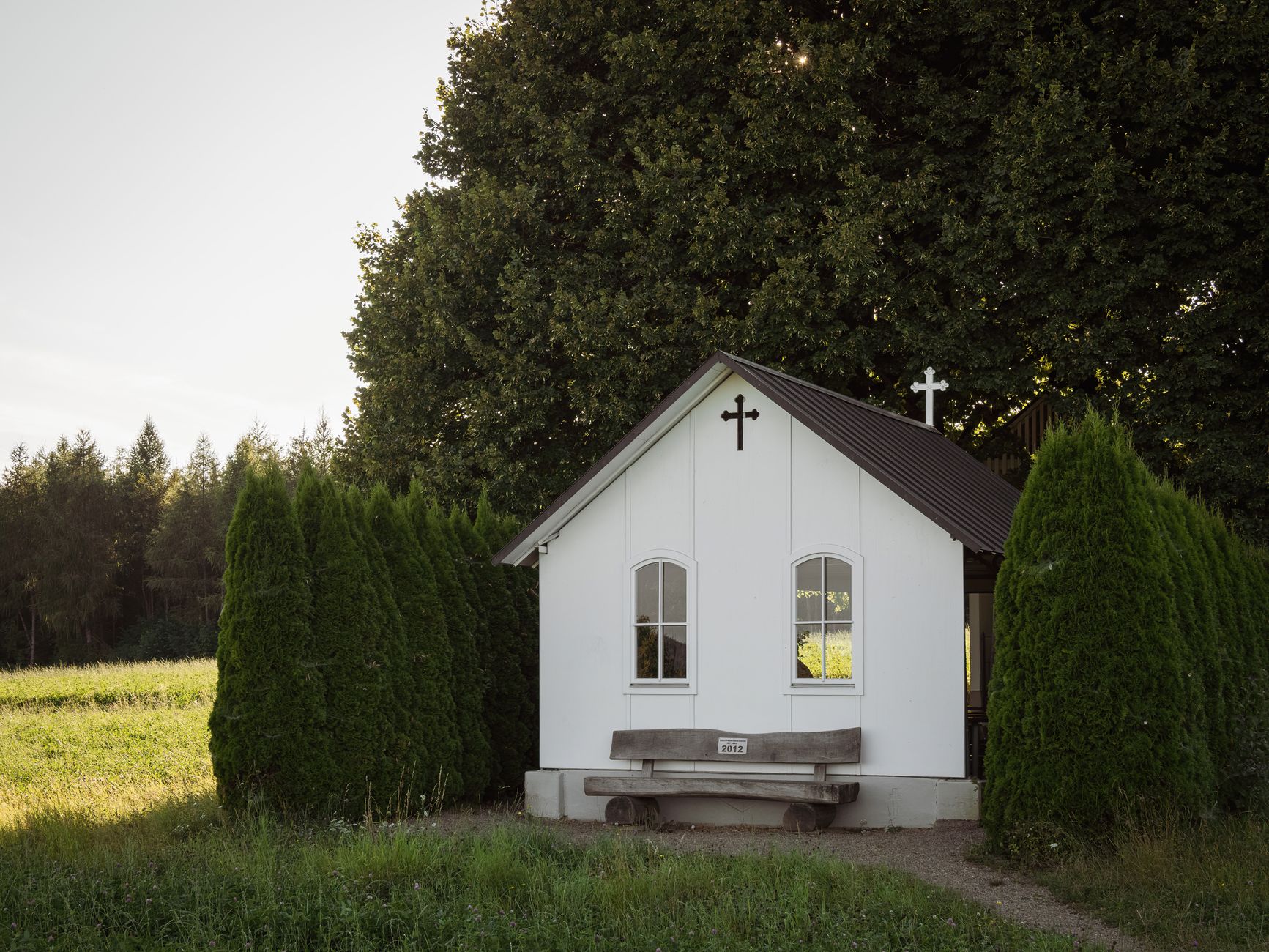
The Eleven in the Pews at Bethel
The second Wednesday
I told Lisa I hadn’t gotten everything sorted yet, which was true. I told myself I would go once more, find out who these people were, and lock it the following week with a clear conscience.
The next Wednesday I left the clinic early and was at Bethel by a quarter to seven. I had the lamp lit and the space heater running by the time the first car came down the gravel.
Nobody was late. They came in one or two at a time, nodded at me, and took what were clearly their own pews, the way church people always do.
I brought Abby that night. My neighbor had a cold, and I did not have anyone else, and I was honestly a little nervous about what my daughter would make of eleven strangers in a dark church.
Abby walked straight up the aisle and sat down beside Kayla and the baby as if she had been invited. Kayla looked startled, then smiled and shifted over to make room.
“Can I hold her?” Abby whispered.
“When she’s asleep,” Kayla whispered back. “If you sit real still.”
So my eight-year-old sat real still for forty minutes, which I have never seen her do in her life, and when Ellie finally dropped off, Kayla laid her across both their laps so Abby could hold her head.
Who they were
That night and the next, I started to learn who they were, a piece at a time. Nobody told me all at once. It came out on the steps after, while people found their keys, the way things come out in the country.
Merle and Art were widowers. Merle lost his wife, Joan, to cancer in 2021, and Art lost his Wanda the year after.
They had farmed across the road from each other for fifty years and never been more than polite. Now they sat a pew apart every Wednesday and drove home in convoy.
“Wednesday was her circle night,” Merle told me. “Forty years, she went to church circle on Wednesdays and I had the house to myself. Then she was gone and I had the house to myself every night. Wednesday was the worst one.”
Nora was the young woman in scrubs. She worked nights on the medical floor at the hospital in Chillicothe, twelve-hour shifts, and she lived alone out here in her late grandmother’s house.
“I used to sit in my car in the hospital lot for an hour before every shift,” she said. “Just sat there. Your mom saw me at the gas station one night in my scrubs looking like death and said, there’s a church on my road, come sit in it instead.”
Donna’s husband had dementia. Her daughter came every Wednesday evening so Donna could have two hours away, and for a year Donna had driven around the county roads in the dark with nowhere to go. Mom found her parked at the cemetery gate.
Ray was a farmer whose wife had left him.
Tom and Sue had lost their grown son in a grain bin accident, and they could not bear to go back to their own church, where everybody watched them to see if they were all right.
“Nobody watches you here,” Sue told me. “That’s the whole thing. You can just sit.”
Bill was a retired lineman who came because his hearing aids made the radio sound like tin and live piano still sounded right to him.
Kayla was nineteen, her husband was working nights in the oil fields in North Dakota, and Ellie had colic so bad that the piano was the only thing that settled her.
And Hank had just been parked on the shoulder in the snow one Wednesday in January of 2023, catching his required break, when an old woman knocked on his window and asked him if he wanted to come in out of the cold and hear some music.
“I told her I don’t go to church,” Hank said. “She said, good, it’s closed.”
None of them knew each other’s last names. Mom had kept it that way on purpose.
She told Hank once that out here everybody already knows everybody’s business, and some people need one hour a week when nobody knows anything about them but their first name.