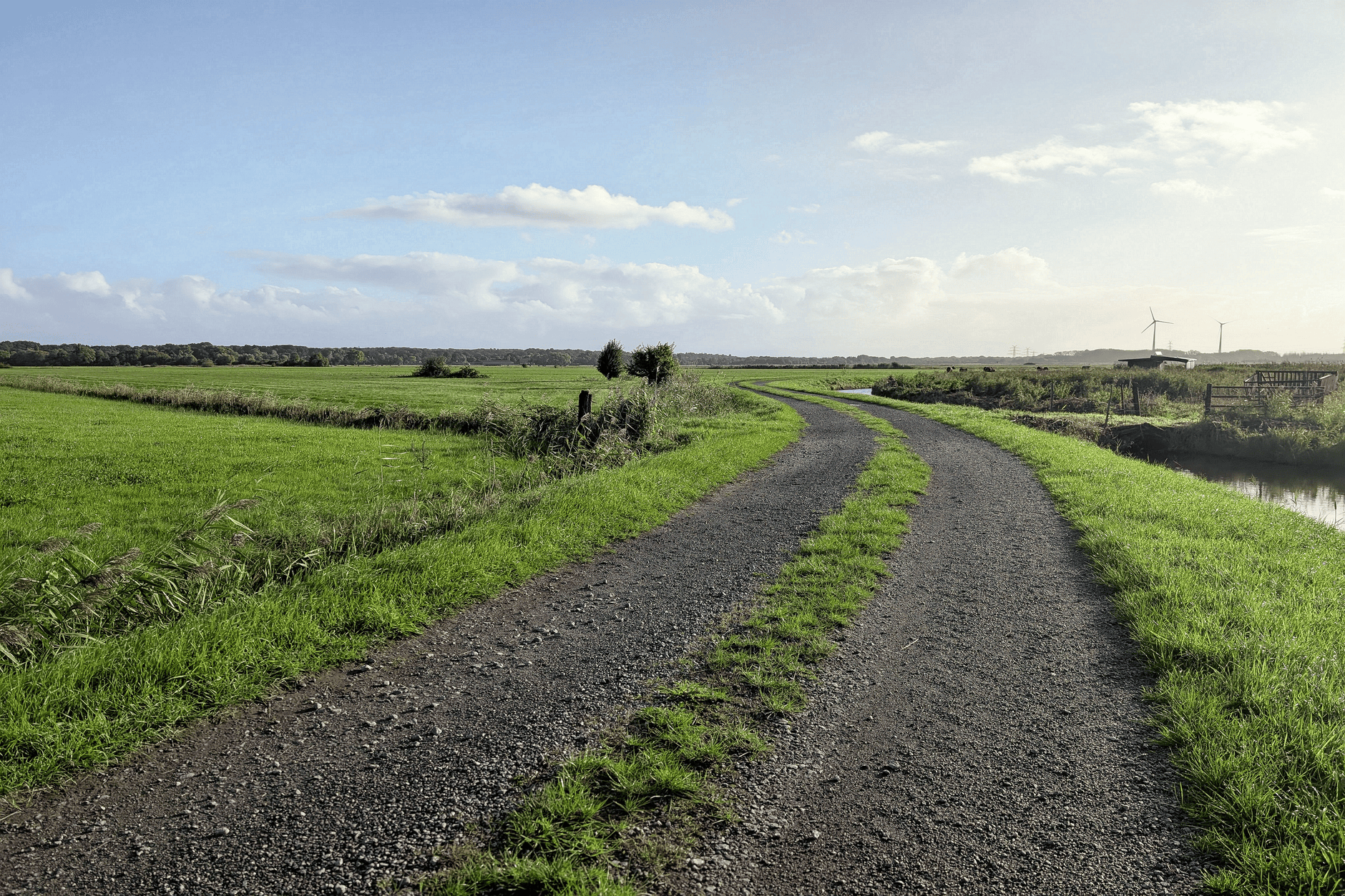
The Lane I Cut Around My Brother’s Gate
The gate was already hung when I brought the school bus home that Thursday in March. Two new steel posts, a green farm gate sixteen feet wide, and a chain wrapped twice around the end post.
A brass padlock hung off the chain. It was so new it still shone, and it was the only bright thing in that whole gray stretch of mud between my brother’s yard and my house.
I stopped the bus a few yards short of it and left the engine running. Lily and Gus were my last two riders, the way they always were, sitting together in the front seat right behind me.
“Mom,” Gus said, standing up to see over the dash. “Somebody shut Grandpa’s road.”
Somebody had. I knew who before I saw Kurt walk out of the machine shed in his chore coat, and I knew it before he came up to the bus door with his hands shoved in his pockets.
I opened the door. Cold air came in smelling of thawed ground and diesel. Kurt stood at the bottom step and did not come up it.
“Got you a key,” he said. He held it up between two fingers, a single brass key on a split ring with a paper tag. “This one’s free through the end of the month.”
“Through the end of the month,” I said.
“Starting April first it’s fifty a month. For upkeep.” He looked past me at the kids, then back at me. “That lane’s had a school bus on it twice a day for six years, Tara. You’ve seen the ruts. Somebody pays to fix that, and it’s been me.”
I took the key. I did not say anything else. I could feel Lily watching the back of my head, and the thing I wanted to say was not a thing I wanted my daughter to hear me say to her uncle.
Kurt waited a second, like he expected more. When it did not come, he nodded once, the same short nod Dad used to give a man at the sale barn, and walked back toward his shed.
I got down, unlocked the padlock, swung the gate, drove the bus through, got down again, swung it shut, and locked it behind me. Gus counted every step out loud. It took four minutes.
The Quarter Section
Our dad, Walter Bauman, farmed the same quarter section in Clay County for forty-one years. A hundred and sixty acres, half a mile on each side, the kind of square you can see from a plane.
The county road runs along the south edge of it. Dad’s lane ran north from that road a quarter mile to his yard, where the house and the barn and the machine shed sit in a ring of old cedars.
Eleven years ago, when Mike and I married, Dad told us to put a house on the north side of the yard. “Plenty of room,” he said. “And I’d like to hear kids on the place again.”
So we did. A modest ranch house, two hundred yards past Dad’s barn, with a little pole shed and a clothesline. The lane just kept going past Dad’s yard and ended at our door. Nobody thought twice about it.
When Dad died two winters ago, his will left the quarter to Kurt and me, equal shares. We sat at his kitchen table with the banker and a surveyor from Hastings and drew a line straight across the middle.
Kurt took the south eighty with the yard, the buildings and the lane. He farms it, along with ground he rents from two widows down the road. I took the north eighty, where our house was, and the brome meadow Mike cuts for hay.
It was fair. I still think it was fair. Kurt is paying me for my half of the buildings over three years, and he has never once been late.
What nobody did was write the lane down. The surveyor asked once. Kurt said, “She’s my sister,” and I said, “We’re family,” and the banker smiled, and that was the end of it.
So when Kurt hung that gate, there was no paper that said I could cross his ground. There had never been an easement recorded. There had only ever been Dad, and then there had only been us.