The Lane I Cut Around My Brother’s Gate
Easter
Easter came late that year, the twentieth of April. The church was full, the way it only is on Easter and the Sunday before Christmas. I sat with Mike and the kids in our pew. Kurt sat two rows back, alone.
Nobody said anything about the lane at church. That is not what church is for, and Pastor Dale preached on the road to Emmaus and never once looked our way.
That afternoon, Kurt came to Easter dinner at our house. He had not been to our house for a meal since Dad’s funeral.
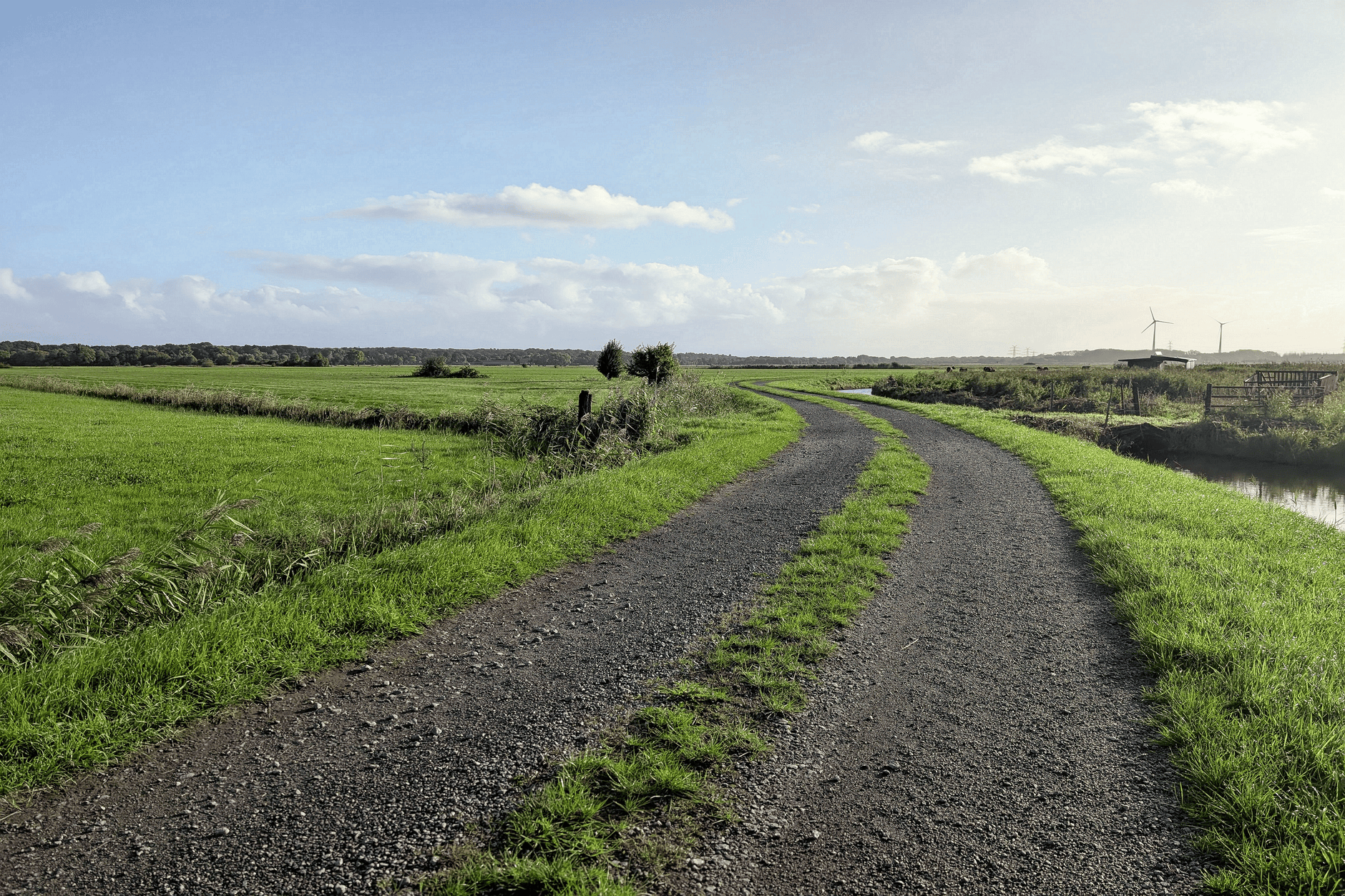
He came up my new lane in his pickup, not through his yard. I watched him from the kitchen window. He drove it slow, the whole quarter mile, like a man walking a fence.
He knocked on the front door instead of the back. When I opened it, he held out his hand. In it was the brass padlock, open, with the key still in it.
“I took the chain off this morning,” he said. “Gate’s standing open. I’ll leave it open.”
“You don’t have to do that.”
“Yes, I do.” He put the lock and the key in my hand and closed my fingers around them. “That’s yours. For good. You want to lock that gate, you go ahead. I won’t ever lock it again.”
Then he stepped inside, kicked his boots off on the rug like he used to at Dad’s, and Gus grabbed his leg and asked him if he wanted to see the dozer seat, and Kurt said, “Buddy, the dozer went home Monday,” and Gus said, “I know, but I remember it.”
We ate ham and scalloped potatoes and Mike’s mother’s deviled eggs. Kurt said grace when Mike asked him to. He said it the way Dad used to say it, the same words in the same order, and halfway through his voice went, and he had to stop and start again.
After dinner, while the kids hunted eggs in the brome, I brought out Dad’s stakes.
I had kept all thirty one of them, tied up again in the same orange twine. I set the bundle on the table in front of my brother and turned the top stake so he could read it.
Tara’s drive. West to the county road. Someday.
Kurt read it. He read it again. He put his thumb on Dad’s pencil letters, very gently, like they might smudge.
“He never told me,” Kurt said.
“He never told me either,” I said. “Not really. He told me once, and I laughed at him.”
Kurt picked up the bundle and held it the way I had held it on the shed floor.
“He saw it coming,” he said finally. “Didn’t he? Not me, I don’t mean. Just that someday there’d be two of us out here and one road.”
“I think he just wanted me to have my own door,” I said.
Kurt nodded. He set the stakes down. Then he reached over and pulled one stake out of the bundle, the top one with Dad’s writing.
“Can I keep this one?” he asked.
“It’s got my name on it,” I said.
“I know,” he said. “That’s why I want it.”
I let him keep it. It hangs now on a nail in his machine shed, right over the bench where Dad used to sharpen sickle sections. I have seen it there. He does not know I have seen it.