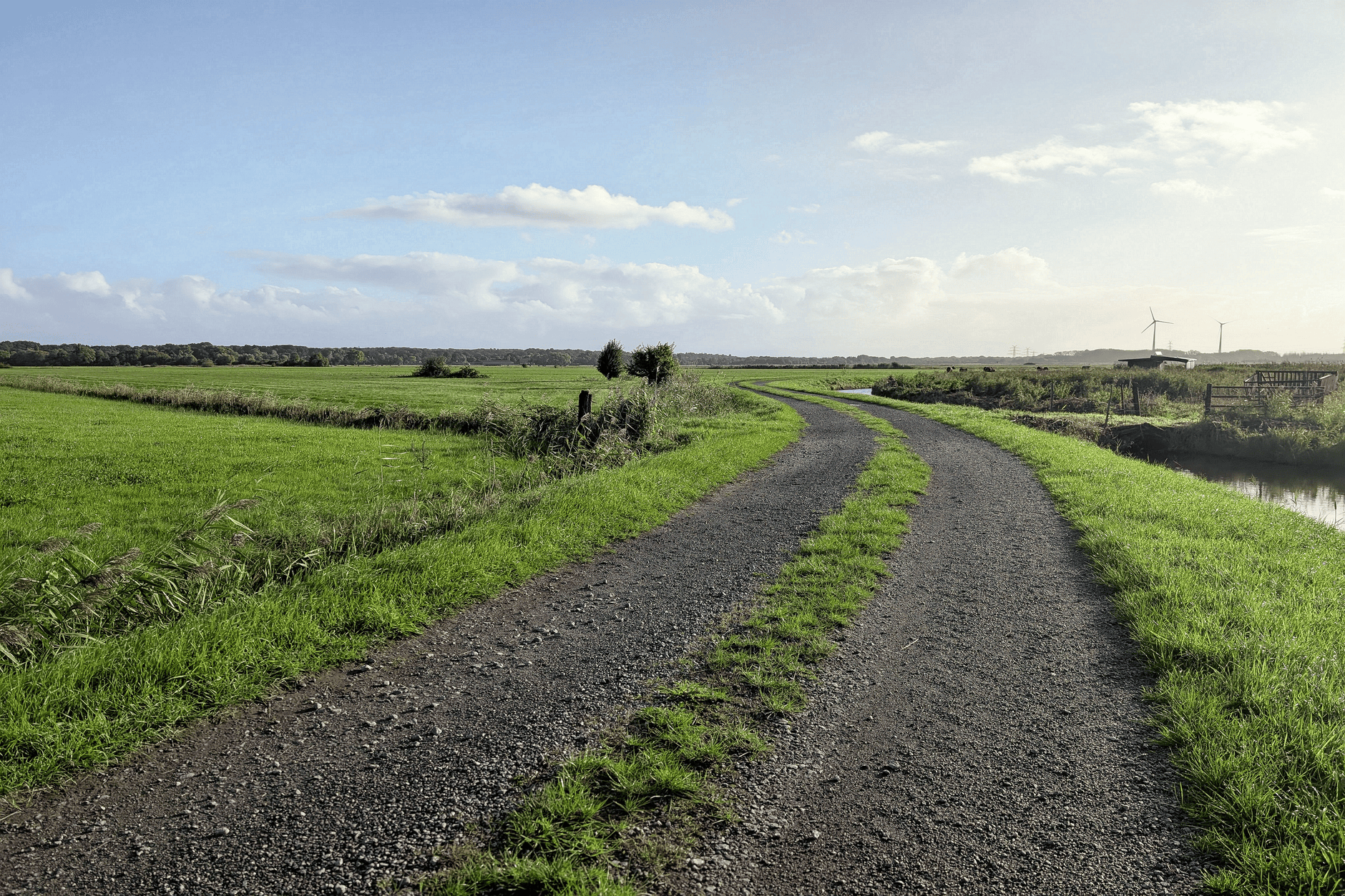
The Lane I Cut Around My Brother’s Gate
The Shed
The next morning I drove the route, and the next morning after that. Every time, I stopped at the green gate, got down, unlocked it, pulled through, got down, locked it.
Some of the high school kids on the early run thought it was funny. The little ones did not. A kindergartner named Josie asked me if the gate was to keep a bull in, and I told her no, honey, just a road.
Saturday, I went out to my pole shed. When we split Dad’s things, I took his hand tools and the old workbench and whatever else Kurt did not need. Most of it was still in boxes.
I was looking for his post hole digger. I wanted to see if I could set two posts of my own somewhere, though I did not know yet where or why. I think I just wanted my hands busy.
The digger was in the back corner, leaning against the wall behind a roll of woven wire. When I pulled it out, a bundle fell over and hit the floor.
It was a bundle of wooden survey lath, maybe thirty stakes, each one about four feet long, tied together with two loops of orange baling twine. The tops were painted with a band of blue.
Dad had written on the top stake in his flat carpenter pencil, the way he wrote everything, in square block letters that leaned a little to the right.
Tara’s drive. West to the county road. Someday.
I sat down on an upturned bucket on the shed floor and held that bundle in my lap.
I remembered then. The year we put the house in, Dad had walked the line with me one evening in May. He said he did not like the idea of me always having to come through his yard.
“Someday you’ll want your own way in,” he said. “A woman ought to have her own door to the road.” He paced it off west, a quarter mile, along the edge of what would one day be my half, to the gravel road on the section line.
I had laughed at him. I said, “Dad, I’ll always come through your yard.”
He said, “Well. Someday.” And he must have come back later with the stakes and the pencil, and then he put them in the shed and got busy, and he got older, and then he was gone.
I cried for a while on that bucket. I am not ashamed of it. The shed smelled like his old work gloves and two-cycle oil, and for a few minutes it was like he had walked in behind me.
Then I wiped my face on my sleeve, carried the bundle into the house, and set it on the kitchen table where Mike would see it when he came in from feeding the cats.
He came in, saw the stakes, picked up the top one, and read it twice. He did not say anything. He just put his hand on the back of my neck for a second, the way he does.
“A quarter mile,” he said finally. “That’s what, thirteen hundred feet?”
“Thirteen twenty,” I said.
“That’s a lot of road.”
“It’s not a lot of road,” I said. “It’s a lane. Dad already measured it.”