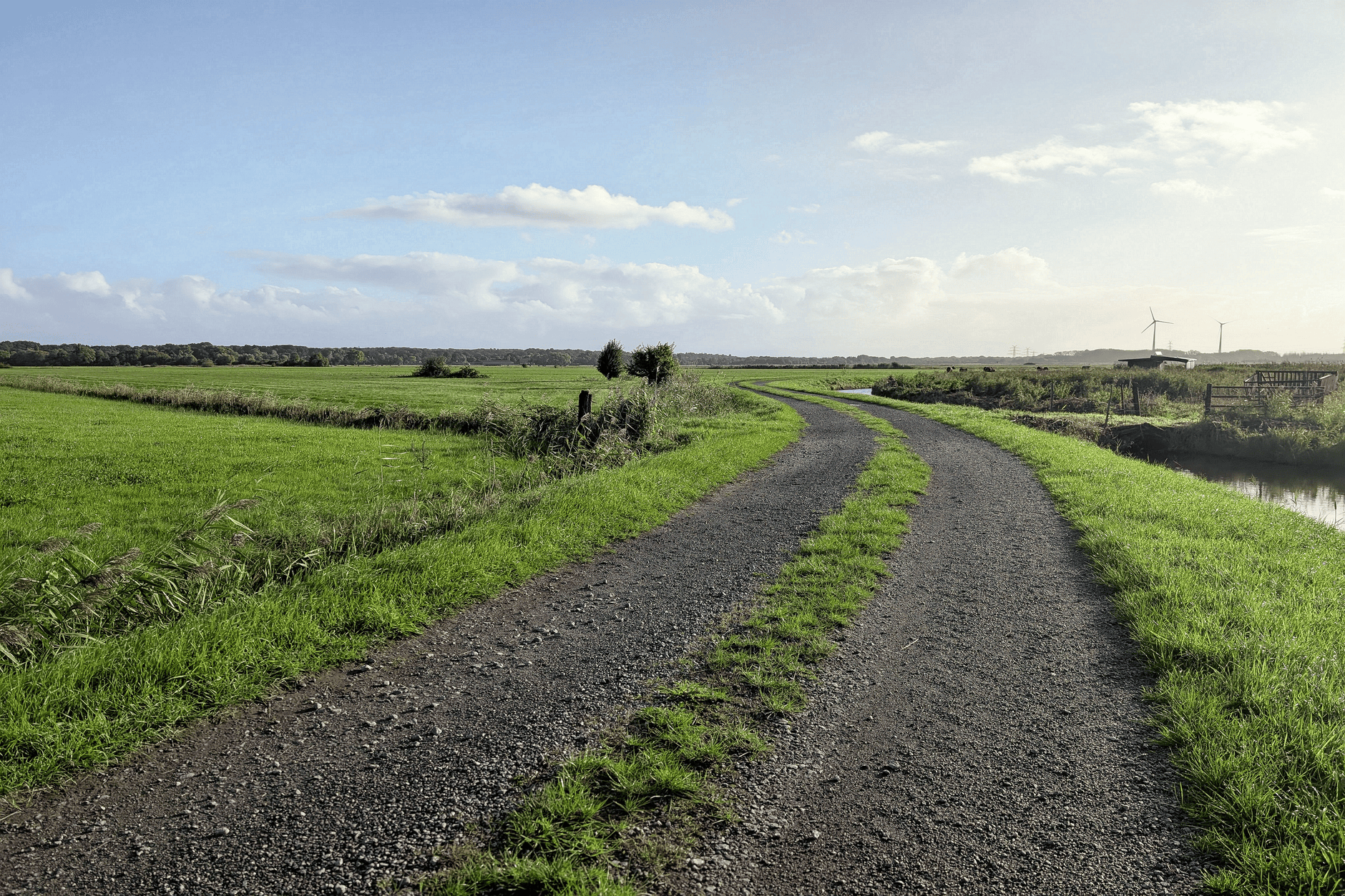
The Lane I Cut Around My Brother’s Gate
The Gate
All four men stopped. Pastor Dale stopped. Lily, over by the cooler, stopped. Even Gus stopped steering.
It was Kurt’s big tractor. I knew the sound of it. It idled a minute by his shed, then moved, and I heard it come around the barn toward the lane.
Then I heard the chain rattle on the green gate.
I turned around. Kurt had climbed down off the tractor and was standing at the gate with the brass padlock open in his hand. He pulled the chain loose and swung the gate wide, all sixteen feet of it, back against the post.
He climbed back up. Behind the tractor, on the three point hitch, he had his rear blade, the eight foot one Dad bought at a farm sale in Harvard the year I graduated.
He drove through the gate. He did not stop to close it behind him. He drove up Dad’s old lane to my yard, cut across the corner of the grass, and came out onto the new gravel right at the rough stretch.
He stopped the tractor in front of me and looked down from the cab. Nobody on that lane said a word.
“You’re short on the house end,” Kurt said.
“I know it,” I said.
“Dozer’s too big to finish it. You’ll gouge your yard.”
“I know that too.”
He looked at the heap. He looked at the men with their shovels. He looked at Pastor Dale, who looked right back at him and did not smile and did not frown.
“Get your rake out of the way, Tara,” Kurt said.
I stepped back. He dropped the blade, angled it, and drove the last sixty feet of my lane at a crawl, pulling the gravel out flat and even, crown in the middle, the way Dad taught both of us.
He made three passes. On the third pass he tilted the blade just a hair and feathered the edge right into my grass, so clean you could not tell where the gravel stopped.
Then he lifted the blade and shut the tractor down. The quiet afterward was enormous.
What He Said
Kurt climbed down. He took his cap off, which he never does outside of church. His hair was going gray at the sides. I had not noticed.
“The bank called me in in January,” he said. To me, but loud enough for all of them.
“The planter. I owe more on it than I told anybody. They want to see cash flow. I sat in that truck in the bank lot and thought about every dollar going out, and I got to thinking about the ruts in that lane, and the bus, and the rock I put on it last fall.”
“Four hundred dollars of rock,” I said. “I know. I saw you hauling it.”
“Four hundred and twenty.” He turned the cap in his hands. “I told myself it was fair. Fifty a month. I told myself you’d understand.”
“I would have,” I said. “If you’d asked me. Instead of a padlock.”
He nodded. He looked at the ground a long time.
“I know it,” he said. “I knew it Friday night. I watched you out there on that dozer till one in the morning. Your lights going back and forth. You sat on that machine just like Dad. Same hunch in your shoulders.”
I did not say anything. I could not have.
“Then I saw Walt’s truck this morning, and Gene, and Hank Pruitt with a shovel at eighty one years old, and I thought, those men are doing what I should’ve been doing. And I’ve got a twelve row planter sitting in my yard I can’t afford, and a gate across my sister’s road.”
Hank, of all people, was the one who spoke.
“Well, son,” Hank said. “You came out. That counts for something.”
Kurt laughed, a short, rough laugh that was almost something else. He reached into his shirt pocket and pulled out two twenties and a ten, folded the way I had handed them to him on the first.
“Here.”
“Keep it,” I said.
“Tara.”
“Put it on the planter,” I said. “I mean it. Not to be smart. I’d rather it went on the note than in my pocket.”
He looked at me, and then he put it back.