The First Play Belonged to Riley
The car that pulled into our gravel drive at twenty to five on a Wednesday afternoon was a maroon Buick with a dented trunk, and I knew whose it was before it stopped.
I was at the kitchen sink scraping a roasting pan when my daughter Hannah said, “Mom, there’s a car.” She was thirteen then and had a gift for understatement. I dried my hands and looked out the window over the sink.
County Road 17 runs past our place four miles outside Sauk Centre, and it is not a road where anybody turns in by accident. The Buick came up the drive slowly, the way you drive when there is a person you do not want to startle. Two men sat inside. One was thick and gray and wore a windbreaker in eighty-two degree heat. The other was tall and young and held something small against his chest.
They parked by the machine shed. Neither one got out right away.
I should say where my son was. He was behind me in the front room, in the recliner, under a blanket he did not need, with a surgical mask hooked over his ears and a stocking cap pulled down to his eyebrows in the middle of August. He had been home three days. Before that he had spent six nights in a hospital bed in Minneapolis.
“Riley,” I said. “You might want to come look.”
He did not move. “Is it somebody from church?”
“It’s Coach Dunn. And Tyler.”
“Just the two of them?”
“Just the two.”
My son closed his eyes for a second. Then he put both hands on the arms of the chair and pushed himself up, slowly, the way a much older man gets up, and I watched him decide not to let me help.
I will tell you now, because I would want to be told, that Riley is twenty-five today and healthy and bored to tears by his own checkups. This is about the fall he was sixteen. I want to tell you how we got to that driveway, because the driveway only makes sense if you know the nine days before it.
It started with bruises.
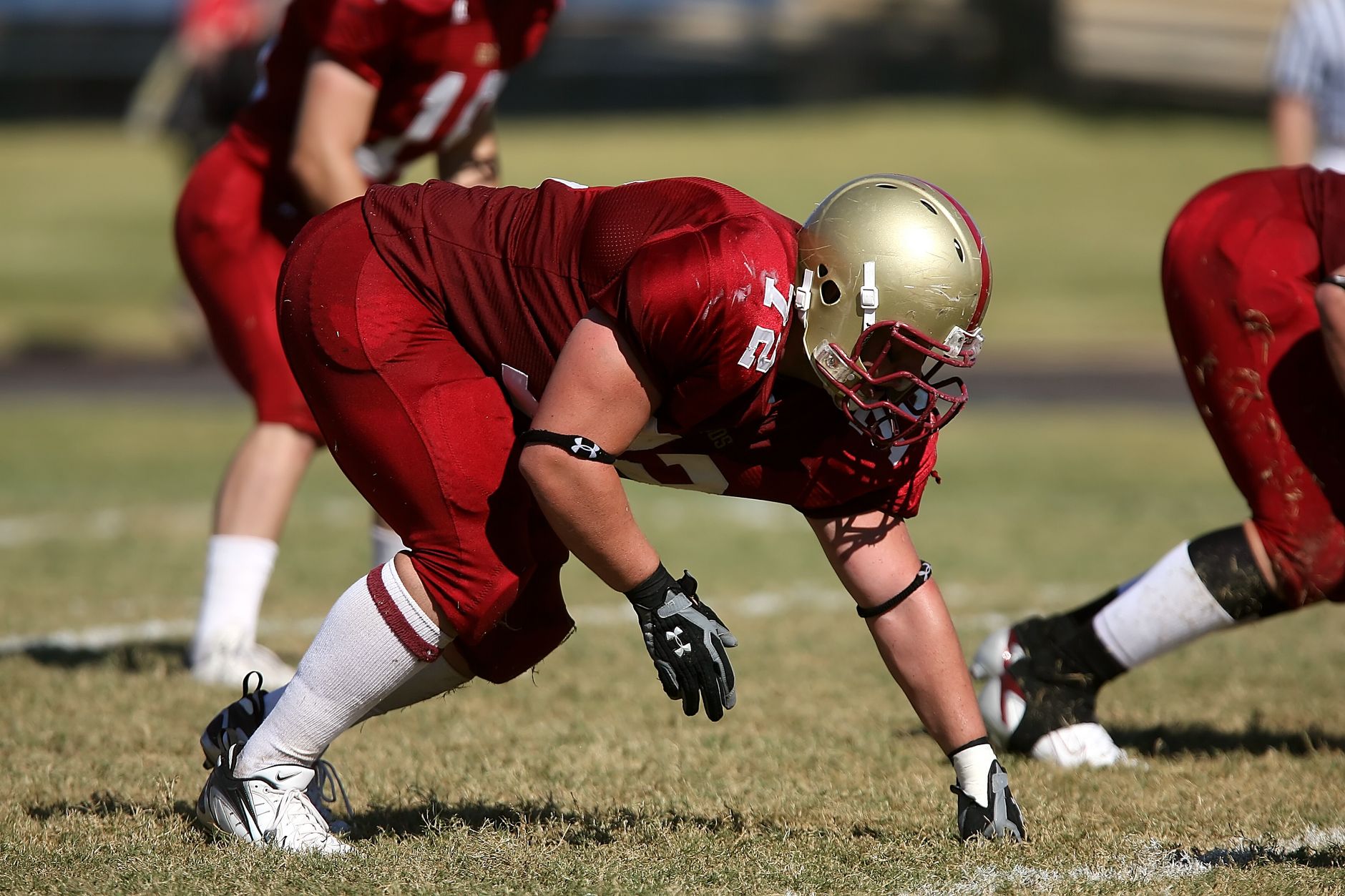
Riley was a junior that August, five foot eleven and a hundred and ninety pounds, and he plays center, number 54. If you do not follow football, the center is the boy who bends over the ball and snaps it, and then does a hard thing for the next four seconds with a larger boy leaning on him.
He was not the fastest boy on the team or the strongest. He was the one with the spiral notebook.
That notebook had been in his backpack since eighth grade, a green one from the Dollar General, and every page was Xs and Os. Plays he had drawn at the kitchen table. Plays he had drawn in church during the long hymns, which I knew about and let go. Coach Dunn had told me once, in the checkout line at the co-op store, that Riley called the protections better than the assistant coaches did, and that he said so only because it was true.