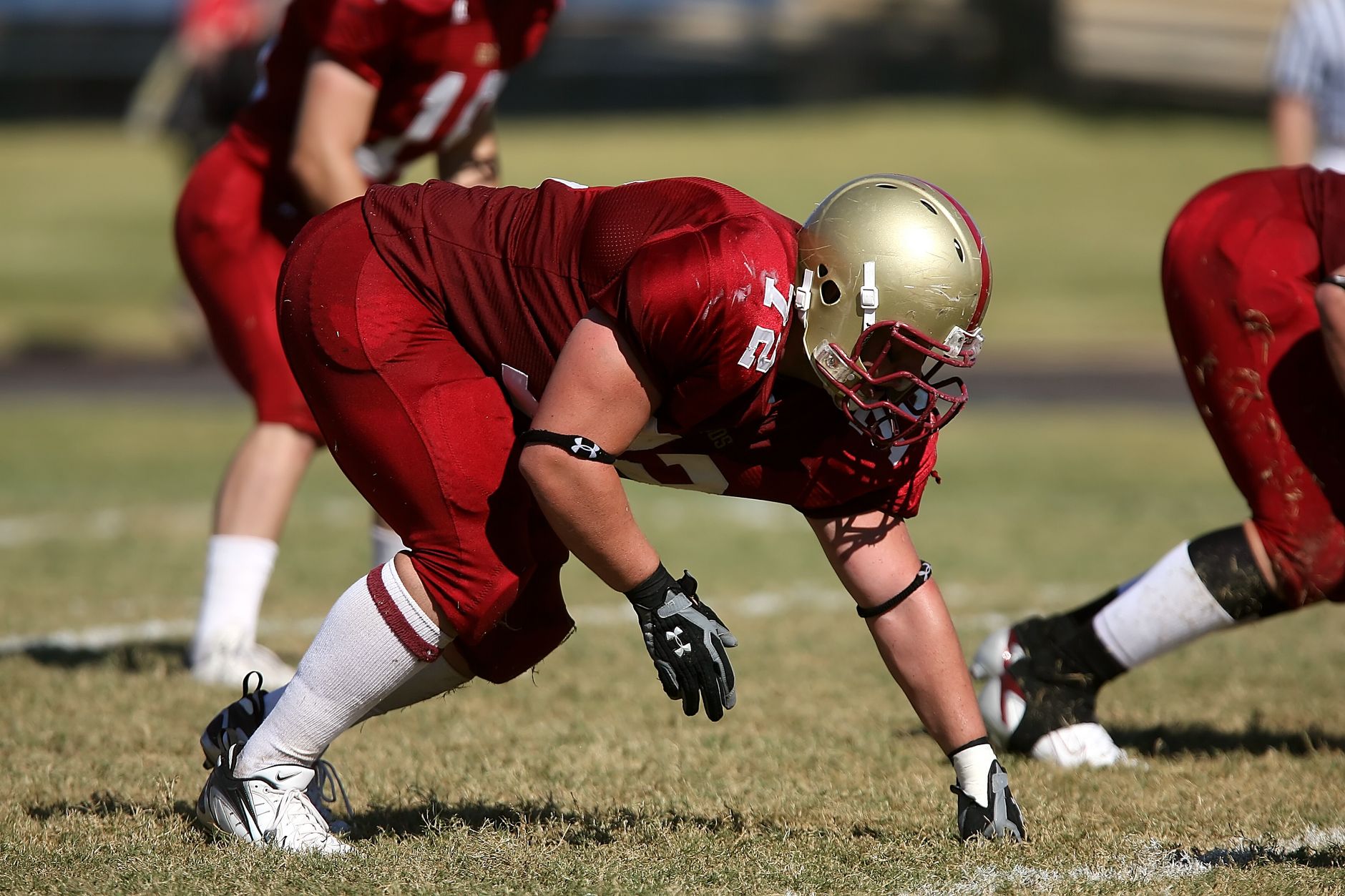
The First Play Belonged to Riley
She did not smile, but her face softened. “Not Monday. Not in a helmet this fall, Riley. I’m sorry. I won’t pretend otherwise.”
He nodded once. He looked at the wall for a long time. Then he said, “Okay,” in a voice that was perfectly steady, and I have never been prouder of anything or hated anything more.
I made it as far as the parking ramp. It was the fourth level, a gray concrete corner with a view of a water tower. I got into the truck and shut the door and put both hands on the wheel, and I tried to pray. Nothing came out in sentences.
I grew up Lutheran, and I raised my children in the same pew I was raised in. I had said the Lord’s Prayer ten thousand times without trouble. That morning I could get out one word.
“Please.”
When I went back upstairs, my husband was standing in the hall with two terrible cups of coffee.
“Anything?” he said.
“Please,” I said. “That’s what I had.”
Mark nodded as if that were a full sentence. “That’s what I had too.”
That was where we started.
They put a port in under Riley’s collarbone, a small device just beneath the skin that would carry the medicine so nobody had to find a vein every time. They did a bone marrow test. They began the treatment on the second day.
By the weekend, the steroids had begun to work on his face. By Sunday, he looked like himself seen in a spoon.
His phone buzzed all week with texts from the team and from girls at school. He would not answer one. I watched him read every message and set the phone face down on the blanket.
On the third day, Coach Dunn called the room line. I held out the receiver. Riley looked at it for a good ten seconds and then took it and walked into the hall, trailing his pole of fluids, as far as the cord would let him.
I heard his half.
“Hi, Coach.”
A long pause.
“I know. I know. Coach, listen.” His voice was low and level. “Don’t do anything for me.”
Another pause.
“No shirts. No signs. Nothing on the helmets, nothing with my number.” He took a breath. “I’m not a poster. I mean it. Don’t put me on a poster.”
He came back and handed me the receiver and got into bed and turned his face to the window.
I understood him better than he knew. Our town is the kind where a sick child gets a spaghetti supper and a jar by the register at the gas station, and a photograph on a poster in the window of the bank. People mean every dollar of it. But my son had watched a girl two grades ahead of him go through a poster, and he had noticed how she became, to everyone who passed that window, a person who was only sick. He had made up his mind about that long before August.