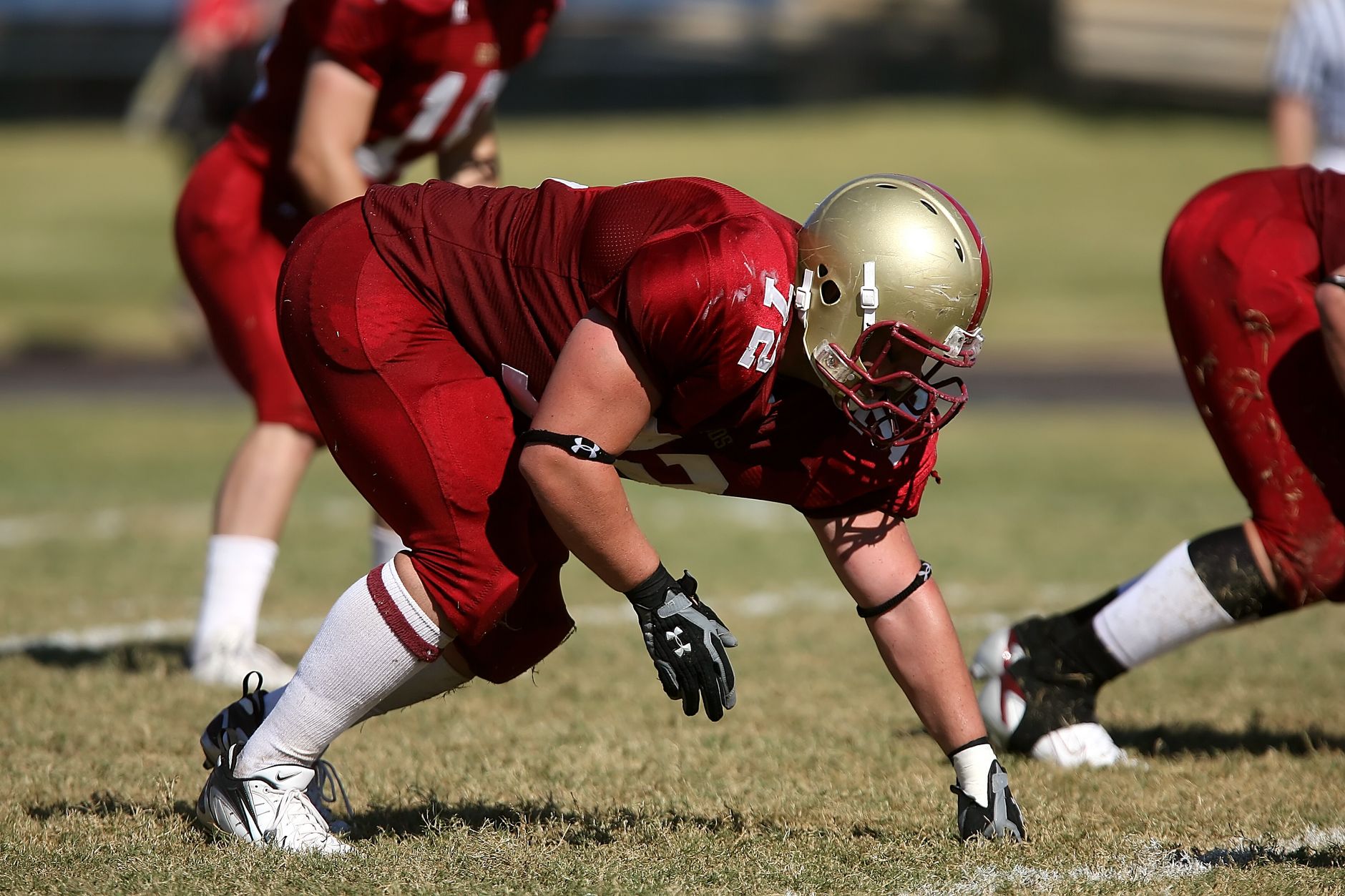
The First Play Belonged to Riley
Two-a-days started the second week of August. It was ninety degrees for most of them. Riley came home gray under his sunburn and ate half a plate and went to bed at eight.
Then there were the bruises. Dark ones up both shins, bigger than a sled could explain, and one the size of my palm on his hip.
“Sled,” he said.
“A sled did that.”
“Mom. It’s football.”
On Sunday night his nose started bleeding at supper, a plain nosebleed, nothing dramatic. It took twenty-two minutes to stop. I know because I watched the clock on the stove and did not say anything.
I am a bookkeeper at the co-op elevator. Thirty years of looking at columns of figures has left me with one useful skill, which is that I can feel when a number is off before I can say which one. Harvest was three weeks away and I had a desk full of scale tickets, and none of them mattered to me that week.
Something was off. I called the clinic at eight Monday morning. They fit him in at ten and drew blood, and Riley watched the whole thing with the polite interest of a boy who has been poked by every kind of needle a farm can offer.
We were back in the truck, halfway to the elevator, where I was supposed to be by eleven, when the clinic called. It was not noon yet.
“Mrs. Pfaff, is your husband with you?”
“He’s at work.”
“Can you reach him? The doctor would like you to take Riley to the children’s hospital in Minneapolis. Today. Tonight, I mean. Not tomorrow.”
“What’s wrong with me?” he said.
“They want a better look at your blood.”
“That’s not what I asked.”
“I know it isn’t.”
We did not talk much after that. I called Mark, and he met us at home and packed a bag in six minutes. Then we drove a hundred miles of interstate in the evening light, with a sixteen year old in the back seat whose cleats were still in his gym bag, because nobody had thought to take them out.
Mark held his foot through the blanket the whole way. Mark does not hold anybody’s hand, but he reached back between the seats and held that foot.
At six the next morning, a doctor named Anita Lindqvist came in, pulled a chair to the bed, sat down so her face was level with his, and said the word.
Leukemia.
She said it the way you would report the weather on a hard stretch of road. She said it was the kind they treat all the time. She said most children and teenagers who have it are cured, and that she fully intended Riley to be most of them. She said the treatment would take about three years, start to finish, and that the first month would be the hardest to watch.
Riley listened to all of it with his arms crossed. When she was finished and had asked if he had questions, he thought for a bit.
“Can I be at practice Monday?”