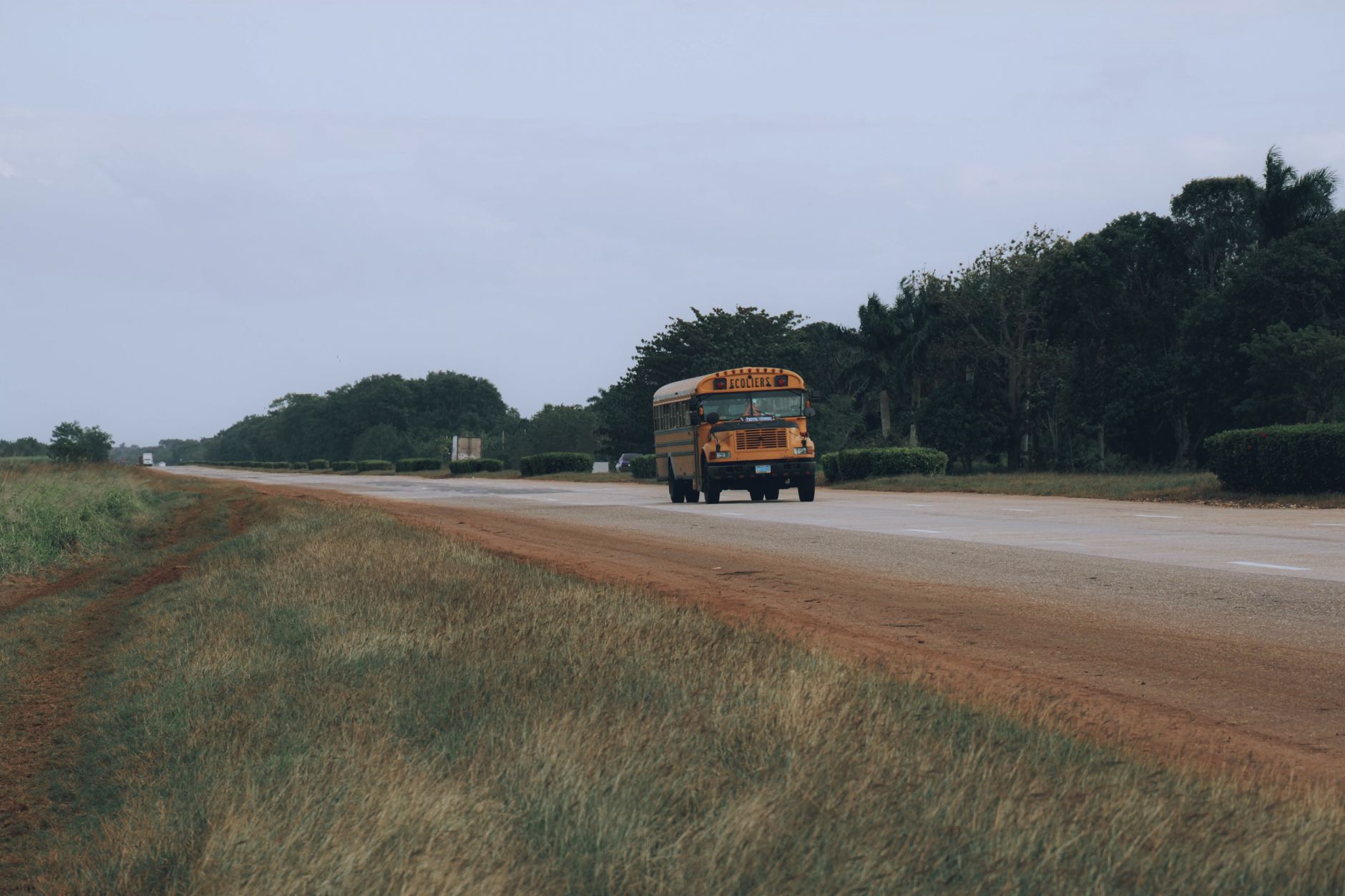
The Minute I Held the Bus
Doris was humming at five o’clock that morning, and I should have known right then.
She hums when she is hiding something. Forty-four years of marriage, and she has never once been able to lie to me with her mouth closed.
It was a Tuesday in May, the last day of school and the last day I would ever drive Route 4 for the district. I was sixty-six years old.
She filled my thermos at the counter with her back to me. She screwed the lid down twice, which she does not do.
“You’ll want to leave at the regular time,” she said.
“I always leave at the regular time.”
“I know it,” she said, and went right on humming.
I took my lunch sack off the table and stood there a second with my hand on the doorframe. I will admit I was not in a good frame of mind.
Twenty-nine years is a long time to do one thing. I had spent most of the week trying to decide whether I would be sad or just tired, and I had not landed on either.
The yard light was still on over the machine shed. A meadowlark had started up somewhere out past the windbreak, the way they do in May before there is any real light.
I drove the four miles into Ord with the window cracked, past the grain elevator and the feed store, and pulled into the bus barn at ten past five.
I walked around the bus the way I have walked around it every morning since 1996. Tires, lights, mirrors, the folding door, the stop arm.
I checked the fluids and wiped my hands on the rag that hangs from the mirror bracket. I checked the seats, because a child will leave a mitten or a lunch sack or, one time, a pet turtle.
Every other morning there had been something. A window left down, a candy wrapper, a note to send home. That morning the bus was spotless, and I put it down to the end of the year.
The last morning does not make sense without the first one, so I have to go back.
In the summer of 1996 I lost the ground I had been farming. It was rented ground, three quarters of it east of Elyria, and a dry year and a bad loan finished what was left.
I was thirty-seven. Doris and I had a daughter in the fifth grade and a mortgage on a house in town, and I had never worked for anybody but my father and the weather.
The bank was not cruel about it. The man there was a fellow I had gone to school with, and he was as polite as a pallbearer. But he had a clock on his wall, and I had never in my life been so aware of being hurried.