The Clean Shirt The Barber Gave
The chair I grew up in
My name is Nora, and the first chair I ever loved was a barber chair.
It is a 1947 Koken, white porcelain base, cracked red leather seat, a chrome arm that swings out so a boy can sit up high for his first cut. It has lived in the same window on our town square since before I was born.
My father, Virgil, has stood behind that chair for fifty years. His own father stood behind it before him, in the same narrow shop, with the same red-and-white pole turning out front.
I was raised in the back of that shop. After school I would walk up the square from the grade school, let myself in the side door, and climb into the Koken to do my homework while the men talked over my head.
I learned a lot of what I know about this town from down inside that chair.
I learned who was sick and who was mending. I learned which farmer had a good bean year and which one was borrowing against next spring. I learned that men who will not say three words to their own wives about their troubles will say every one of them to a barber, if the barber keeps his eyes on the scissors and his mouth shut.
My father kept his mouth shut. That was his gift, more than the haircut.
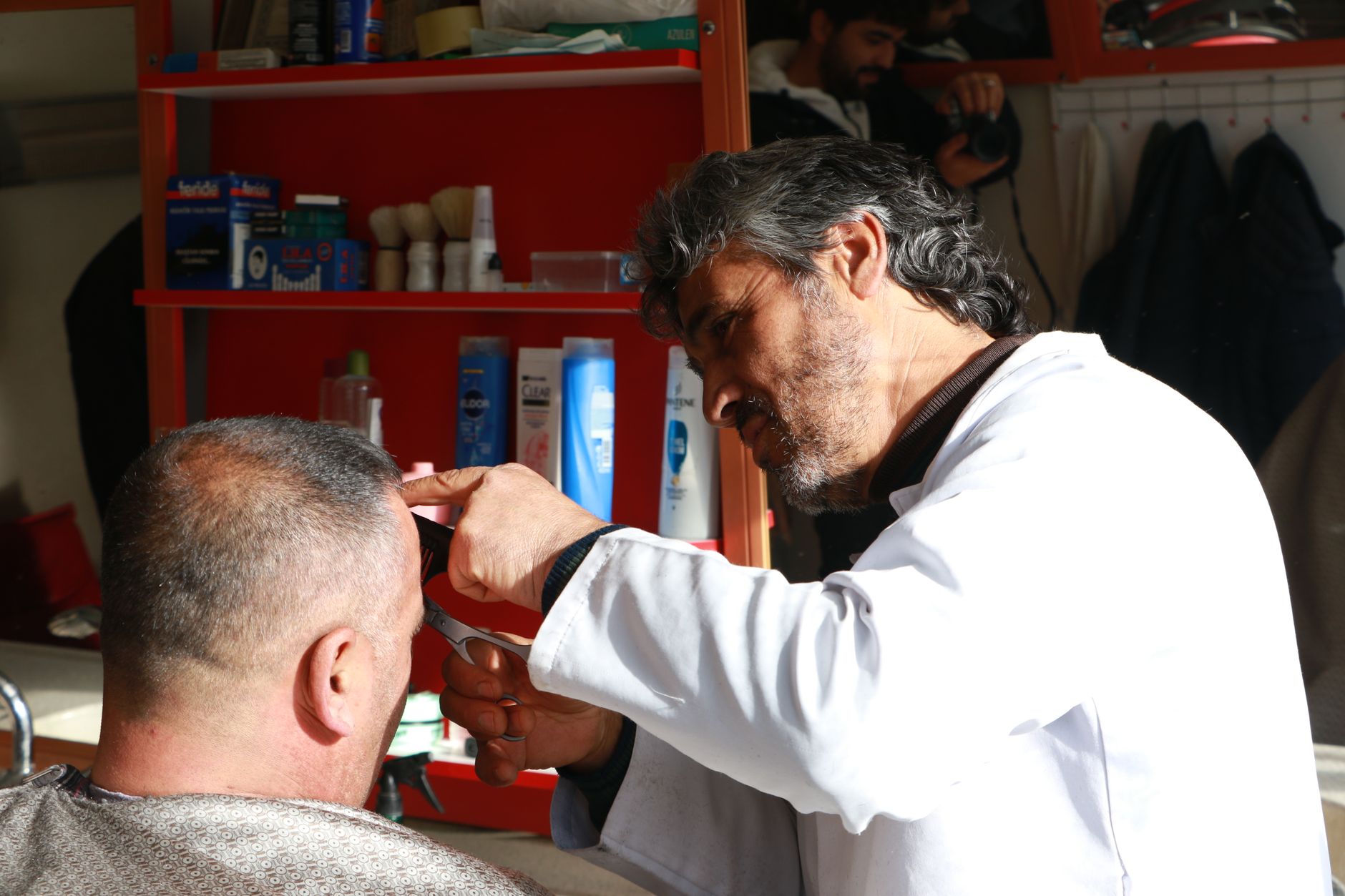
The shop was eleven feet wide. One chair, one long mirror gone silver at the edges, a row of four wooden waiting chairs under the window, and a magazine rack that mostly held farm papers and a Bible somebody left in 1979 that nobody ever claimed.
The whole place smelled like talc and bay rum and the little blue jar of Barbicide on the counter.
There was a cigar box for the money. There was a radio that only got the AM station out of the county seat. And there was a wooden rack in the back, by the sink, that held a dozen pressed white shirts on wire hangers.
For most of my childhood I never thought twice about that rack of shirts. It was just part of the shop, the way the pole was part of the shop.
I did not understand what it was for until I was almost grown. And I did not understand how big it was until the day my father turned off the pole for good.
That is the story I want to tell you. It is not a sad one, though I cried most of the way through it. It is the other kind.