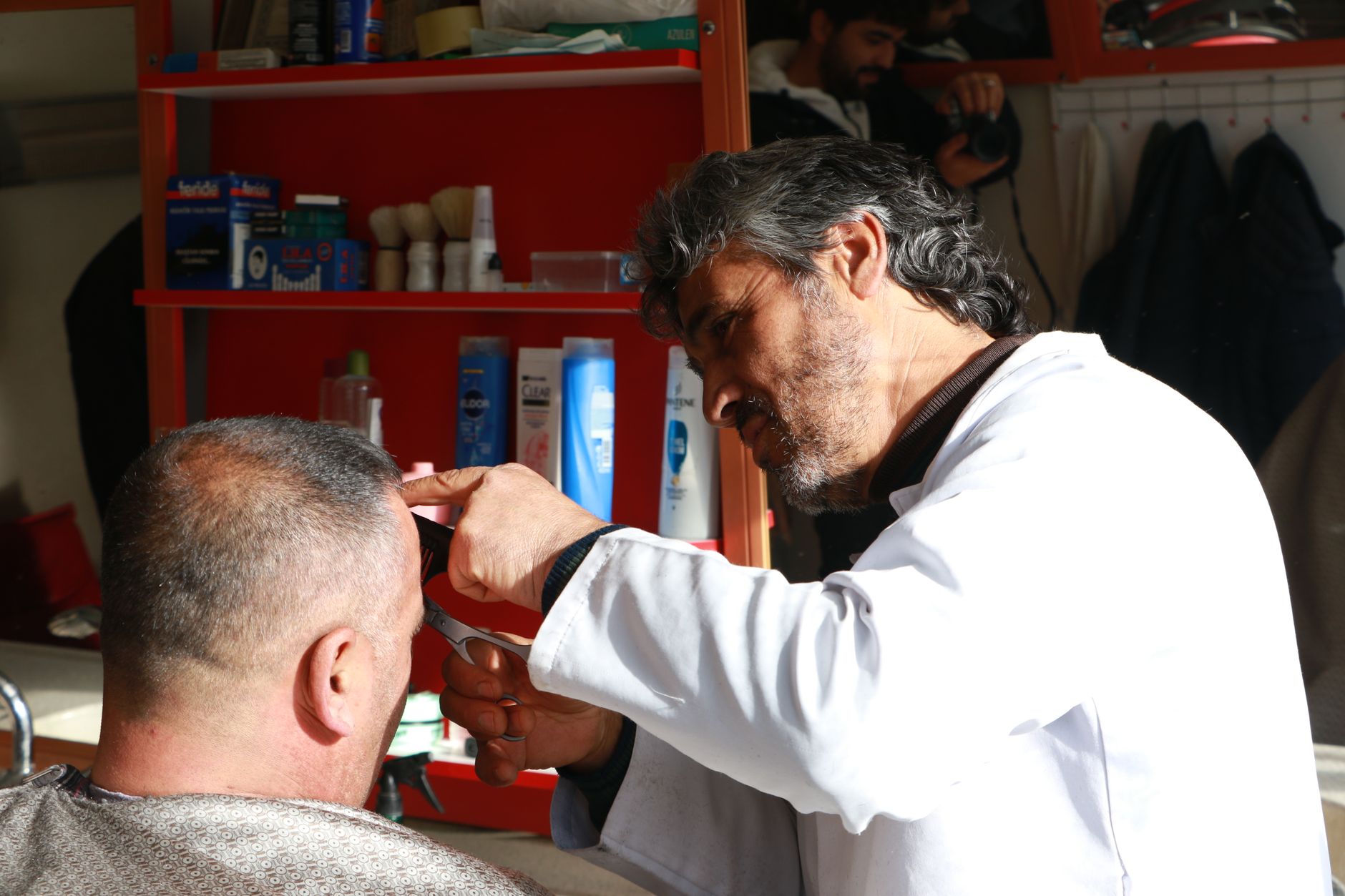
The Clean Shirt The Barber Gave
The sidewalk
By three o’clock there was no room left inside, so they waited outside.
They lined up along the storefronts, down past the hardware store, a line of men in white shirts in the flat gold light of a September afternoon on a courthouse square. People coming out of the bank stopped to look. Nobody could make sense of it from the outside. A line of grown working men, dressed up, quiet, in no hurry, waiting for a barbershop that was closing.
My father cut hair until four. The last man did not need a cut at all. He just sat in the chair with his eyes closed while my father ran the comb through what was left, and when it was done the man stood up and shook my father’s hand and could not speak and went out to stand in the line with the rest.
Then my father took off his apron.
He has a hook by the mirror that apron has hung on for fifty years. He hung it there, and he stood a second with his hand flat on it. Then he turned off the radio and emptied the Barbicide jar in the sink and rinsed it, because that is the kind of man he is, he closed the shop the way he had closed it ten thousand nights, and then there was nothing left to do but turn off the pole.
He went out front and reached up and shut it off, and the red and white quit turning.
I locked the door behind us.
And we turned around, and the whole line of them was still there. Every man. Standing on the sidewalk in their white shirts, facing the door, waiting for us.
What they pressed into his hand
Dale stepped out of the line.
He had a manila envelope in his hand, soft at the corners, and I could see his jaw working.
“Virgil,” he said, loud enough for the whole sidewalk to hear, because this part he wanted witnessed. “You never would take our money. Fifty years, you never would. So we quit asking.”
He held the envelope out. My father did not take it. He just looked at it.
“Open it,” Dale said.
My father opened it slow, with his two hands, the right one trembling against the paper. He slid out what was inside and unfolded it, and he read it, and I watched my father’s face do something I had seen it do exactly twice in my life, at my mother’s funeral and at the birth of my son.
It was a deed.