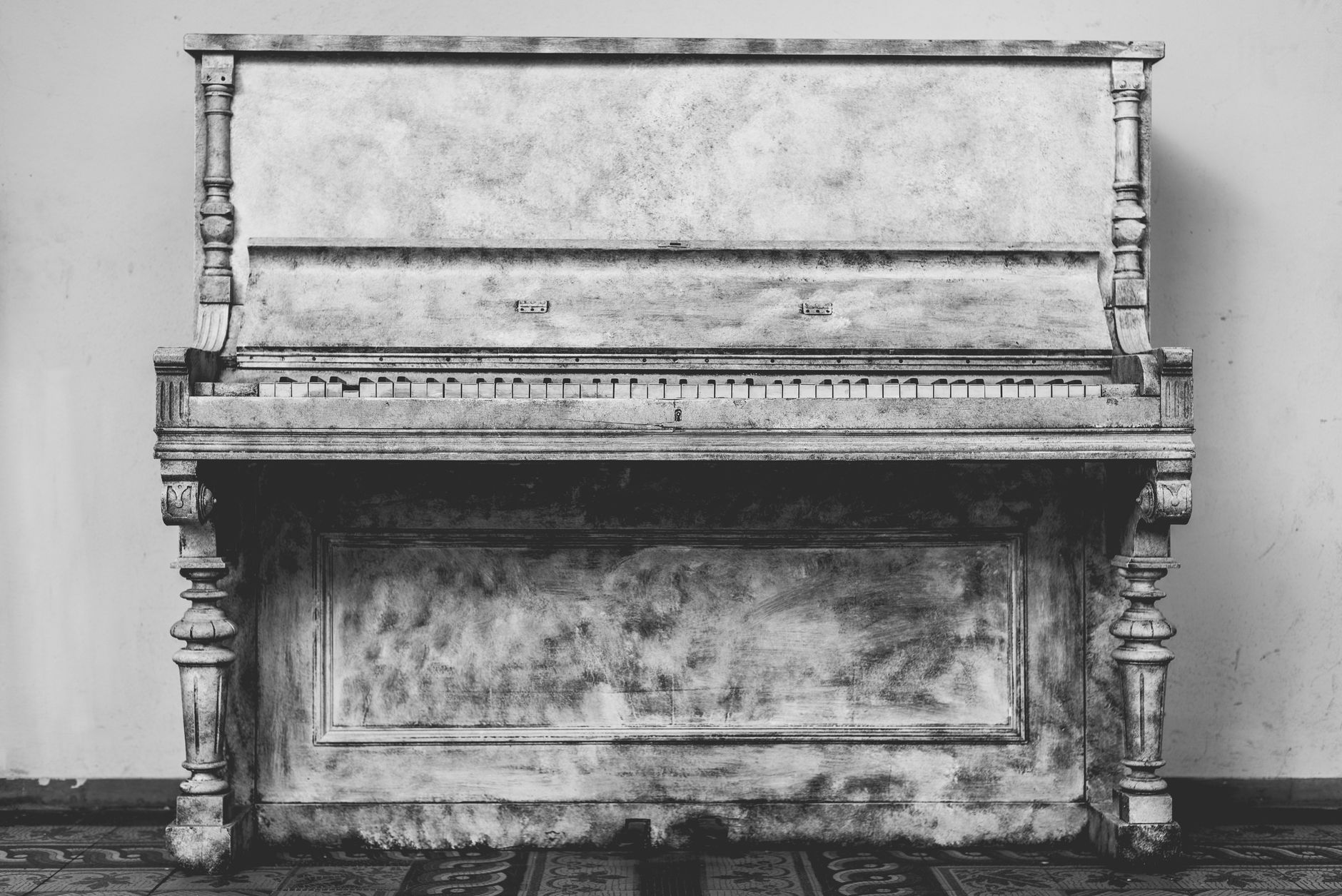
The Piano on the Porch in the Rain
The cardboard sign was taped to the music stand with packing tape, and the rain had already made the marker run. It said FREE in capital letters, and under that, smaller, it said Must Haul Yourself.
My mother’s piano stood on the front porch of the house I grew up in, pushed up against the railing where the hanging ferns used to go. The lid was down. The bench sat beside it with its seat propped open, empty, and the rain was blowing in sideways off the street.
I had come straight from the hospital in Macomb. I was still in my church dress from that morning, with my rain jacket thrown over it, and my daughter Lily was in the car with her earbuds in. I had only meant to stop for my father’s reading glasses and his good slippers.
I stood on the bottom step for a long time before I went up.
Then I put my hand flat on that walnut lid. It was cold and wet, and a bead of water ran off the edge onto my wrist. Inside, I could hear the faint sound strings make when the weather changes, a kind of hum you only notice if you grew up beside one.
The front door opened before I knocked. Renee stood there in a gray sweatshirt with her reading glasses pushed up into her hair. Behind her the living room looked strange, and it took me a second to understand why. The wall where the piano had stood for forty-five years was bare, and there were four pale squares in the carpet where its casters had pressed.
“Megan,” she said. “I didn’t know you were coming by.”
“Dad wanted his glasses,” I said. “And his slippers.”
She nodded and went to get them. She did not ask me in. When she came back, she handed them to me through the gap in the storm door, and I held them against my chest so they would not get wet.
“Renee,” I said. “The piano.”
“I know.” She looked at it and then away. “I called a man in Galesburg about it. He said nobody wants those old uprights anymore. He said it would cost me three hundred dollars just to haul it to the dump. So I put it out. Somebody will want it for the wood.”
“It’s raining.”
“It’s junk, Megan. It’s worth nothing. I’m sorry, but it is.”
“Where’s the music that was in the bench?”
She pointed with her chin to a cardboard box at the end of the porch, under the eave but not far enough under. The top sheets had gone soft and gray. I picked up the one on top. It was a hymn, “In the Garden,” with my mother’s pencil fingering written above the right hand in her small, slanted numbers.
“I’m making this house mine,” Renee said. “Your father and I talked about it. I’ve waited a long time.”
“Did you talk to him about this?”
She did not answer that. She said, “I have to get supper,” and she closed the inside door. Not hard. Just closed it.